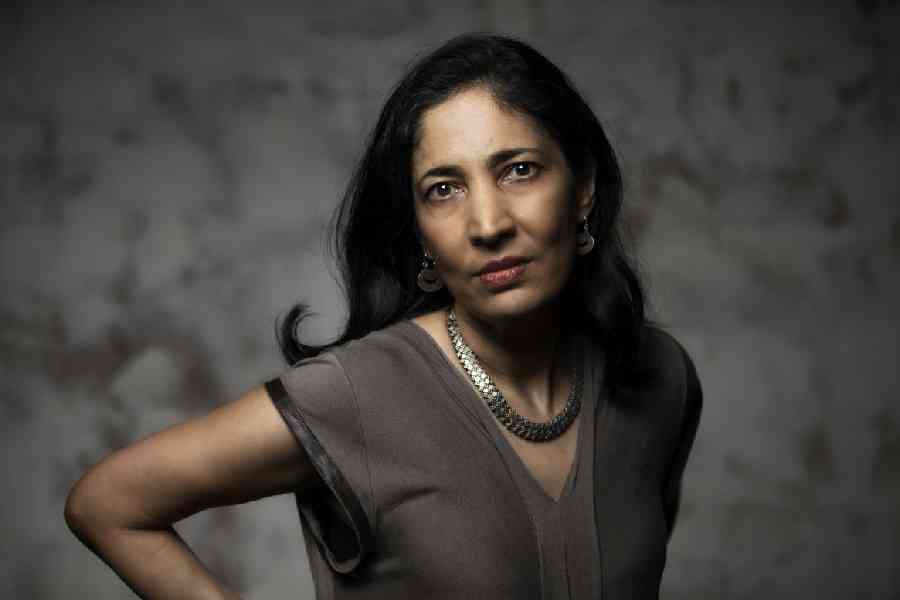
Kiran Desai believes there is “a real upside to loss”, drawing from her own experience missing out on her second Booker, and says she now wants to prioritise time with her mother, veteran writer Anita Desai.
Desai, who won the Booker Prize at 35 for her 2006 novel The Inheritance of Loss, said she has come to value the creative freedom that comes without the spotlight. Her debut novel, Hullabaloo in the Guava Orchard, was published in 1998.
Her latest novel, The Loneliness of Sonia and Sunny, was shortlisted for the Booker Prize last November but did not win.
“I’ve learned over time that, of course, it’s an honour to win, but there is a real upside to loss. I remember telling my mother, ‘I don’t want to win’ because I knew how much it takes out of you to have everyone’s eyes on you. My mother, she’s 88, 89 now, I want to focus on her. She’s my priority,” Desai told PTI during her recent visit to India.
"And also, when there are no eyes on you, as I was telling my editor, you can go back to scratching in the dirt like a chicken in the yard, which is what writing is all about. You’re alone, you’re not self-conscious, and you’re really free to work. So yes, there’s an upside to loss," she added.
Desai recalled the overwhelming nature of her Booker win, noting that at the time she was deeply immersed in her work and had little space to grow beyond it.
Anita Desai, shortlisted three times for the Booker Prize for Clear Light of Day (1980), In Custody (1984), and Fasting, Feasting (1999), offered advice that resonated with her daughter after the recent near-miss.
“She told me, 'Now you’re free to experiment with your life and your work',” Desai said.
“That’s exactly what I felt -- it gave me freedom."
The 2025 Booker Prize was awarded to Hungarian-British author David Szalay for his book Flesh.
Desai’s latest work, spanning nearly 700 pages, traverses India, Mexico and the United States, following Sonia, a literature student grappling with heartbreak and creative ambition, and Sunny, a young journalist dealing with cultural expectations and loneliness. Their lives intersect in India, exploring themes of identity, family and connection.
The New York-based author, 54, said completing the novel after nearly two decades brought immense relief.
“The sigh of relief was immense because, of course, after 20 years, it is far too long. If I had waited another 20 years, I would be 74. And if I want to write a few more books, there’s an urgency to finish them now," she said.
Despite concerns over time, Desai emphasised that the joy of writing remained central.
“I was very happy working on this book. And I still think all the time, I could have done this differently, that could have been better. But that’s part of writing,” she added.
Desai said her characters continue to stay with her long after a book is completed, shaping her both personally and as a writer.
“They have a space for themselves. They kind of change you -- you become the characters you write. So in a way they stay with you, because you feel like after all of this time that they have kind of shaped you as well as a writer. Like so much exploring of these different people, that they become you," she said.
Having lived in New York for over two decades, Desai said the new novel may mark her “last in-depth” engagement with India, a country she has visited less frequently since her father’s death in 2008.
“During the process of writing this book, my father was still alive. I was keeping notes. I was going home (India). And I knew I would lose the ability to write about India. So I wanted to write one last book in this way,” she said.
Reflecting on identity, a theme central to the novel, Desai pointed to Sunny’s sense of dislocation — returning to India yet feeling uncertain of himself.
“I sometimes feel that way. I come back and I am in the landscape I grew up in, so somehow my body remembers, even though I am a stranger now... there is something still profoundly familiar,” she said.
She added that the feeling of being an “insider-outsider” persists both in India and in the United States, where recent political developments have unsettled her sense of belonging.