Book: Faith and Fury: COVID Dispatches from India’s Hinterland
Author: Jyoti Yadav
Published by: Westland
Price: Rs 599
Reading Faith and Fury made me distinctly aware of the parallels between journalism and community research. Both begin with assumptions, often unexamined, about what a ‘community’ is supposed to be. Yet the moment one starts listening to lived stories on the ground, those monolithic ideas fracture into layers of contradiction, resilience, fear, and negotiation. Remaining open to this process requires intellectual humility and moral courage. Faith and Fury documents precisely such a journey, that of a young journalist stepping into uncertainty and refusing to look away.
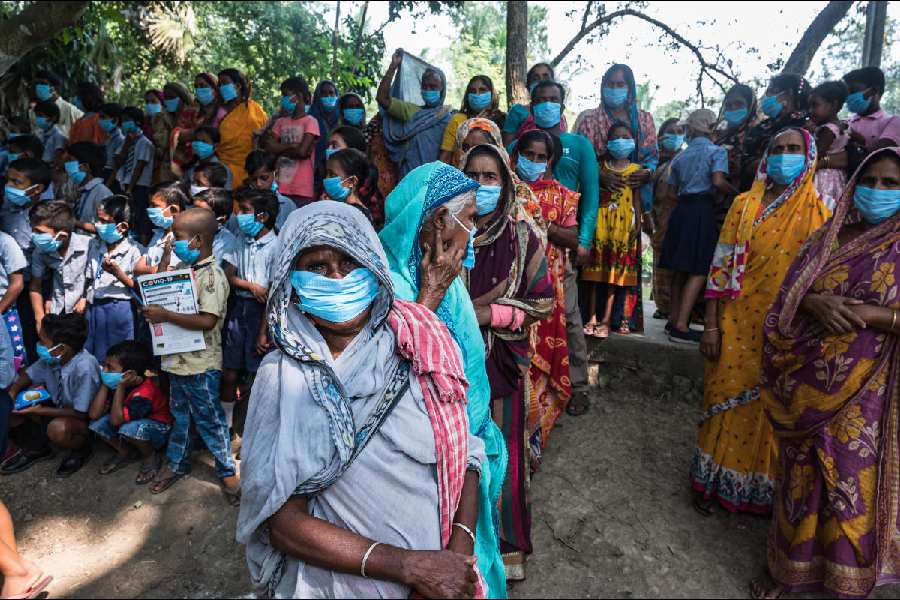
The book returns us to the emotional terrain of the Covid-19 pandemic. A microscopic organism pushed us to confront the limits of human claims of dominance, stripping societies down to their moral and institutional skeletons. When the world moved indoors, Yadav travelled through the suburban belts, hinterlands, and mofussil towns of Uttar Pradesh and Bihar, where the pandemic unfolded with a very different texture.
She vividly captures the challenges of reporting from the ground during the early months of the pandemic, working without basic amenities, clean toilets, or secure shelter while travelling through deserted towns and silent highways. As cases increased disproportionately, so did deaths, and the systemic fractures widened into visible ruptures. Referral hospitals that boasted state-of-the-art infrastructure crumbled, oxygen cylinders vanished, ventilators were scarce, and medical staff were overwhelmed. Several state authorities appeared to downplay the scale of deaths. Crematoriums were covered with tin sheets, hospitals were cordoned off, and ground reports were often questioned or dismissed even as the Centre indulged in symbolic gestures like banging thaalis. Claims of new treatments surfaced almost every day, ranging from chloroquine to ayurvedic remedies, herbal cures, and even gaumutra. The distrust and misinformation grew to such an extent that families unwrapped the bodies of the deceased in the belief that their loved ones were being killed for organ theft.
The book also gives voice to some of the most disadvantaged frontline workers. Yadav writes about government nurses who were overworked, denied leave, and, at times, even lacked basic toilet facilities. She talks to doms who cremated dozens of bodies each day, not having enough time to eat and often relying on alcohol to endure the emotional strain. She also documents the struggles of mortuary workers, many of them contractual employees who had not been paid for months and were sometimes forced to ask grieving families for money.
Yadav often reached out to people in positions of power to arrange beds, oxygen cylinders, and ventilators for those in need. Yet the sheer scale of the pandemic often overwhelmed such individual resilience. One of the strengths of the book is Yadav’s editorial judgments about what not to report. One such decision is to avoid covering the story of a marginalised family forced to place the mother’s body in a gunny bag with stones to submerge it in the Ganga, fearing that public attention might invite scrutiny and further hardship.
At the same time, the book occasionally leaves the reader wanting more. A sustained follow-up on some of the individuals after five years could have elevated the work from documentation to a deeper tracing of social change.
Despite these limitations, Faith and Fury remains an important contribution to pandemic reportage, capturing not only the structural failures of institutions but also the interpretive worlds of communities navigating uncertainty.