Book: Under Grey Smoggy Skies: Living Homeless on the Streets of India's Cities
Author: Harsh Mander
Publisher: Yoda
Price: Rs 499
Indian cities are organised around a deeply-entrenched belief that those who sleep on their streets do not belong. Harsh Mander unsettles this belief with a persistent force. Drawing on more than two decades of engagement with homeless communities across urban India, he pushes against the language that flattens lives into labels, such as encroachers, beggars, or nuisances. In its place, the book offers a different way of seeing, one that recognises dignity, labour, and the fullness of social life that the city repeatedly refuses to acknowledge.
What takes shape is far more than an account of homelessness. It is an indictment of the moral and the political economies that decide whose lives are seen and whose are rendered expendable. To live on the street in an Indian city is to endure more than the absence of shelter; it is to be denied recognition, to be looked through rather than looked at. Mander writes into this refusal and gradually unsettles it, drawing the reader into forms of attention that the city has learned to withhold. The result is a work that confronts not only the violence of the State but also the quieter, everyday indifference that allows such violence to persist.
At the heart of Under Grey Smoggy Skies lies a methodological choice that is as political as it is ethical. Mander does not approach homelessness as an object of distant empathy but as a field of lived relations that demands a different way of knowing. Refusing the dominant epistemologies through which the urban homeless are typically rendered, as cases to be managed, encroachers to be removed, failures to be explained away, he situates them as workers, carers, survivors, and social beings. This is not merely a shift in tone but a refusal of the categories that enable their dehumanisation in the first place. Dignity here is not an affective gesture but a methodological commitment, one that unsettles how knowledge about poverty is produced and circulated.
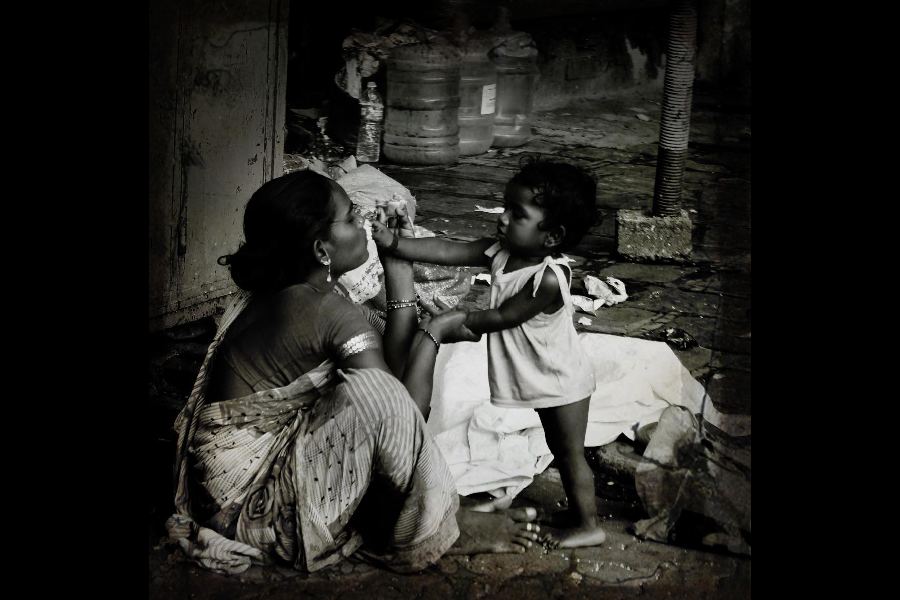
Equally significant is the book’s attention to the intimate textures of everyday life on the street. Through moments of sharing food, caring for one another, and collectively negotiating danger, Mander brings into view forms of sociality that are routinely erased in dominant representations of homelessness as abject and isolating. These fragments of the everyday do more than humanise; they function as political knowledge. They reveal practices of care, reciprocity, and endurance that persist despite structural abandonment, challenging the embedded idea that poverty strips people of relational life.
The book is equally powerful in undoing the internalised figure of the “undeserving poor” — a figure sustained through everyday language as much as through laws and policy. Terms such as freeloaders or parasites are not incidental slippages but they become ideological devices that make abandonment appear reasonable. What Mander offers instead is a careful reconstruction of homeless lives as sites of relentless labour. From waste-picking and street-cleaning to vending and other forms of casual work, the book shows how the urban homeless are not outside the economy but integral to it. Their labour is foundational to the functioning of the city even as it remains unrecognised and unprotected. What emerges, then, is a stark contradiction: the city depends on them materially, yet must disavow them morally. It is this disavowal that enables everyday forms of violence in the shape of evictions, policing, neglect, arrest and so on to appear not only permissible but also necessary.
In this sense, Under Grey Smoggy Skies exceeds the bounds of documentation to become a moral indictment of contemporary urbanism. It compels the reader to confront what it means for a society to normalise such conditions where survival itself is rendered suspect and visibility becomes a risk. Without overt polemic, the book offers a quiet but sharp critique of a model of urban development that privileges aesthetics, capital, and order over human life. The “world-class” aspirations of the city are revealed to rest on the systematic exclusion of those who sustain it. What Mander ultimately lays bare is not just the condition of homelessness but the ethical contours of a “New India” in which dispossession is both produced and denied in the same breath.