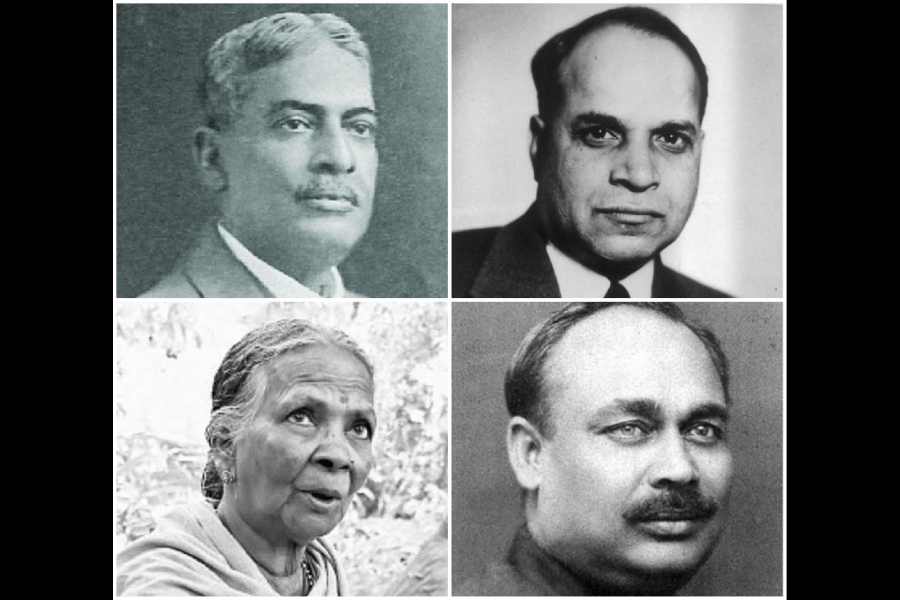
Book: FORGOTTEN HEROES OF INDIAN SCIENCE
Authors: Anand Ranganathan and Sheetal Ranganathan
Published by: Ebury
Price: Rs 999
Paradoxically, this book is both timely and ill-timed. The renewed and often aggressive assertion of ‘Indian diversity’ and its ‘contribution’ to the contemporary public discourse cannot be separated from the ultra Hindu-nationalist wave the country has been riding for over a decade. In this climate, science itself has become a site of ideological contestation. The State’s push towards ‘traditional systems of medicine’, amplified by international optics such as the recent WHO-endorsed events, has led to friction between the government and allopathic doctors — most visibly over proposals permitting practitioners of alternative systems to perform surgeries. It is against this charged backdrop that the book must be read.
What the book does well is undeniable. It brings to popular attention Indian scientific and medical contributions that have long been marginalised: Upendranath Brahmachari’s work on kala-azar, Yellapragada Subbarow’s role in the discovery of Adenosine triphosphate, and the therapeutic use of sarpagandha associated with R.N. Chopra. Popular writing on medicine and science in India remains surprisingly scarce, and the way these subjects are taught — often stripped of history, context, and intellectual query — leaves students unaware of their own scientific inheritance. As a young medical student myself, I was startled to discover how little I knew: that until around the 1940s, hypertension was not even considered a disease but the body’s response to maintain cardiac output.
The book is most engaging when it reconstructs the conditions under which these discoveries were made — often amid poverty, poor infrastructure, and colonial indifference or hostility. The account of how Indian scientific work was frequently overshadowed by colonial power structures is compelling. Particularly moving is the portrayal of scientists such as Azizul Haque, who died in penury and lies buried in Motihari, largely forgotten — an unsettling contrast to contemporaries like Orwell whose legacies have been carefully preserved. These are reminders of the intellectual richness of India’s past that has been erased from collective memory.
However, the book struggles to sustain focus. Alongside the central scientific narratives are a series of digressions — on the discovery of the telegraph, the British loss of monopoly over tea, the shift of imperial economic strategies, and even the first dissection conducted in Calcutta. Such individually interesting snippets are scattered like fragments, never becoming part of a tapestry that a book of this ambition must weave for the reader. The five scientists profiled are never brought into a coherent analytical frame, and the rapid movement across socio-political contexts results in a sketch rather than a deep portrait of the era. The authors have stated in public talks that they excluded much of what they knew to keep the book accessible; yet the result often feels like a collage of facts loosely stitched together, with narrative threads left unresolved.
What is more troubling is the authors’ admission, in the preface, that in order to bring alive history and the socio-cultural milieu of the time, they have dramatised events, dialogues, incidents and interaction in their narration while keeping true to the dramatis personae and locations named and referenced. In Brahmachari’s section, youthful hilltop discussions abruptly give way to Anandamath, an ideologically-charged text in the current political environment. If Anandamath warranted inclusion, its implications demanded scrutiny. But ideology is gestured at yet never examined. In fact, one of the book’s major criticisms is its reluctance to tread into difficult waters
to reveal what these scientists were like as human beings.
In their talk, Anand Ranganathan invokes Lakshmikutty Kani, a woman from the Kani community, who devoted her life to building a sophisticated pharmacopeia of herbal knowledge. He jokingly suggests that a foreign researcher could easily extract this knowledge, win a Nobel Prize, and offer Kani a passing acknowledgment in an acceptance speech. Beneath the humour lies a damning indictment of Indian science: our chronic failure to recognise, invest in, and systematically develop indigenous knowledge into discoveries of global consequence. The problem is not a lack of wisdom or tradition, but the absence of institutional seriousness, funding, infrastructure, and ethical translational pathways that could convert such knowledge into science that endures. The contrast is stark. Tu Youyou engaged rigorously with classical Chinese medical texts to isolate Artemisinin, a breakthrough that transformed malaria treatment and saved millions of lives. Until Indian science moves beyond symbolic reverence for tradition and commits to deep structural reform, sustained funding, and meaningful opportunities to rigorously develop, own, and translate knowledge, these failures
will remain systemic.