|
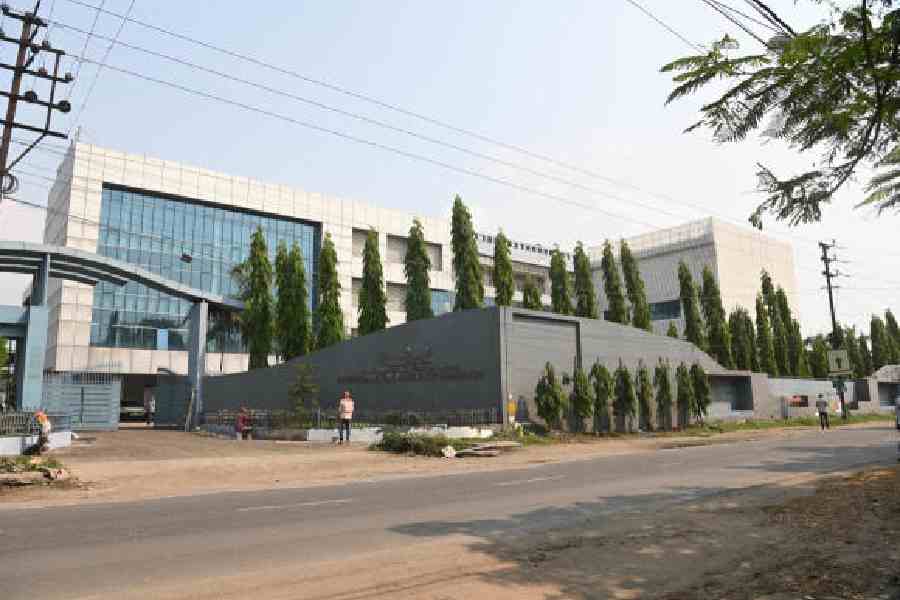
| Patna Medical College and Hospital. Telegraph picture |
Patna, Aug. 25: The microbiology department at the state’s premier health institution Patna Medical College and Hospital (PMCH) is set to be developed as ultra-modern facility for testing cases of polio, measles and rubella virus.
The new facility will be the first of its kind in north India and the third in the country said Dr Shankar Prakash, head of PMCH’s microbiology department.
The lab will be set up by the World Health Organization (WHO) with the support of the state government and is expected to be functional within a month, said officials of the PMCH.
Prakash told The Telegraph: “The state government has tied up with the WHO for the initiative. The new lab in the state will mean that we are in a position to test suspected cases of polio, measles and rubella virus here itself. As of now, the samples are sent to labs in Mumbai and Chennai for diagnosis. This will reduce the waiting time for testing and will be immensely beneficial for other neighbouring states as well.”
He added: “While we are providing the infrastructure and manpower, WHO is supporting us with technical knowhow and equipment. Some of the equipment have already been installed in the department. These machines are worth Rs 1.5 crore and more machines will be installed in the department in times to come.”
Prakash said a five-member team comprising doctors and technicians was recently sent to labs in Mumbai and Chennai for training. “These training sessions were sponsored by the WHO and more such sessions will follow in the coming months. The diagnosis for these viruses are extremely technical and sophisticated and it requires great skills to be able to conduct these tests,” he added.
The hospital, however, will take some time before it starts performing final tests for these viruses.
“With the kind of equipment we are getting at the department now, we can only conduct primary screening of the viruses on the samples here. The final tests require more advanced and sophisticated machineries. WHO has also agreed to provide more advanced equipment but at a later stage. Things will shape up gradually but we will get the facility functional as soon as we have basic equipment and sufficiently trained manpower in place,” Prakash said.
According to sources, the need to set up a polio-testing laboratory in Bihar was felt as the dreaded virus has made a re-appearance in some parts of the state recently.
“The microbiology department collects sewage samples from various parts and sends them to laboratories in Mumbai and Chennai for checking the presence of polio virus in them. We also collect blood samples from the suspected patients and send them across for further diagnosis. From now, the diagnosis will be much easier since we will have the facility here itself,” said another senior official at the health hub.
Meanwhile, the plan to develop a full-fledged virology laboratory still remains on paper. According to sources in the health department, PMCH was slated to have the first virology laboratory in eastern India at an estimated cost of Rs 3 crore.
Senior doctors at the hospital said an upgrade plan of the present microbiology department into a modern testing lab was approved by the state government about two years back and the process of expanding infrastructure and bringing in new equipment should have been completed by now. However, the pace of work remains extremely slow.