
Patna: The air quality over Patna is better than over Delhi, but still not safe.
The Bihar State Pollution Control Board, taking a cue from the plight of the national capital, plans to issue an advisory to stakeholders and the general public on strategies to curb air pollution.
The BSPCB member secretary Alok Kumar said a meeting with stakeholders would be held within a week.
Kumar said the board plans to ask the transport department to ensure that vehicles older than 15 years are off the roads. An earlier meeting with the chief secretary had already highlighted the need to eliminate such old vehicles but, he said, "we are going to repeat these instructions in the coming advisory."
The board also plans to seek promotion of public transport and the use of compressed natural gas powered vehicles.
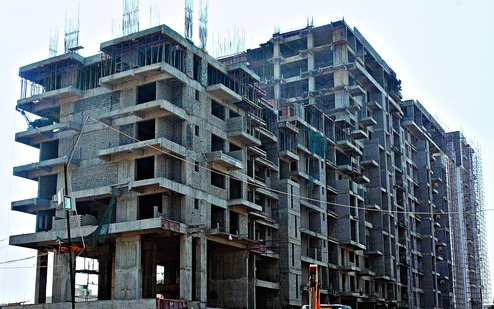
"We are going to ask the municipal corporation to ensure than under-construction buildings are covered up properly to minimise dust particles exposure to the general public," he said.
The general public will be asked to stop cooking food on coal, opt for public transport and car pooling.
Data from the Central Pollution Control Board (CPCB) website showed that the level of atmospheric particulate matter sized 2.5 microns (PM2.5) over the city was 329 micrograms per cubic metre, or over five times the safe limit. In comparison, the average concentration of PM2.5 over Anand Vihar an industrial and residential suburb in Delhi was 552. The safe limit for PM2.5 is 60.
The CPCB website had recorded a higher PM2.5 concentration - 496 - on Sunday. But the peak concentration of nitrogen dioxide climbed from 84 gram per cubic metre on Sunday to 149 on Monday.
But values of sulphur dioxide and carbon monoxide have remained well below prescribed safe levels.
Environmentalist Ashok Ghosh said that the increase in PM2.5 (suspended particulates) can cause respiratory problems.
"It can exacerbate attacks in asthmatic people and trigger respiratory distress among people allergic to dust. Seeing the present level of PM2.5, I would suggest asthmatic people start wearing masks when outdoors. Major transport related measures need to be taken by the government," said Ghosh.
"The air quality index of the state capital has always been either poor or very poor. We cannot be satisfied with the air quality in the state capital" said Kumar.