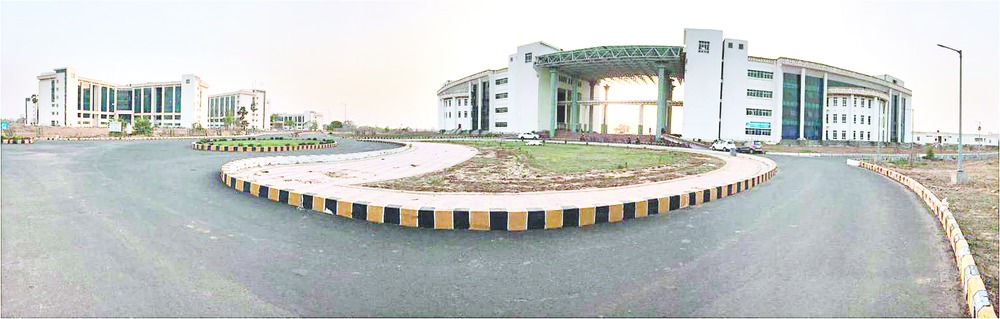

The incubation centre of Indian Institute of Technology (IIT), Patna, is set to enrol its first batch of students for its two-year incubation programme focused on business ventures in electronics system design and manufacturing and medical electronics. Students with innovative ideas to launch start-ups would be selected for this programme.
A maximum of 20 such students would be selected for the programme and they need to have an engineering degree. A team of experts will screen their ideas.
The centre will work to develop low-cost versions of X-ray machines, computed tomography machines, heart-lung machines, MRI machines, pacemaker, robotic arms and other expensive medical instrument.
Interested candidates, who are known as incubi, will provide support for their start-ups for idea validation, product development, building and testing prototypes. Experienced teams, in addition to mentors and academia from across the industry and academia, will guide these start-ups.
Llewelyn D'Sa, a final-year MTech student from IIT-Patna, said: "The idea is to promote new innovations in the field of medical electronics, which can be cost-effective and even user friendly to people."
Llewelyn, who is working on prosthesis (an artificial device that replaces a missing body part which may be lost through trauma, disease or congenital conditions), said: "My idea is to develop a robotic arm at low cost."
He said those using existing variants of robotic arms take around six months to get accustomed to its uses, whereas his innovation would help them in achieving the comfort level of use in a month. "Icing on the cake would be lower cost of my product," he added.
IIT-Patna director Pushpak Bhattacharyya said: "The centre aims to address the quality gap in healthcare. The vision of the incubation centre is to identify, nurture and translate technology ideas and innovation in electronics system design and manufacturing and medical electronics with a focus on medical electronics."
IIT-Patna has invited applications from potential incubi for the centre. The application must have a business plan highlighting the invocations, funding requirements, capital structure and other details.
Prime Minister Narendra Modi inaugurated the incubation centre last year. A sum of Rs 47 crore would be spent over five years for running the centre of which the centre will pump Rs 22 crore and the remaining funds would come from the state.
Aditya Nataraja, the manager of the incubation centre, said: "Qualified people from academia and industries will assist the centre. AIIMS-Delhi associate professor Prashant Jha, who has an MBBS and bio-medical engineering degree from IIT-Kanpur, will be one of the members at the centre. He and other members will assess the ideas before they are conceptualised."
The centre will offer candidates world-class research and development facilities and guidance by Angel Investors for business mentoring.
Abhishek Singh, the general secretary of Bihar Entrepreneurs' Association, said: "It is good that IIT-Patna is focusing on medical incubation, but the success of the incubation centre will depend on three parameters - the number of ideas received, the feasibility of idea and marketability of the products."