Monday, 06 July 2026
Monday, 06 July 2026
Monday, 06 July 2026
One of the most compelling stories of the 2026 T20 World Cup belongs to men who arrived here by accident rather than design — through migration, marriage, paperwork, missed flights and late-night phone calls.
Away from the giants, the associate nations have assembled a cast that reads like a record of cricket’s global drift.
Here are the player-specific stories from some of the associate nations in this World Cup.
Italy: cricket by paperwork, not postcode
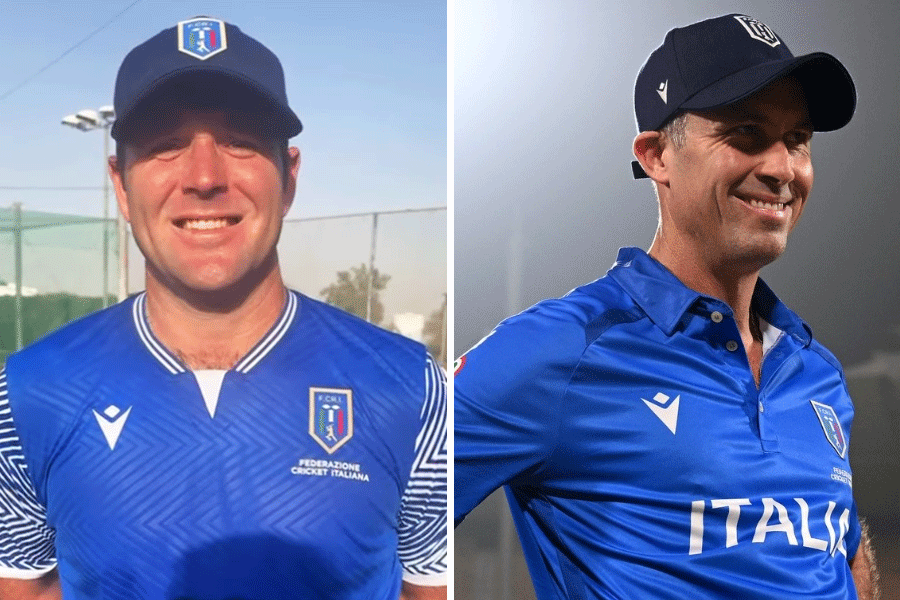
Italy’s qualification has brought with it perhaps the tournament’s most improbable duo.
Jon-Jon Smuts will represent a country he has never visited. Born in South Africa, Smuts qualified for Italy through marriage, securing an Italian passport via his wife’s ancestry. His World Cup debut will precede his first experience of the country whose colours he wears.
Captain Wayne Madsen has travelled even further. In 2006, he represented South Africa at the Hockey World Cup. Two decades later, he captains Italy at cricket’s equivalent. Very few athletes have appeared in World Cups for two different sports — fewer still for two nations.
Canada: an inheritance named Yuvraj
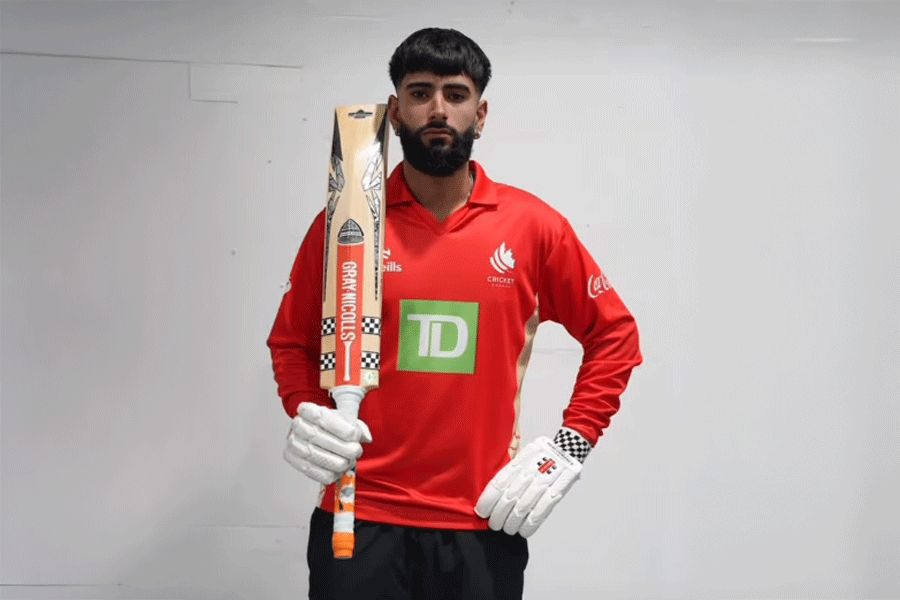
At 19, Yuvraj Samra is the youngest player in the tournament. His name is not a coincidence. He was named after Yuvraj Singh, and his father trained him to bat left-handed to replicate his idol. What began as homage has hardened into method, and now into a World Cup debut.
United States: returning home as visitors
For several US players, the World Cup in the subcontinent feels less like a tour and more like a homecoming.
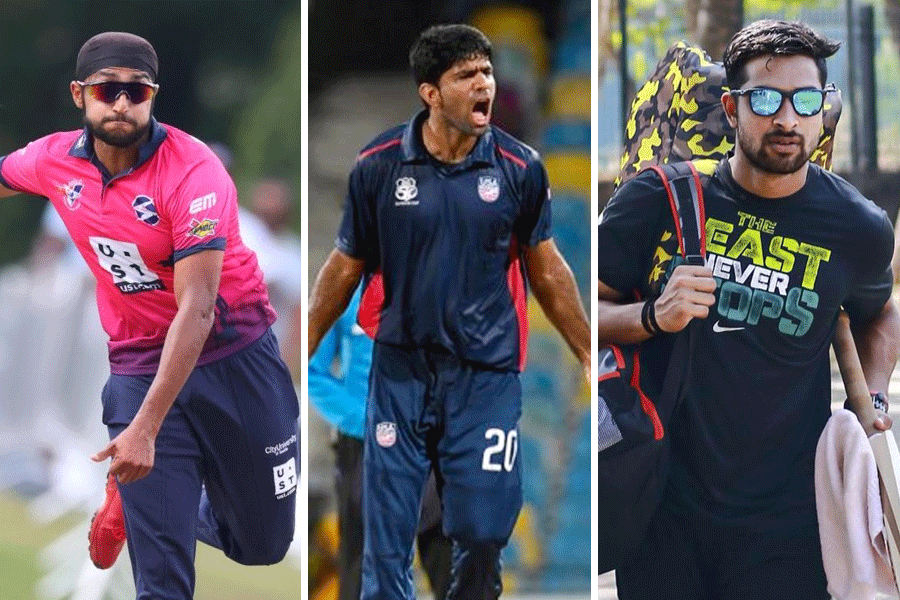
Pacers Harmeet Singh, Saurabh Netravalkar and Shubham Ranjane were all shaped by Indian domestic cricket before emigrating. They now come back wearing a different flag, representing a nation still learning to see itself as a cricketing home.
Adding another layer is Shehan Jayasuriya, once capped by Sri Lanka. His last T20 international came in 2020. In 2026, he makes his USA debut — at a World Cup.
Netherlands: longevity across borders
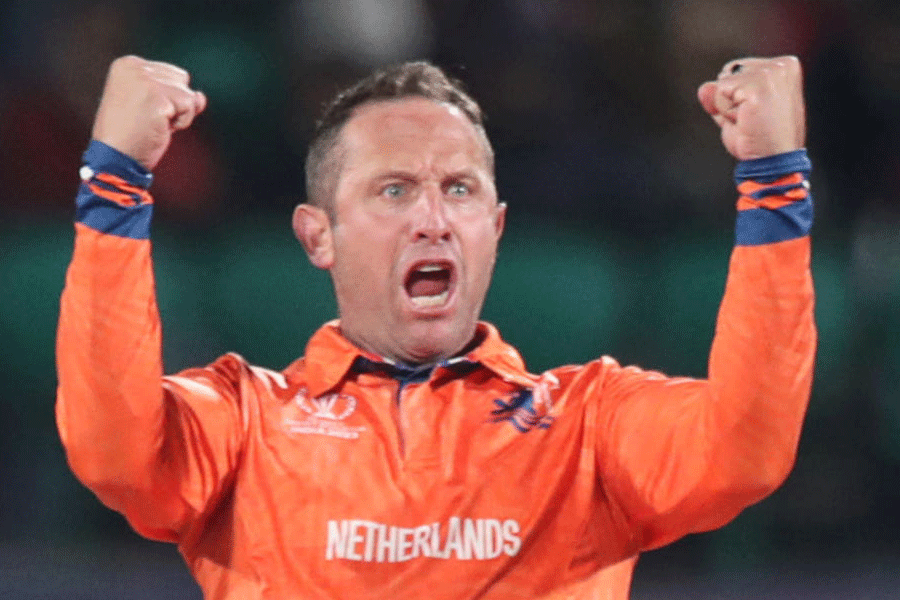
At 41, Roelof van der Merwe remains an anomaly. This is his sixth T20 World Cup: five for the Netherlands, one for South Africa in 2010. Few players have represented two nations at World Cups. Fewer still have lasted long enough for it to feel routine.
Scotland: from displacement to disbelief
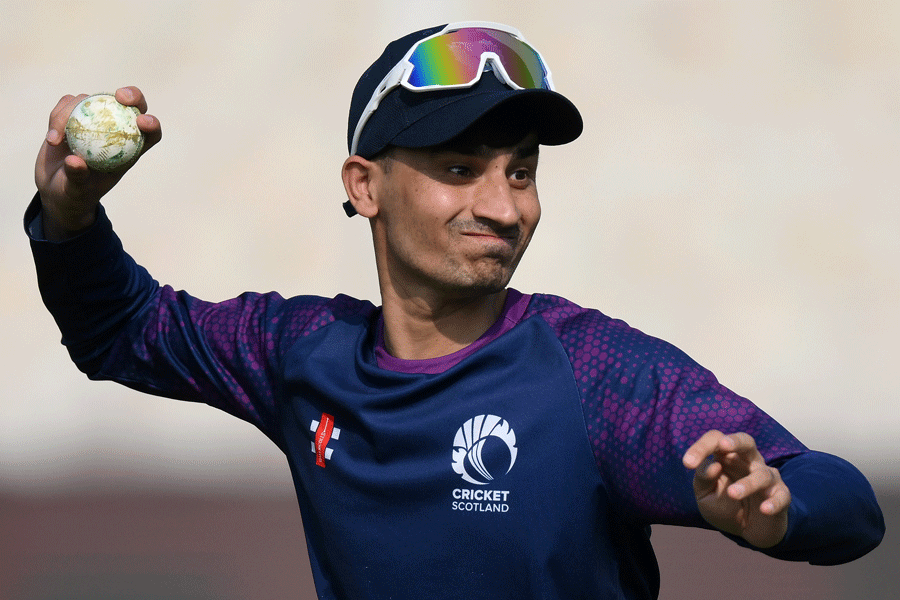
Fast bowler Zainullah Ihsan arrives uncapped but carries one of the tournament’s most powerful narratives. Born in Afghanistan, he emigrated to Scotland, turning displacement into opportunity with a World Cup call-up.
UAE: breaking geography and culture
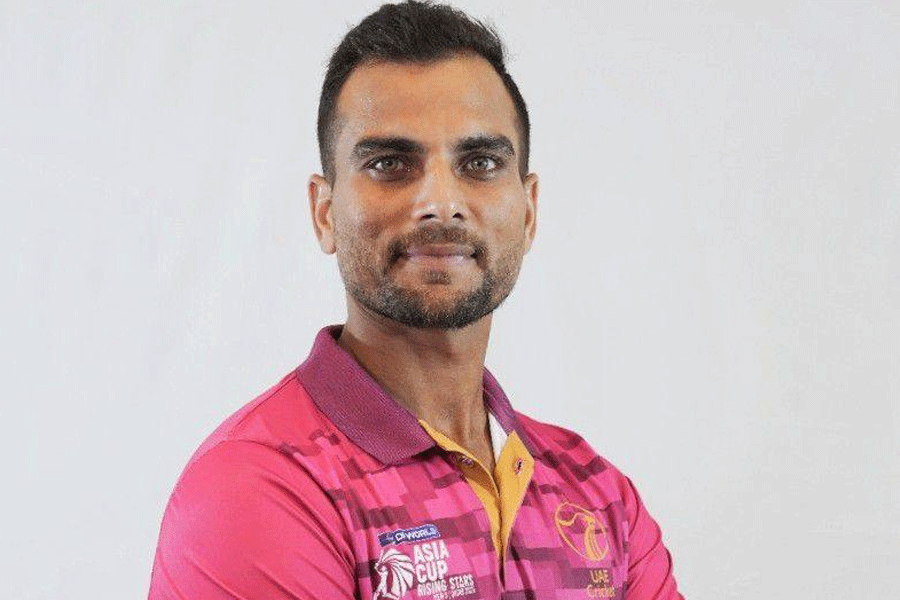
Sohaib Khan, from Sherghati in Bihar’s Gaya district, becomes the first cricketer from the district to reach a World Cup and only the second from Bihar. The first, Ishan Kishan, represents India. Khan represents the UAE.
Bowler Simranjeet Singh adds cultural history. A former net bowler in India, he stayed on in Dubai during Covid, qualified for the UAE.
Oman: recalled from retirement
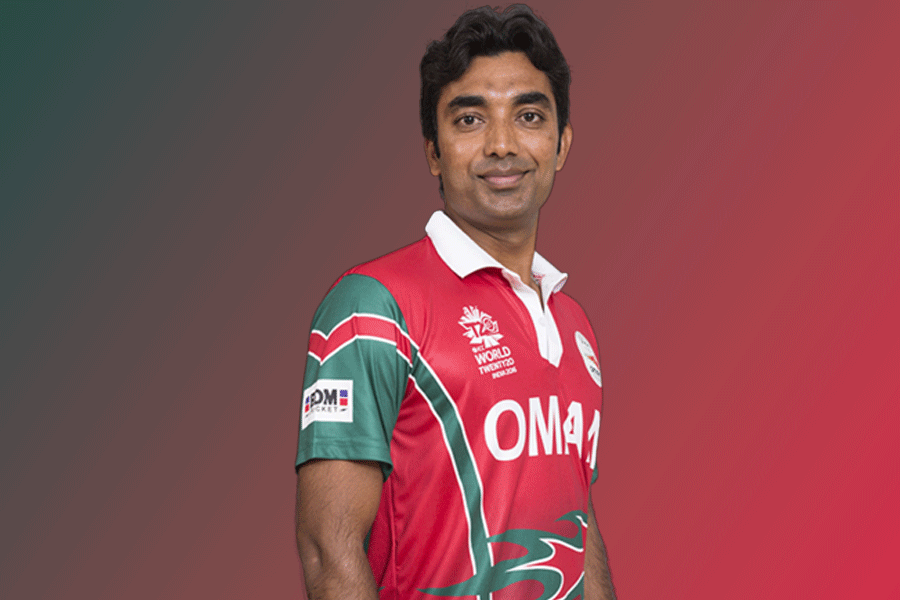
At 44, Aamir Kaleem is the tournament’s oldest player. He had moved into coaching before Oman summoned him back. The decision looked less sentimental after Kaleem scored a half-century against India at the 2025 Asia Cup.
In this World Cup, these players arrive through side doors — migrants, late bloomers, paperwork miracles and second chances. The trophy may end up elsewhere. The tournament’s memory will not.