India on Thursday condemned fresh attacks on West Asian gas hubs, calling them "unacceptable and need to cease”, even as Prime Minister Narendra Modi reached out to leaders of Oman, France and Malaysia, stressing the urgency of restoring peace in the region.
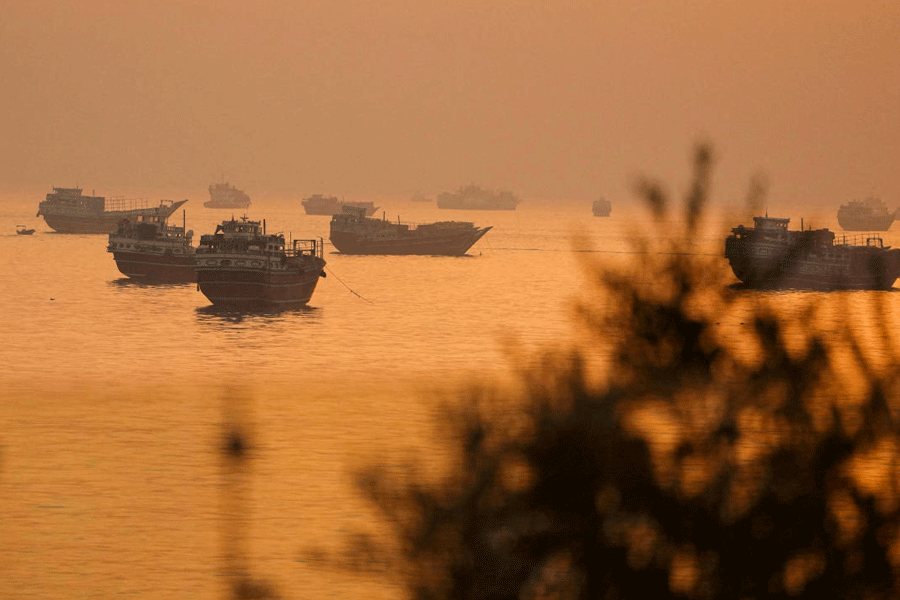
In his conversation with the Omani Sultan, Modi underlined the need for free navigation through the Strait of Hormuz while reiterating India’s condemnation of violations of Oman's sovereignty.
He also appreciated Muscat’s efforts to facilitate the safe return of thousands of people, including Indians.
"India and Oman stand for safe and free navigation through the Strait of Hormuz," Modi said.
Following his phone call with French President Emmanuel Macron, Modi emphasised the "urgent need for de-escalation" and a return to dialogue and diplomacy.
An Israeli strike on Iran’s South Pars gas field on Wednesday triggered Iranian retaliation targeting key energy infrastructure across the Gulf.
Strikes were reported on Qatar’s LNG hub at Ras Laffan, Saudi Arabia’s ARAMCO facilities, and oil fields in Oman, the UAE and Kuwait.
New Delhi warned that such attacks would further destabilise an already uncertain global energy market.
At his weekly briefing, MEA spokesperson Randhir Jaiswal said the strikes on energy installations were “deeply disturbing” and risk worsening the global energy scenario.
"Such attacks are unacceptable and need to cease," he said, without naming any country.
Responding to concerns over supplies, Jaiswal said India remains in touch with multiple stakeholders to safeguard energy security while ensuring the safety of Indian nationals in the region.
The latest escalation has pushed crude oil prices to $115 per barrel.
Domestic LPG worries persist
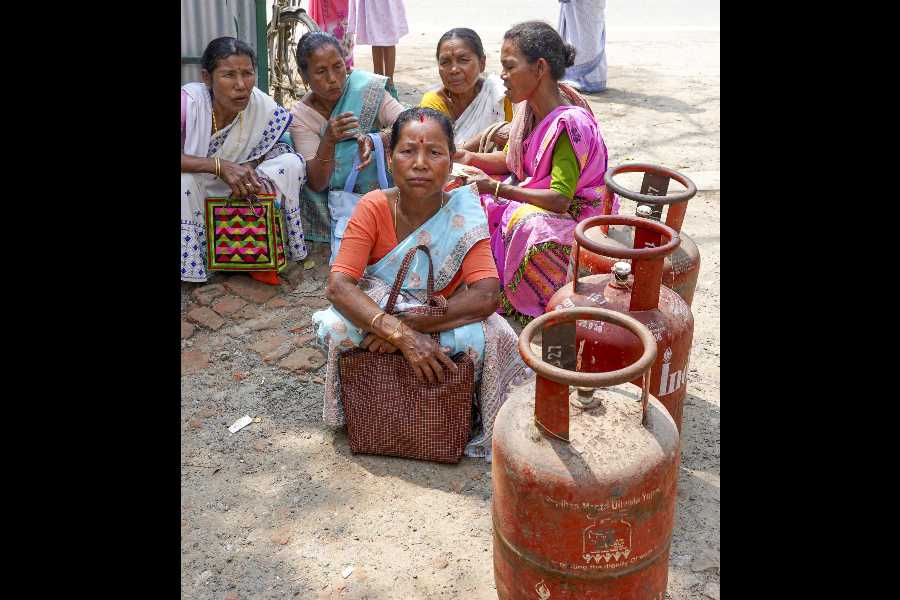
Bookings for domestic LPG refills are now nearing pre-war levels, but supply concerns continue amid restrictions on commercial consumers such as hotels.
Before the February 28 military strikes by the US and Israel on Iran, India’s 33 crore LPG consumers booked around 55 lakh cylinders daily on average. The subsequent disruption of the Strait of Hormuz — which accounts for nearly 60 per cent of India’s LPG imports — led to curtailed supplies for commercial users and triggered panic buying among households, with bookings peaking at 87.7 lakh on March 13.
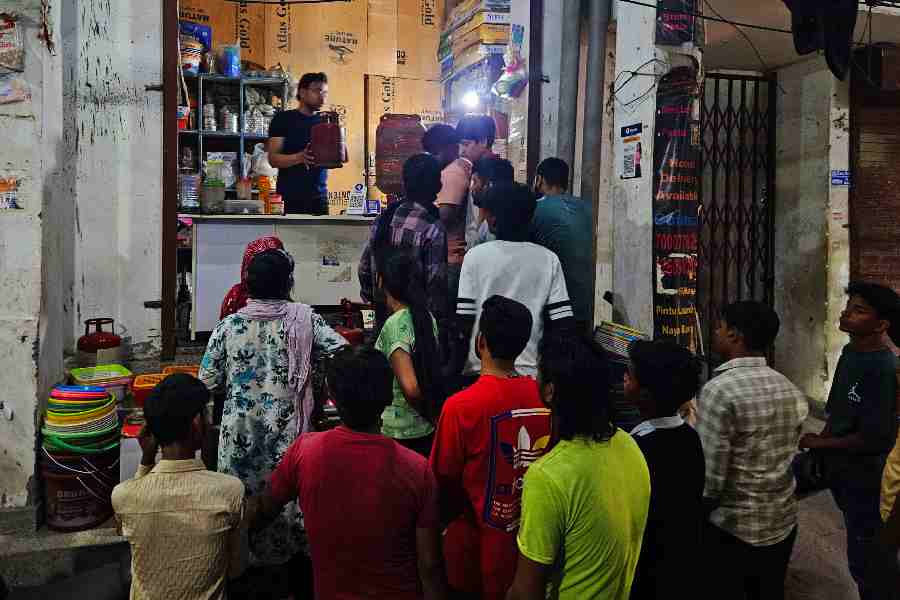
Demand has since eased to about 56–57 lakh bookings per day as of March 18, according to Sujata Sharma, joint secretary in the ministry of petroleum and natural gas.
"Panic booking is coming down," she said, adding that available supplies continue to be prioritised for domestic households.
She cautioned that the LPG situation “remains worrisome”, even though there is no complete dry-out at distributor levels.
Sharma noted that domestic LPG production has risen by over 40 per cent in the past two weeks, and public sector oil marketing companies are now making deliveries at near pre-war levels.
"Our supply has not dipped. Some days it has been higher than pre-war levels. On March 18, 54.91 lakh cylinders were delivered against bookings of over 56 lakh," she said.
Despite these improvements, ground-level disruptions persist.
In Shimla, Himachal Pradesh Assembly’s primary caterer Hotel Holiday Home has switched to firewood chulahs to maintain operations during the ongoing budget session.
The kitchen continues to serve over 500 legislators, staff and guests daily, while several other hotels remain temporarily shut due to supply constraints.
The political fallout has also intensified, with Opposition parties and the ruling BJP trading accusations over the crisis. After protests by the Bihar Congress in Patna, state industries minister Dilip Jaiswal claimed there was no shortage of LPG cylinders, attributing long queues to “misleading propaganda” by the Congress.
Congress leader Madan Mohan Jha countered that there is growing desperation among consumers. “If there is no shortage, what explains the long queues? People are willing to pay up to five times the actual price,” he said.