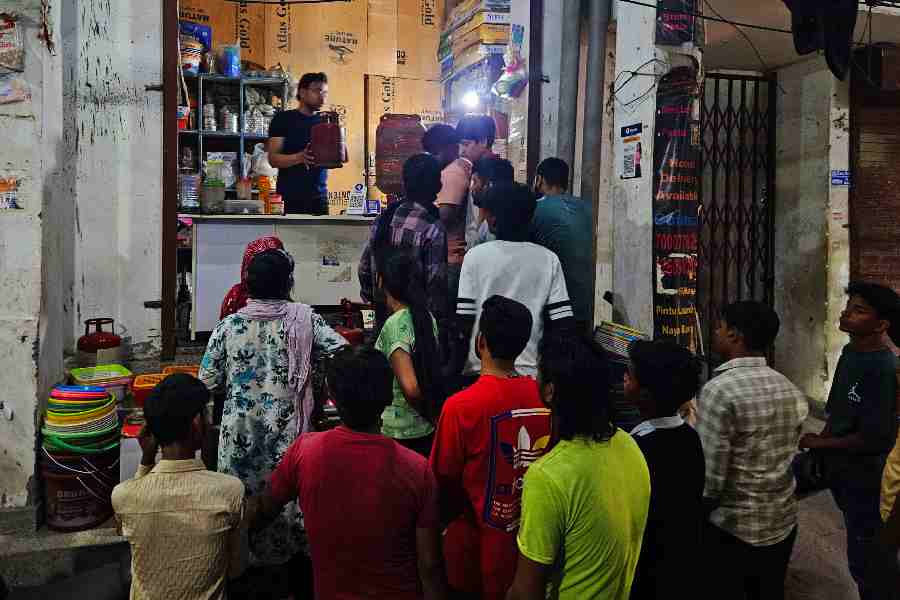
The queues have thinned.
Outside liquefied petroleum gas (LPG) agencies across the National Capital Region, the long, snaking lines that had spilled onto the streets have receded to manageable clusters.
The air, too, feels familiar again — tinged with the smoke of roadside kebabs and frying oil. On the surface, the crisis appears to be easing, helped in part by the arrival of the LPG tanker Nanda Devi, which docked at a Gujarat port after traversing the Strait of Hormuz, with more on the way.
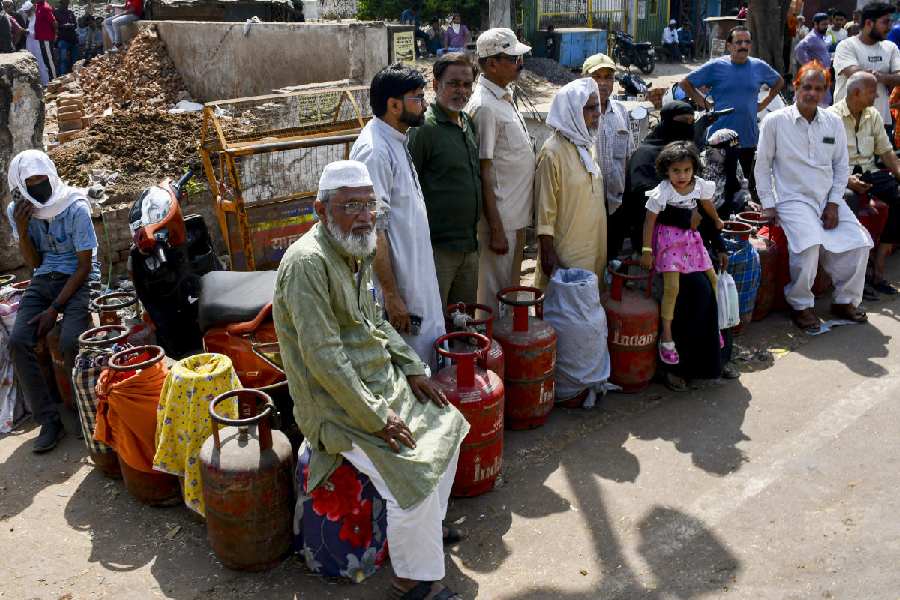
But beneath this return to routine, the shortage persists in quieter, less visible ways.
In back alleys and informal networks, a parallel economy has taken hold. Black-market operators, wary of an intensified police crackdown, have adapted rather than disappeared. Transactions that were once conducted openly are now routed through personal contacts and layers of discretion.
If you find yourself in dire need of LPG or cooking gas and can’t afford to wait, then what you need are either contacts or sheer grit to scope out a black marketeer.
“It used to be quite easy to get your cylinders refilled in black, but the police have been conducting raids,” a person who bought an LPG cylinder in black tells The Telegraph Online.
“So, now, only if you go through a contact or you are from the locality itself can you get it black.”
The price of that access has surged. A domestic cylinder refill in the black market now costs upwards of Rs 3,500, according to multiple buyers.
A fully pre-filled cylinder can command nearly double that amount. Some traders claim they themselves are procuring cylinders at inflated rates, citing the ongoing shortage to justify steep markups.
Outside gas supply shops, people allege that the supply shops have sold some cylinders in black. The shopkeepers naturally deny it. They say that one will need to wait at least 24 hours after filling up their form to get any update on when they can get their cylinder.
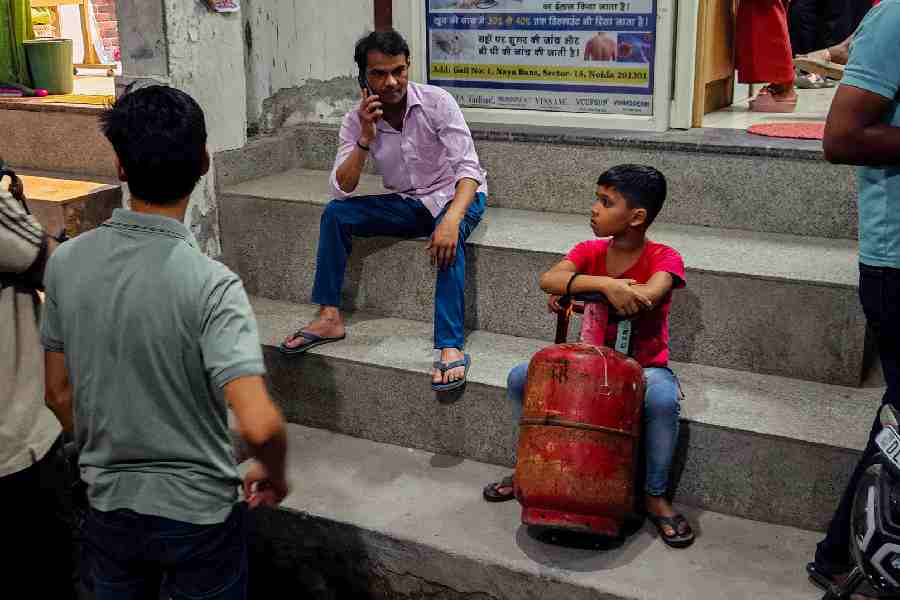
A little boy is waiting for his turn to get the cylinder filled. Picture: Ribhu Chatterjee
To stem diversion, companies have tightened verification protocols. Customers must now present identification, typically an Aadhaar card, and complete additional documentation before their requests are processed.
The measures, officials say, are meant to ensure equitable distribution. On the ground, they have also had the effect of slowing access.
A resident of Noida, who claimed to be associated with a gas supplier, said: “You show your Aadhaar card and fill out the form at the shop and come and tell me. We will figure something out for you.”
But if one asks around enough, one will find the most unsuspecting people who can get you gas. For example, a senior citizen in his late 60s who is the caretaker of a temple in one of Noida’s villages, said he could get gas for Rs 4,000 as long as a cylinder is provided.
Upon giving the money, he takes you to a repair shop where cylinders and other household stuff are repaired, and that person fills the gas for you while the two people split the money unequally.
Several residents recounted instances of being promised quick refills, only to be left waiting — or worse, defrauded. In a market operating beyond regulation, there is little recourse.Delhi Police on Tuesday arrested a man in Jamia Nagar as part of their crackdown on the black marketing of LPG cylinders and seized 62 cylinders — 48 filled and 14 used — along with a pickup van used for transporting the cylinders.
Meanwhile, several users have claimed online that a delivery has been marked in their name without them receiving a cylinder.