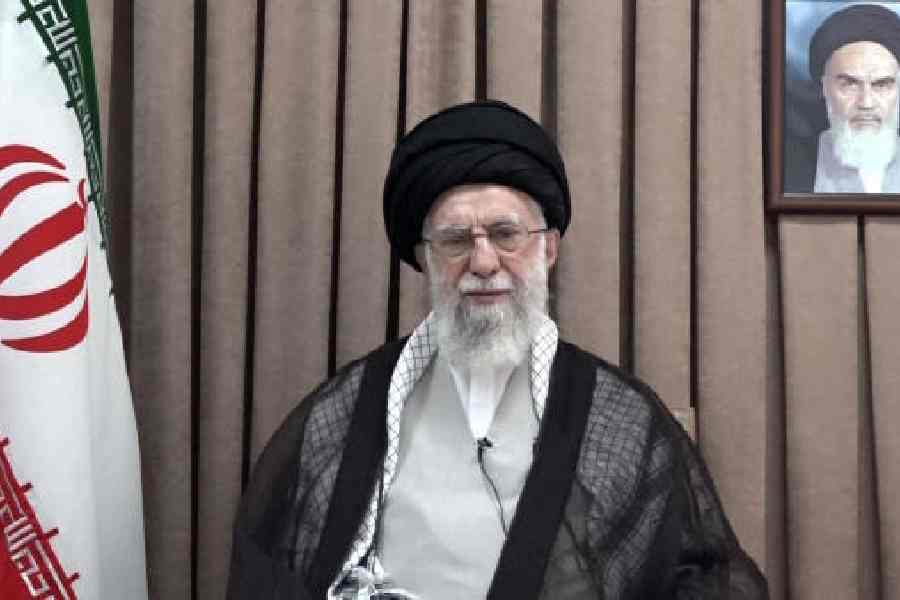
Ayatollah Ali Khamenei, who in more than three decades as Iran’s Supreme Leader transformed the Islamic Republic into a regional power while brutally crushing dissent at home and maintaining unswerving hostility towards the US and Israel, died on Saturday during US and Israeli military strikes on his country. He was 86.
He is survived by his wife, Khojasteh Bagherzadeh, and their six children.
At his death, Khamenei was the longest-serving head of state in West Asia, a tenure that had antagonised six American Presidents. He left behind a country under attack, a fractured regional network of proxies, and a population that had, for years, been taking to the streets to demand his removal.
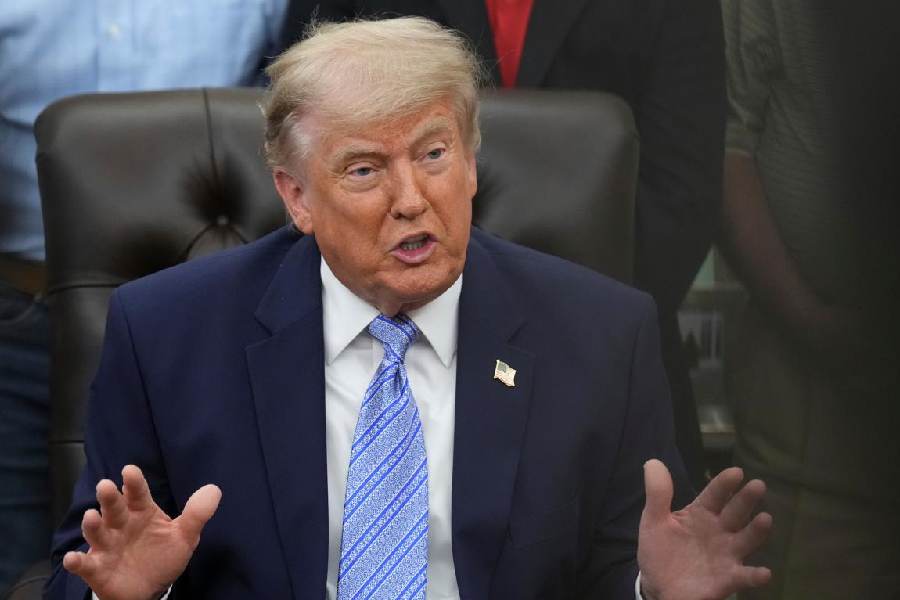
President Donald Trump announced the death on Truth Social, describing Khamenei as “one of the most evil people in History”. Iranian state media later confirmed he had been killed.
As the Islamic Republic’s second Supreme Leader, Ayatollah Khamenei cemented and expanded its hardline Islamist and anti-western policies, shaping the nation’s Islamic revolution far more than its founder, Ayatollah Ruhollah Khomeini, who held power for just a decade — most of it consumed by a devastating war with Iraq.
“Khomeini led a revolution,” said Vali Nasr, a professor at Johns Hopkins University. “Khamenei led a state.”
Iron-fist reign
At home, Khamenei ruled with absolute authority. He blocked attempts at moderate reform, labelled public demands for change as western-orchestrated “sedition”, and crushed dissent with arrests and executions. He vastly expanded the Islamic Revolutionary Guards Corps, whose intelligence wing served as a powerful instrument of repression. His network of appointees, informers, security forces, morality police and a plainclothes militia known as the Basij kept the population under tight surveillance.
Mass protests erupted repeatedly during his tenure — in 2009, 2017, 2019 and 2022 — and each time, security forces crushed them with violence. The 2009 Green Revolution, sparked by a widely disputed presidential election, was particularly damaging to his reputation among Iran’s urban middle class.
The protests of 2022, triggered by the death in custody of Mahsa Amini, a 22-year-old woman detained for allegedly violating the country’s mandatory headscarf law,
became a nationwide uprising. Women across Iran removed their headscarves in public and chanted “Women, life, freedom”. The authorities killed hundreds and arrested thousands. The movement eventually faded, but it left deep scars.
The most lethal crackdown came in January 2026, when Khamenei ordered security forces to fire on protesters who had initially taken to the streets over economic grievances. The Iranian government acknowledged more than 3,100 deaths; human rights organisations put the toll above 6,000. As he had done before, Khamenei blamed foreign enemies for provoking the unrest.
Regional influence
Abroad, Ayatollah Khamenei constructed what he called an “axis of resistance”, training and arming allied militias in Gaza, Iraq, Lebanon and Yemen to extend Iran’s reach across the region, threaten Israel and challenge Saudi Arabia for dominance in West Asia. The American-led invasion of Iraq in 2003, which toppled Sunni dictator Saddam Hussein, gave Iran an opening to arm Shia militias and back Shia political parties, cementing Tehran’s clout in Iraqi politics.
When the Arab Spring uprisings swept the region in 2011, he dispatched militia forces to Syria to prop up President Bashar al-Assad — though that effort ultimately failed when rebels toppled Assad in late 2024.
After Hamas led its devastating assault on Israel in October 2023, killing 1,200 people and taking 250 hostage, Khamenei praised it as “a decisive blow to the Zionist regime”.
His worldview was defined by implacable hostility toward the US, which he called “the great Satan”, and Israel, which he described as “a cancerous tumour that must be removed”. Yet for most of his rule, he avoided direct military confrontation with either, preferring to operate through proxies.
Nuclear stand
Iran’s nuclear programme became the most consequential and contested dimension of Ayatollah Khamenei’s rule. He insisted it was peaceful and sovereign, issuing a religious edict in 2003 banning nuclear weapons. Western and Israeli intelligence agencies disputed those assurances, arguing Iran was steadily narrowing its “breakout time” to produce a bomb.
After years of pressure and diplomacy, he grudgingly backed the 2015 nuclear deal brokered by President Barack Obama, which restricted Iran’s enrichment
activities in exchange for sanctions relief. When President Trump withdrew from the agreement in 2018 and reimposed sweeping sanctions, Iran resumed enrichment. Within a few years, it had accumulated enough enriched uranium to produce at least one nuclear warhead, should it choose to do so.
In 2025, Trump again sought a nuclear accord. Khamenei allowed negotiators to engage but refused to concede Iran’s right to enrich uranium. Before a deal could be reached, Israeli strikes that June killed key military officials and scientists and damaged nuclear facilities.
Accidental leader
In some ways, Khamenei was an unlikely supreme leader. Born on April 19, 1939, in Mashhad, the second of eight children of a mid-ranking cleric, Sayyid Ali Husseini Khamenei was educated at Islamic seminaries from the age of four. He came under the influence of Ayatollah Khomeini at 19 and became a devoted revolutionary, serving as a secret courier and enduring six arrests by the Shah’s secret police.
He became President in 1981 — only after the previous incumbent was assassinated — and served two terms. His rise to Supreme Leader after Khomeini’s death in 1989 was not preordained. He lacked the requisite religious credentials, but was designated an ayatollah overnight and the constitution was amended to remove the requirement that the Supreme Leader hold the highest clerical rank.
His tenure was marked by policy failures that cost Iranian lives. During the Covid-19 pandemic, he banned American and British vaccines and insisted Iran would produce its own, a decision that likely contributed to more than 100,000 deaths. When a Revolutionary Guards officer accidentally shot down a Ukrainian passenger jet in January 2020, killing all 176 aboard, his government denied responsibility for three days before mounting evidence made the lie impossible to sustain.
“He was arrogant, literate, obdurate, revengeful, unable to accept mistakes, unwilling to make concessions and given to conspiracy theories,” said Abbas Milani, director
of Iranian studies at Stanford University. “His policies led to Iran’s isolation internationally and to sclerotic despotism at home.”
After more than 35 years in power, Ayatollah Khamenei had shaped the Islamic Republic in his own image.
Written from a report in the New York Times News Service