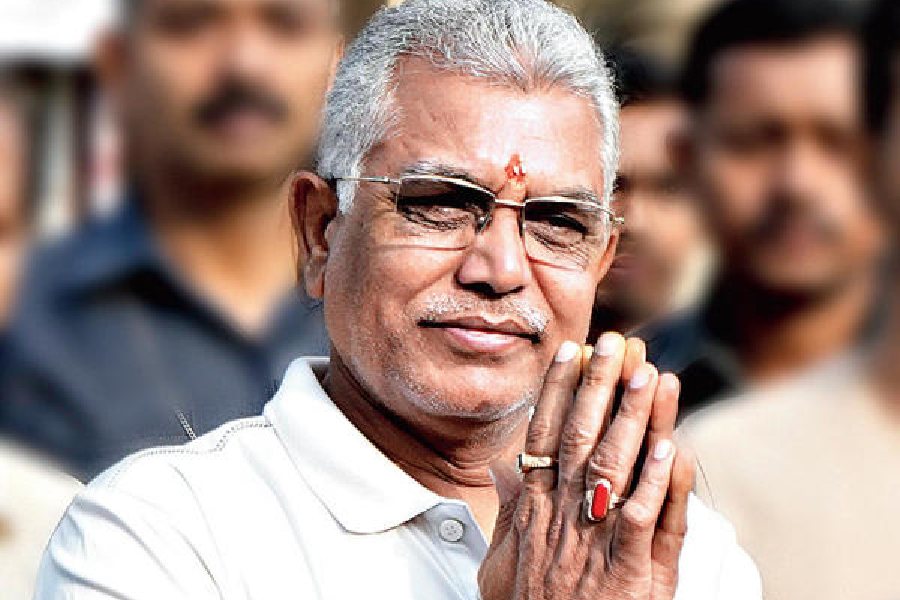

Barry Hart, professor of conflict management in Virginia, US, folded his hands reverentially in a namaste. Having been a hippie in the Himalayas during his salad days, he was familiar with Indian cultural nuances and had greeted me thus during my entire stay on the campus. As I bid my academic advisers farewell after my research stint, Barry (American professors are called by their first names, as I had learnt with a dose of "culture shock") chatted with me till the door and, about to do a namaste again, asked, as if on impulse: "Can I give you a hug?"
It had taken me a while to adjust to the distinct code of conduct in the US, where strangers on the street greeted me with a "Hi, how are you doing?" or students exchanged hugs every time they met. Unlike the distinctly formal atmosphere at Yale, the Center for Justice and Peace building was multi-national, warm and vibrant. The classrooms were filled with students from rival countries: Israel-Palestine, Congo-Burundi, Syria-Lebanon, Bosnia-Serbia and, of course, India-Pakistan. Away from the borders of conflict, a hug was the handshake.
In Calcutta, during our years of study at Jadavpur University (JU), we had revelled in the freedom of expression. Shedding the pride and prejudices of schooldays, it was this campus that had catalysed our sense and sensibilities as young adults. There was a desire to rebel against social fetters; expressions of it ranged from the outrageous to the mundane: smoking, drinking, drugs, PDA, scanty attire and taking to the streets with placards... it all came in a day's work for most. It continues to be a stimulating, creative campus with the brightest minds, inspiring independent thinking and progressive opinion.

Not surprisingly, this university spawned the Hok Kolorob (let there be polyphony) movement in 2014, the possible trigger for the Hok Alingan (let there be embrace) exercise (or is the Prime Minister the inspiration?) over this week's protests on the "moral policing" by co-passengers after a couple was found hugging on Calcutta's Metro rail. The incident reverberated on social media, sparking debate and igniting protests in archetypal Calcuttan passions. As a regular traveller on the tube, I have noticed youngsters indulging in PDA of late, often furtively glancing around to see if anyone is watching.
When Metro Railway issued a directive seeking acceptable behaviour, there was talk of our "cultural heritage" being besmirched. It was possibly this heritage that I had carried with me halfway around the world, across the Indian and Atlantic oceans, that made me initially stiffen every time a fellow student greeted me with a hug. There were bleary-eyed morning hugs for the 8am class, the cheery lunchtime hugs, the tired twilight hugs while parting ways. While JU was liberal, the expressions were optional. In the US, it was the norm. It took weeks to acclimatise and transcend these cultural markers. Stereotyping is so inherent in us that a colleague called from Calcutta to warn me to stay away from Pakistanis!
Across all university campuses that I've traversed, racism thrives. Tacit but entrenched. It is quite commonplace to see students divided into groups: the Africans flocked together, the Asians generally kept to themselves, the whites preferred their ilk. The spontaneity of a hug was directly proportional to ethnicity.
As a fallout, my fellow Fulbrighter from Pakistan, a young bureaucrat, was clueless about cooking till I helped hone his culinary skills. There was so much common ground in our shared histories that the enmity on our border was rarely on our minds. But the conflict was not totally forgotten either; we never hugged.
On the eve of my departure in late February, it snowed for three days. Flights were cancelled and I had a three-hour ride to Washington Dulles. Transport went haywire, and who should come to my rescue but the Pakistani with his trusted car! Not only did he navigate the icy route with patience and dexterity, he lugged my heavy suitcase to the terminal. At the check-in counter, as we said goodbye, quite certain that we would never meet again, he reminded me that we were trained peace-builders. And throwing caution to the wind, he gave me a hug. No one in the crowded airport batted an eye. We were just two South Asians, sibling-like, bidding adieu. Thank God we were not on Calcutta's Metro rail.
Sudipta Bhattacharjee