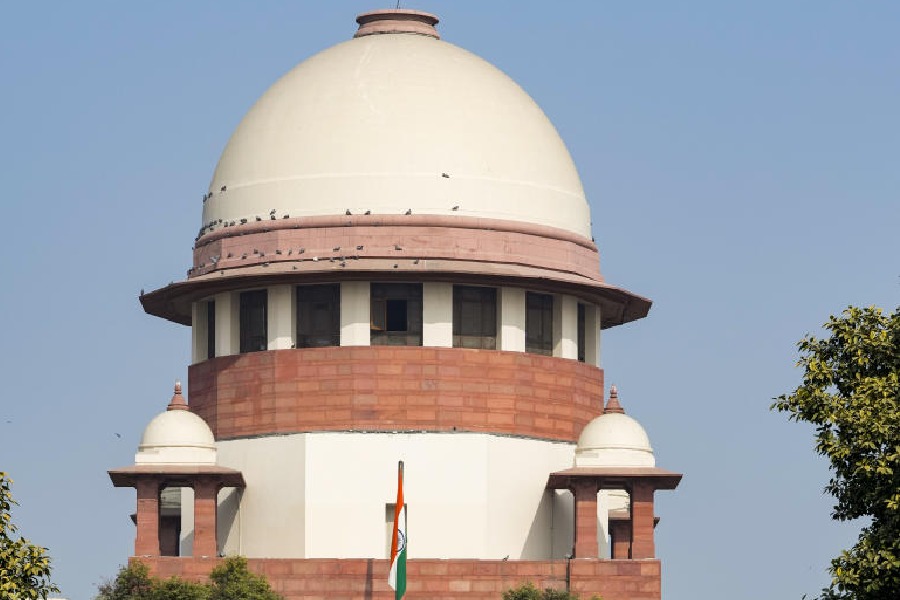
The Supreme Court of India on Monday dismissed a plea filed by the government of West Bengal against a Calcutta High Court order that refused to stay a probe by the National Investigation Agency (NIA) into incidents of violence in Murshidabad district in January.
A bench of chief justice Surya Kant and justice Joymalya Bagchi said the high court had taken a "balanced view".
The top court was hearing a petition filed by the state government challenging the February 26 order of the high court, which had declined to halt the NIA investigation.
During the hearing, the court referred to its February 11 order passed in a separate plea moved by the state government.
In that order, the apex court had asked the NIA to file a report in a sealed cover before the high court explaining the invocation of provisions of the Unlawful Activities (Prevention) Act (UAPA) related to terror acts in connection with repeated incidents of violence and unrest in Murshidabad.
While disposing of the state's appeal earlier, the bench had asked the government to approach the high court with its grievances regarding the NIA probe.
The court had also said the high court could examine the state government's challenge to the Centre’s decision to transfer the investigation to the NIA.
The bench had asked the agency what the basis was for invoking provisions of the UAPA to justify its probe into the violence in Beldanga in Murshidabad district.
The NIA, which was handed over the investigation by the Ministry of Home Affairs (MHA) on January 28, invoked Section 15(1)(a) of the UAPA in the case.
The provision deals with terrorist acts and can be slapped on whoever indulges in any act with an intent to threaten the unity, integrity, security, economic security or sovereignty of India or with an intent to strike terror.
The provision is attracted if "bombs, dynamite or other explosive substances or inflammable substances or firearms or other lethal weapons or poisonous or noxious gases" are used in terror acts.
The court had asked the NIA to place its justification for invoking this provision before the high court in a sealed report.
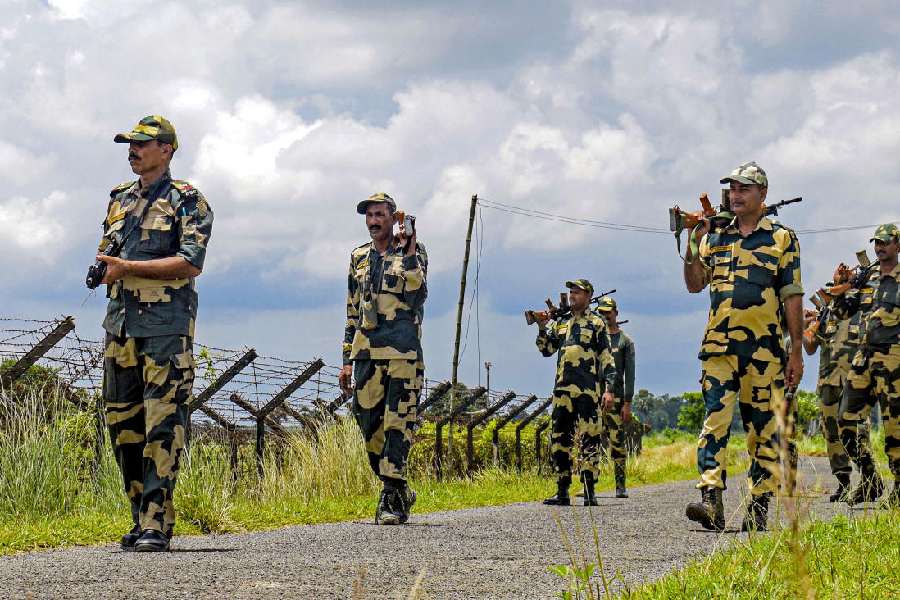
Appearing for the NIA, additional solicitor general S. V. Raju defended the agency’s decision, citing the use of deadly weapons and the proximity of Beldanga to the Bangladesh border.
The high court had earlier flagged the law and order situation in the district. On January 20, it expressed concern about repeated incidents of violence and unrest in Murshidabad and directed the police and the administration to ensure peace.
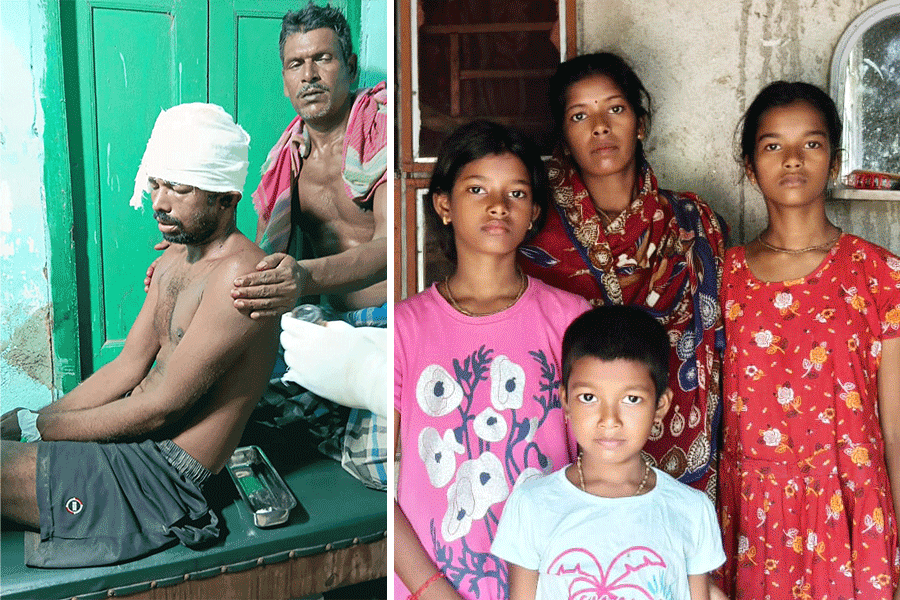
The unrest followed a series of protests earlier in the month. On January 16, demonstrators blocked National Highway-12 over the death of a Beldanga resident who was working as a migrant worker in Jharkhand.
The following day, on January 17, similar blockades were held over the alleged heckling of a Murshidabad resident working as a migrant worker in Bihar.