The academic council of the Indian Statistical Institute (ISI), Calcutta, met on Tuesday to evaluate the ISI bill. Several attending professors indicated that the council found no issues with the ISI 1959 Act, authored by Jawaharlal Nehru, which the bill proposes to abolish.
The teachers claimed that while the legislation states the council will be involved in initiating courses, it fails to specify the empowering authorities to carry out this task.
“On the contrary, under subclause 17, 2, D, of the ISI bill, a proposed overarching board of governors set above the academic council has been empowered to start and withdraw courses. This diminishes the role of the academic council,” an academic council member said.
Another member of the academic council stated that the board would be comprised of individuals appointed by the Union ministry of statistics and programme implementation, and that it would offer courses on the edge of pseudoscience, leveraging its “unchecked powers”.
“In the existing structure, the academic council recommends courses which the council, the apex administrative decision-making body, usually endorses. The council, which the bill seeks to replace with the board, never had the power to introduce or withdraw a course. But the board now smacks of a top-down approach, which goes against the notion of autonomy,” the academic council member said.
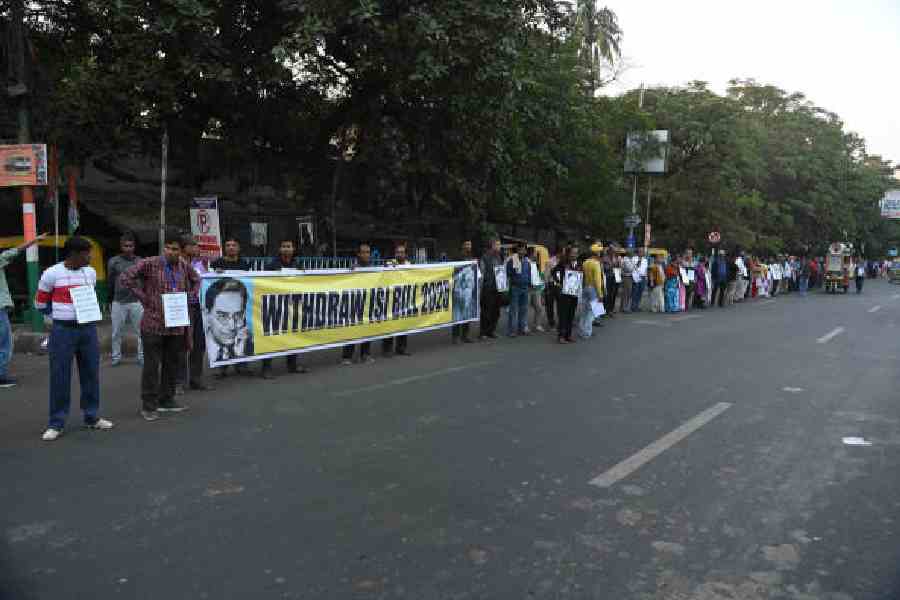
In its resolution on Tuesday, sources stated that the academic council flagged the loopholes of the bill and asked the council to address them in its meeting on January 24.
The powers and functions of the board of governors have been spelt out in clause 17 of the Indian Statistical Institute Bill, 2025.
An ISI teacher said the contentious sub clause 2D says the board “shall have the following powers, namely: (d) Establish departments, faculties or schools of studies at the institute, taking into account the recommendations of the management councils regarding the programmes and courses of study at the centre”.
The management councils are another proposed body that has been set above the different centres of the ISI.
The subclause “e” says the board will have the power to set up centres of studies in statistics and allied areas within the country, “under intimation to the central
government”, an ISI teacher said.
A professor who is an academic council member said: “The subclause ‘e’ seeks to bypass the academic council while setting up the centres of studies in statistics and allied areas.”
Calls and text messages to ISI officiating director Ayanendranath Basu went unanswered.
On December 26, the Union ministry, in its “frequently asked-answered questions” section of its website, remarked that the bill seeks to create a lean governance structure that will fast-track decision-making.