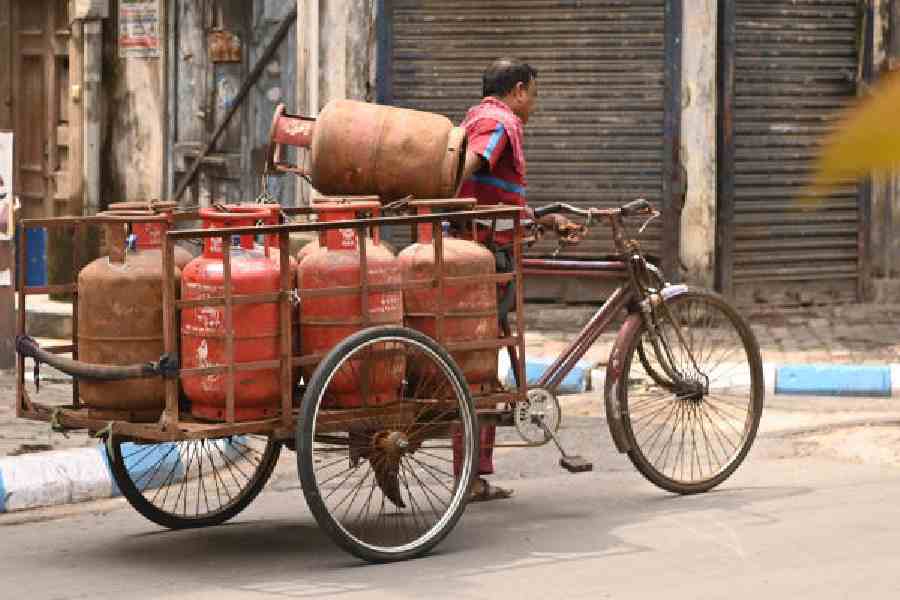
The steep rise in commercial LPG prices is expected to deal a severe blow to restaurants, eateries and other businesses that depend on the fuel for daily operations.
The Centre announced a nearly ₹1,000 hike in the price of commercial cooking gas on Friday, barely two days after the elections.
A standard 19kg commercial LPG cylinder now costs ₹3,202 in Calcutta, up from ₹2,208 — a jump of ₹994. This is the third and steepest increase in commercial cooking gas prices since February 28, when the US and Israel attacked Iran.
The price of autorickshaw LPG also rose by ₹6.44 per litre. A litre of auto LPG will now cost ₹89.40 in the city.
Industry insiders said the price rise, attributed to supply chain disruptions caused by the war in West Asia, had been imminent and was held back because of the state
elections.
“The supply is far from normal. The price of commercial cylinders has increased for now. In the coming days, we expect the same for domestic cylinders,” said Bijan Behari Biswas, spokesperson for the Indane LPG Distributors’ Association in Bengal.
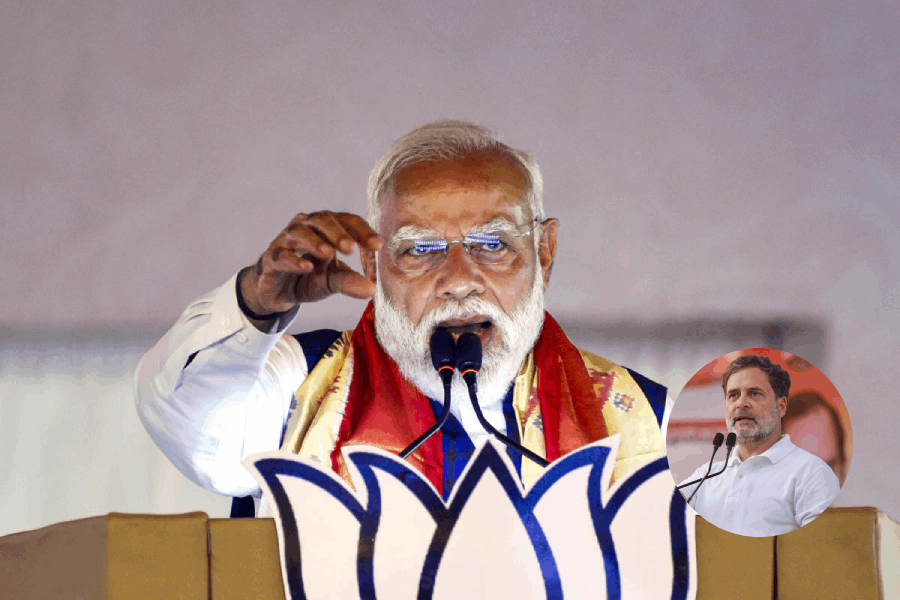
Opposition parties have targeted the BJP over the hike.
“Just as we had been warning, the anti-people BJP government increased the price of cooking gas as soon as the elections got over. BJP leaders and their sycophants should be answerable for this,” said Trinamool leader Kunal Ghosh.
While some restaurants and eateries have shifted to electric cooking, LPG remains integral to most. “The entire hospitality industry is already suffering because of the LPG crisis. A one-time hike of ₹1,000 is a blow that many smaller establishments will find extremely difficult to cope with,” said Sudesh Poddar, president of the Hotel and Restaurant Association of Eastern India.
Owners of at least three small eateries and roadside fast-food stalls said they cannot sustain operations without increasing food prices.
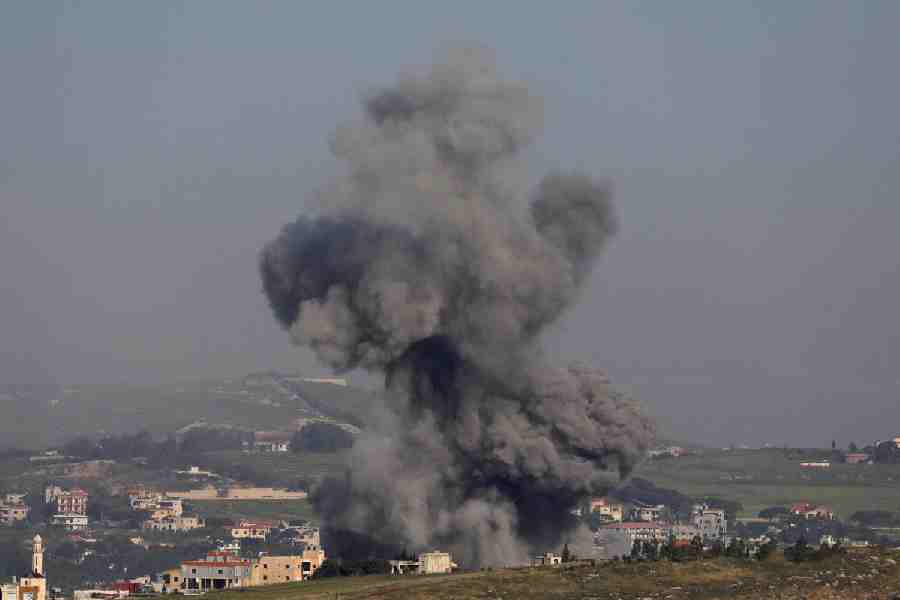
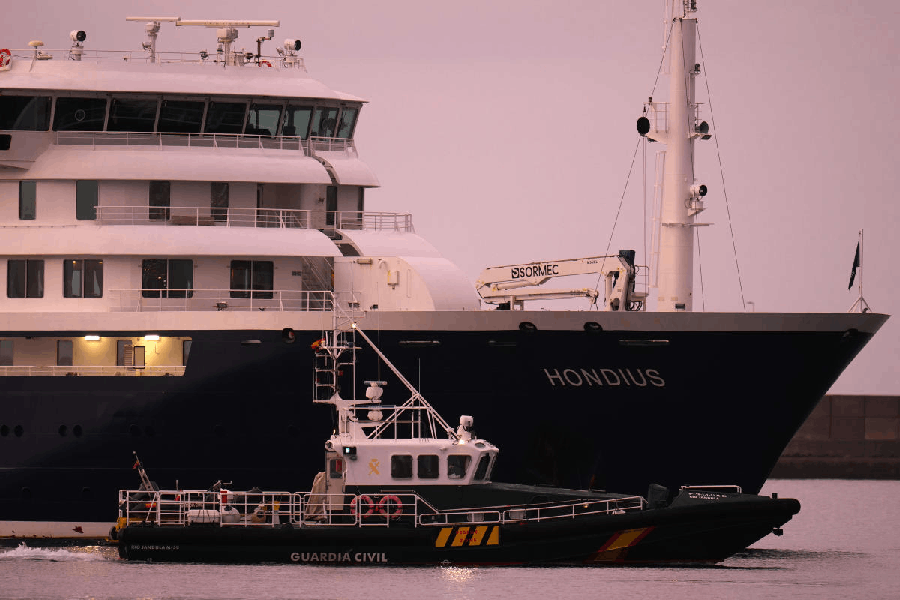
The Strait of Hormuz, the epicentre of the West Asia conflict, is effectively under a dual blockade. The US is enforcing a naval blockade on Iranian ports, while Iran has restricted shipping, creating an energy trade crisis. Only a fraction of the usual supplies meant for the Indian market is making its way through the strait.
This has led to a demand-supply mismatch.
For much of March, Calcutta faced a severe LPG shortage.
Following instructions from the Centre, oil companies had prioritised essential services — hospitals and schools — over commercial establishments. Availability of domestic LPG was also restricted, with a 25-day gap imposed between refill bookings in urban areas.
The curbs on supply to commercial establishments have since been lifted.
Several distributors said supply remained stable for most of the past month due to the elections, but they now fear a fresh dip.
“I have stock for two weeks. What happens after that is not clear,” said a distributor in the northern fringes of Calcutta.
Auto fuel
The price of auto LPG has been increased for the fourth time in less than two months, adding to the burden on operators across the city. Auto LPG now costs ₹89.40 per litre.
On March 1, the price was around ₹58 per litre; by April 2, it had risen to ₹82.96.
A section of autorickshaw operators said they were uncertain about the future. Fares have already been increased on several routes.
“We have asked our union leaders to arrange a meeting with vehicle owners to decide the next course of action.
How will we survive with such price fluctuations?” asked Asit Das, an autorickshaw driver on the Sovabazar-Ultadanga route.