The popularity of Calcutta Chinese food has soared in inverse proportion to the dwindling Chinese population in the city where they have been living since Governor-General Warren Hastings granted land for a sugar plantation around 1780.
The land went to Yong Atchew, the first Chinese settler. He settled at Achipur near Budge Budge.
Calcutta Chinese food is so popular that many Bengali families serve their own versions of “chow” using local ingredients. These gastronomic innovations have more to do with the heart than haute cuisine.
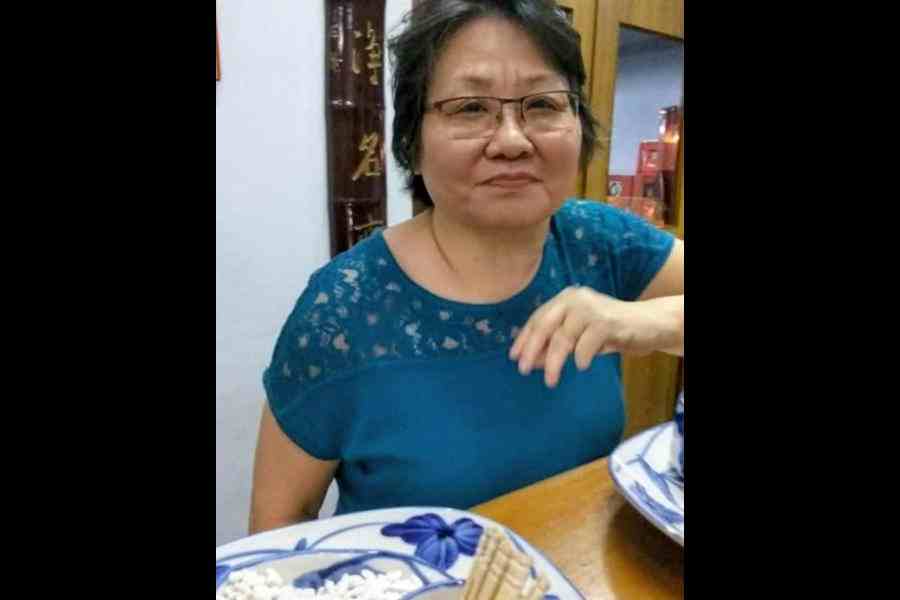
Lovers of Chinese food were saddened to learn about the death of Josephine Li Ying Huang at 71 on February 7.
As the matriarch of Eau Chew — a name cherished by gourmets — she had woven herself into the heartstrings of the city like the restaurant her family owned.
Dignified and polite, she was always a silent presence. Apart from Eau Chew’s famed chimney soup, steamed fish, dim sum and other Hakka delights that are not always available in the smaller eateries that operate around Bentinck Street, Phears Lane, Blackburn Lane, Chhattawalla Gully and Sun Yat Sen Street of former Chinatown, it is possibly the only restaurant that the same family has run since circa the 1920s.
The eponymous Josephine noodles is a lip-smacking dish that has nutritious goodies hidden in its gooey depths waiting to be discovered.
Like the once-thriving Jewish, Armenian and Parsi communities of central Calcutta, Chinatown with its pantile roof shanties, sprawling tenements, eateries and opium and gambling houses and temples had become such an integral part of this once-cosmopolitan city that it had found a place for itself in the popular detective fiction of Nihar Ranjan Gupta and in Mrinal Sen’s film Neel Akasher Nichey (1959) based on a story by Mahadevi Verma.
The Calcutta Improvement Trust largely demolished the old Chinatown in the 1960s.
Nanking — once a place for fine dining — fell into disrepute in later years, only to be revived in recent times to serve as a temple. Its first floor was always a chapel.
The best-known Chinese eateries, such as How Hua on Free School Street and Waldorf on Park Street, have disappeared.
The popular Chinese breakfast served near Tiretta market is there only in name. The Chinese mamas and patriarchs huddled in corners are no longer visible, and the food has lost its authenticity.
The popular Chinese grocery store closed down after the death of Stella Chen.
However, Dominic Lee’s Pou Chong Kim, which manufactures a wide variety of authentic Chinese sauces and noodles, continues to titillate our taste buds.
And Cei Vui restaurant opened in 2017 in the former Voi Ling club and temple dormitory that was founded in 1908. There are many other popular restaurants in Tangra where many Chinese people have shifted.
Eau Chew was always a no-frills joint with little to recommend it by way of decor. It is housed in an ancient tumble-down building at 12 Ganesh Chandra Avenue. A red-and-gold signboard announcing the name of the restaurant in prominent Mandarin characters hangs on its façade. The petrol station in front closed down long ago, and the pavement is occupied by squatters.
A short flight of rather tortuous stairs leads to the restaurant, decorated with typical Chinese prints.
As in all Chinese homes, the photographs of ancestors occupy a prominent place above the counter. It has a warm, homely ambience complemented by its elaborate and exotic menu that boasts everything from prawns, duck, mushrooms, pork, chicken, fish (bekti), crabs, meat and fish balls and baby corn, spinach and bean sprouts, all steamed and broiled and fried and seasoned with the most delectable sauces.
Musician and food writer Nondon Bagchi had written in his column Taste Case in The Telegraph in 1997: “Like most items in Hakka style cuisine, Chimney Soup is simple, light: the flavours stimulate the taste buds rather than assault them.”
And in conclusion: “The touch in the cooking was light and thankfully no attempt had been made to Indianise the food.”
The daughter of the family, Joanna Huang, used to run the restaurant in the 1990s. Now that the matriarch, Josephine Li Ying Huang, is gone, her son Joel and his young wife will hold the fort.