Two years ago, astronomers noticed one of the brightest stars in the neighbouring Andromeda galaxy had vanished after fading for nearly a decade.
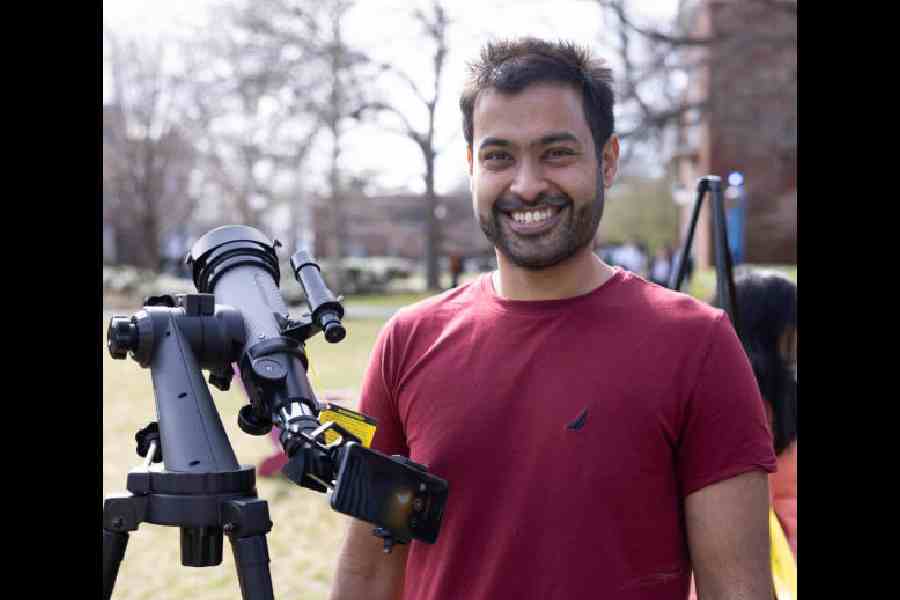
Now, Calcutta-born astrophysicist Kishalay De, an alumnus of St James’ School and currently at Columbia University, has helped solve the mystery, showing that the star collapsed directly into a black hole — without the usual supernova explosion.
De and his colleagues have found evidence that the star bypassed the explosive death astronomers expect from massive stars, confirming a decades-old prediction that some stars can skip the supernova stage — a phenomenon never conclusively observed until now.
“Stars with this mass have always been assumed to be destined to explode into a supernova — if that had happened, we’d have seen the explosion in Andromeda with our naked eyes,” De told The Telegraph. “Instead, this massive star quietly collapsed into a black hole. This suggests such events may not be rare outliers, but rather an alternative pathway in stellar evolution we have simply been missing.”
The findings were published on Thursday in the US journal Science.
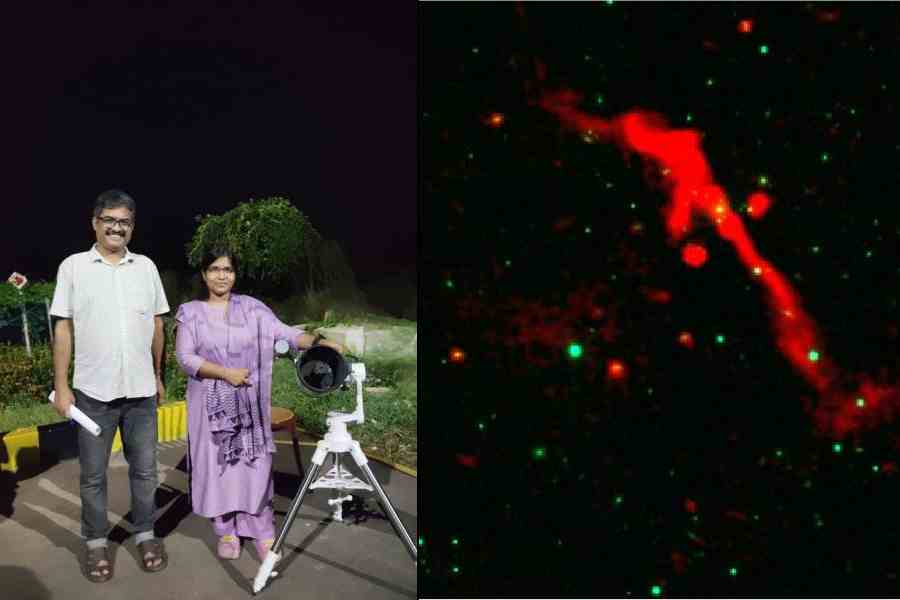
Telescopes around the world had captured images of the star, a luminous supergiant named M31-2014-DS1, for more than four decades. Located about 2.5 million light-years from Earth, the star briefly brightened in infrared light around 2014 — a sign it was nearing the end of its life — before fading rapidly.
De’s team compared archival observations to theoretical models predicting that when a massive star collapses directly into a black hole, its loosely bound outer layers are gently ejected, producing a brief infrared glow before vanishing.
“The combination of disappearance in visible light, the absence of any explosion, and the residual infrared glow supports our black hole interpretation,” De explained. “The remaining infrared glow comes from the star’s envelope falling into the newborn black hole — ultimately, the object will disappear into darkness.”
The 14-member team includes researchers from Caltech, Harvard, MIT, Princeton and other institutions. Their work provides crucial evidence to understand why some massive stars explode as supernovae while others implode directly.
De studied at Seventh Day Adventist School and St James’ School in Calcutta, then moved to the Indian Institute of Science, Bangalore, and completed his PhD at Caltech in 2021.