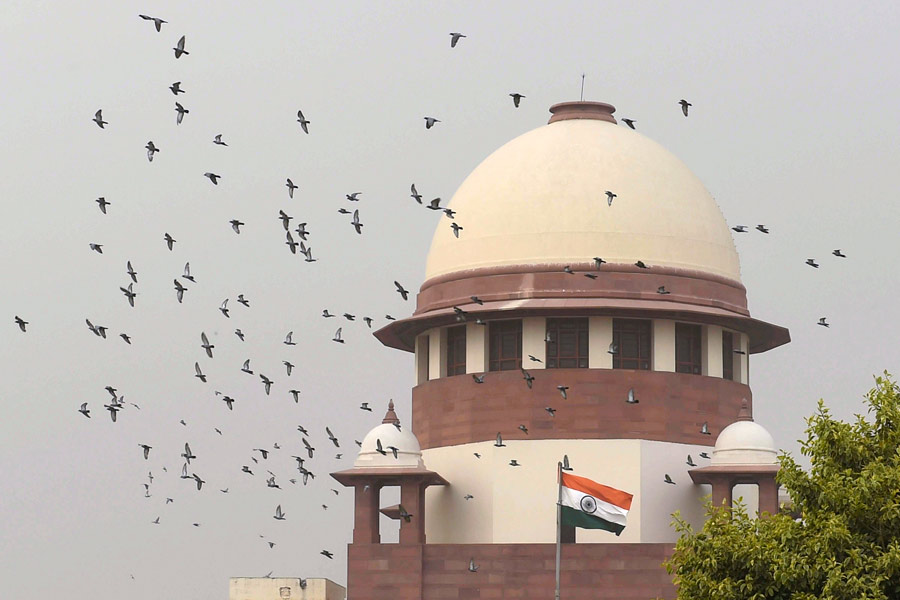
The Supreme Court on Thursday came down heavily on the growing “freebies culture”, observing that it was time to revisit such policies as they impede the country’s economic development.
Hearing a plea by the Tamil Nadu Power Distribution Corporation Ltd, which has proposed to provide free electricity to all consumers irrespective of their financial status, the top court said welfare measures must be balanced against fiscal prudence. The bench noted that it was understandable for states to extend support to the poor, but cautioned against indiscriminate largesse.
“Most of the states in the country are revenue deficit states and yet they are offering such freebies” overlooking development, a bench comprising Chief Justice Surya Kant and Justices Joymalya Bagchi and Vipul M Pancholi said.
The court underlined that excessive distribution of benefits without targeting the genuinely needy could undermine national economic growth. It said states should prioritise creating employment opportunities rather than offering universal subsidies such as free food, cycles or electricity.
The bench, however, issued notice to the Centre and others on the plea filed by the DMK government-led power distribution firm, which proposes to provide free electricity. The firm has challenged a provision of the Electricity Amendment Rules, 2024.
Raising broader concerns, the bench questioned the policy approach adopted by the state government.
“What kind of culture are we developing in India? It is understandable that as part of the welfare measure you want to provide to those who are incapable of pay the electricity charges,” the bench asked.
“But without drawing a distinction between those who can afford and those who cannot, you start distributing. Will it not amount to an appeasing policy,” the CJI asked.
The court also sought to know why the Tamil Nadu utility decided to ease its finances after the electricity tariff had already been notified.
“The states should work to open avenues for employment. If you start giving free food from morning to evening then free cycle, then free electricity then who will work and then what will happen to the work culture,” the CJI said.
The bench observed that instead of focusing on long-term development projects, states often limit themselves to two functions — paying salaries and distributing largesse.