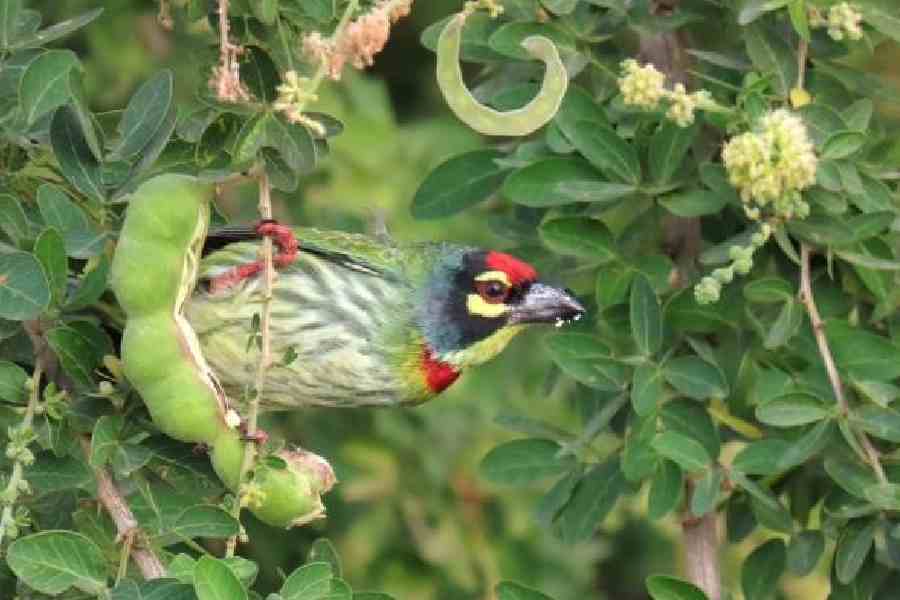
The fourth edition of Poila Baisakh Bird Count, a citizen-science initiative to document birds across Bengal during this time of the year, kicked off on Friday. It will continue till Sunday.
Birdwatchers can register by logging into the eBird mobile app.
“This is the breeding season for resident birds. Besides, some of the winter migrants are still around. This is a great time to count both,” said Kanad Baidya, a founder member of the Birdwatchers’ Society, which is organising the Poila Baisakh Bird Count jointly with Bird Count India.
This is the only summer bird count exercise across Bengal.
“... Poila Baisakh is a time of celebration in Bengal, and we use the occasion to motivate birdwatchers to go out, observe, and list the birds they find,” Baidya said.
Participants can track breeding and migrating species during this period by listing birds they see or hear. “There is provision to upload pictures, video or audio clips in the mobile app,” said Baidya.
In 2025, the Poila Baisakh Bird Count had participation from all 23 districts of Bengal. “We had high participation from Darjeeling, Kalimpong, Birbhum and South 24-Parganas last year,” Baidya said.
There were 937 checklists, and 523 species were recorded in the 2025 count. “A checklist can be prepared every 15 minutes,” he added.
The same species may appear in multiple checklists. There is also a risk of incorrect identification.
Reviewers across the state and the country carefully examine the checklists before the final report is prepared after the three-day count.
The inspiration for the bird count during Poila Baisakh came from the Great Backyard Bird Count, which is conducted in multiple countries in February. That count focuses on migratory birds, most of which would have left by now.
The organisers said that patterns in bird sightings across different areas and environments will emerge over time.
“After a decade, we will be in a position to say what kinds of birds are seen where during this time of year, along with documentation of their breeding behaviour,” an organiser said.
The records can provide valuable insights into how climate change may be influencing migration patterns and breeding behaviour.