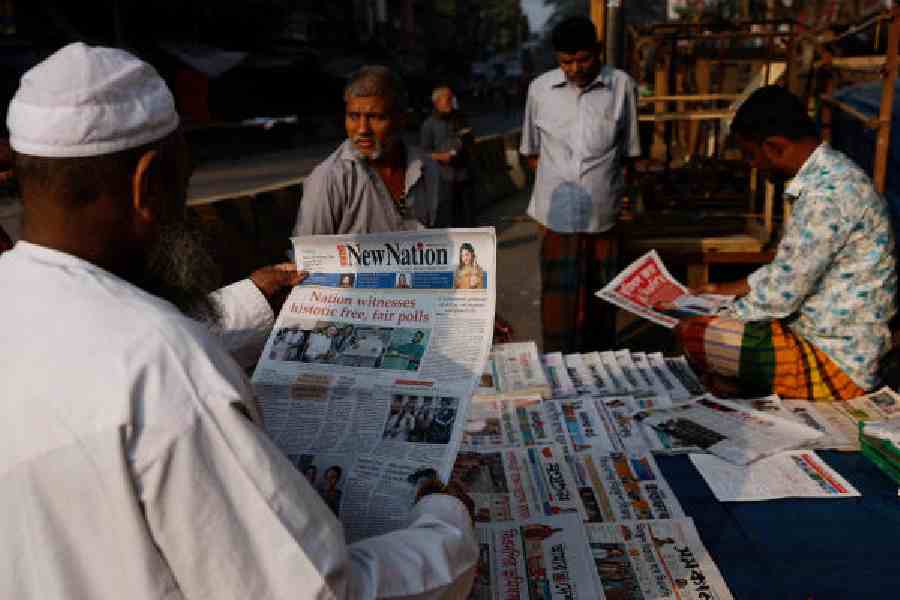
The Bangladesh national election results have raised hopes on this side of the border that cultural exchanges, business, and the sense of brotherhood between the two Bengals will return to where they belong.
The turmoil in Bangladesh began with the ouster of Sheikh Hasina in August 2024. Among the first to be affected were Bengali films, which faced an “unofficial ban” on releases from Bengal in the neighbouring country.
The first casualty was Padatik, a film on the life and times of Mrinal Sen, directed by Srijit Mukherjee. The title is borrowed from a film of the same name made by Sen. The new film was highly anticipated in Bangladesh because it stars Chanchal Chowdhury, one of the country’s finest actors, as Sen.
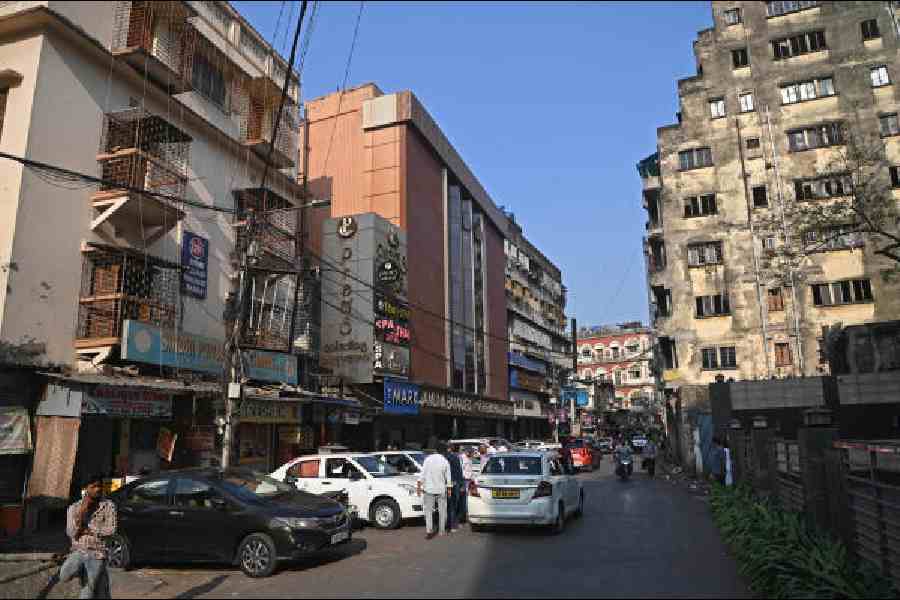
Mukherjee’s film was scheduled to release in Bangladesh on August 16, 2024, a day after its India release, but that never happened.
“A global market for Bengali films is incomplete without the audience in Bangladesh. The Bengalis on both sides of the border need each other. I hope the elections pave the way for stability. I hope Bengali films travel across the borders seamlessly,” said Firdausul Hasan, the producer of the film.
Hasan’s films have featured celebrated Bangladeshi actors even during the turmoil, yet none could be released in Bangladesh. With a new government, Hasan hopes that will change.
In December last year, vocalist Arman Khan, son of the late maestro Ustad Rashid Khan, cancelled his trip to Bangladesh for a classical music event at a club in Dhaka as a symbolic protest.
Arman, 21, cited the continuous violence and abuse directed at Hindus in Bangladesh. He added that he could not imagine a human being damaging musical instruments.
Chhayanot, a cultural centre in Dhaka’s Dhanmondi, had been ransacked by a mob a week earlier, and several musical instruments were destroyed. The centre had been set up in the 1960s.
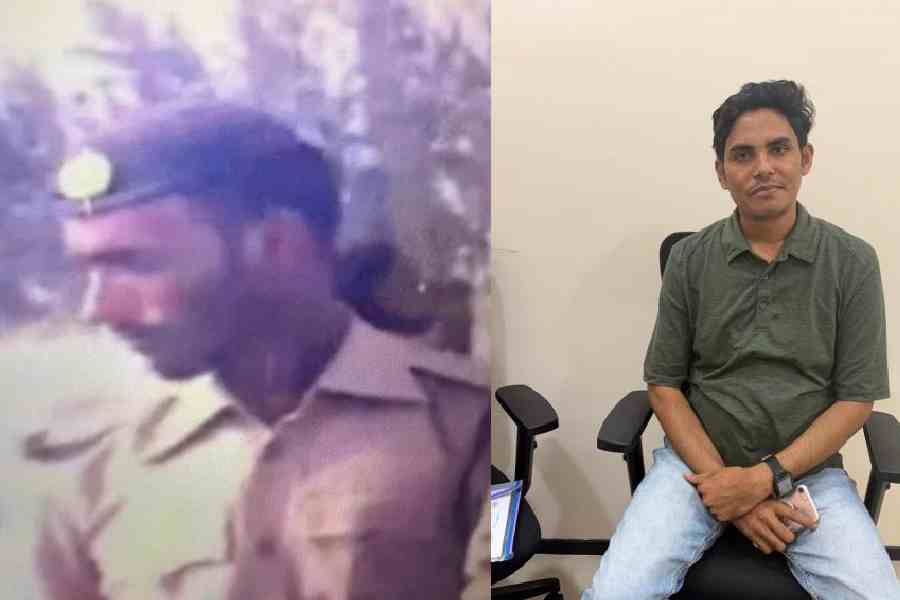
On Saturday, Arman’s mother, Joyeeta Basu Khan, better known as Soma, expressed hope that her son would perform in Bangladesh again.
“In 2019, Arman visited Bangladesh for the first time, accompanying his father to a concert. He received so much love. As a people, Bangladeshis are naturally inclined to music, often with more vigour than their counterparts here. I remember visiting Bangladesh with my husband in 1994. The love that good musicians receive there is unparalleled,” she said.
“The events of the past couple of years were deeply disturbing. When my son refused to visit, I supported him completely. Musicians have only one religion, that of music. That is what I learnt from my husband. Now, with an elected government whose leader has promised an inclusive Bangladesh, I wish my son could perform in the Bangladesh that I know,” she added.
Dola Banerjee, another singer who frequently travelled to Bangladesh until the violence erupted, also hopes for a return visit soon.
“The respect that an artiste receives in Bangladesh is special,” said Banerjee, who was previously felicitated by the Artist Journalist Foundation of Bangladesh (AJFB).
A 40-year-old man, who requested anonymity, spent around six years in Dhaka working with a company exporting grains to Bangladesh. He has since shifted his base to Australia but still visits Bangladesh for work, most recently last month.
Unrest is bad for business, he said, expressing hope that a Bangladesh Nationalist Party government with a strong majority would bring positive change.
He added a caution: “The leaders sit at the top, but a country is run by the government machinery. That machinery belonged to the Awami League for almost two decades. A smooth transition to a different machinery will take time.”