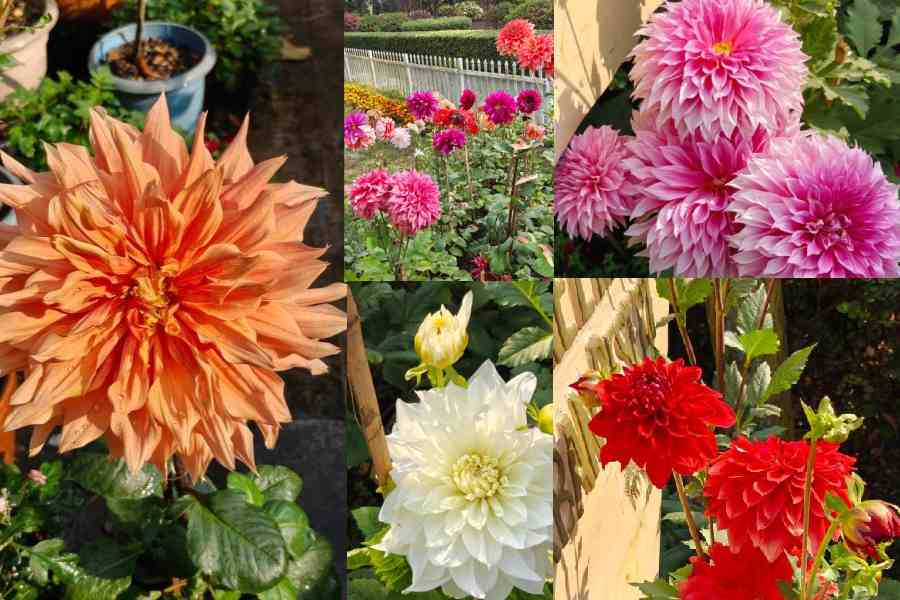
Dahlias are like the jewel in any winter garden’s crown. Huge, colourful, flamboyant...green thumbs work tirelessly, but happily, to make these flowers bloom.
Their beauty, size, and vibrant colour make it one of the most sought-after ornamental blooms amongst gardeners, florists, and flower lovers alike. From simple bloom types with rounded, flat petals to pom-pom blooms with tightly rolled petals, the eclectic textures and exotic beauty of Dahlias are a sight to behold. Blossoms can range from two inches to 12 inches in diameter, and a stunning cut flower has a vase life of four to seven days.
Dahlias are perennial plants and are available in many colours and more than a dozen different flower styles and sizes. The flowers are incredibly diverse, with colours including white, yellow, orange, red and purple of varying shades. Dahlia’s flower structure also varies considerably, including simple star arrangements, complex spherical balls and flowers resembling water lily blooms. They grow from underground tubers, which can be split to create new Dahlia plants. There are 42 species of Dahlias available, where some have green herby stems and others have woody stems.
The Dahlia plant is a genus of the Asteraceae family. A defining feature of this family is their compound flower heads, called capitula, which may contain hundreds of tiny individual florets surrounded by a coil of protective bracts or leaves. It also includes flowers such as Sunflowers, Mums, and Zinnias.
Dahlias are native to central America and Mexico, originally grown by the Aztecs as a food crop for their starchy root tubers. Today, it is the national flower of Mexico. The Dahlia was named after naturalist Anders Dahl by Antonio Jose Cavanilles, director of the Royal Gardens of Madrid, in 1791.
The numerous varieties of this flower are grouped into 14 types based on flower shape — Mignon Dahlias, Single Dahlias, Peony-Flowered Dahlias, Orchid Dahlias, Pompom Dahlias, Ball Dahlias, Cactus Dahlias, Semi Cactus Dahlias, Decorative Dahlias, Dinnerplate Dahlias, Collarette Dahlias, Anemone Dahlias, Water Lily Dahlias, and Stellar Dahlias.
Light– Dahlias thrive in full sun, requiring at least six to eight hours of direct sunlight per day to produce profuse blooms. While they prefer maximum sun exposure, particularly morning light, they can benefit from some afternoon shade in extremely hot weather. Insufficient light often leads to weak, leggy plants with few or no blooms.
Soil- prepare soil with organic matter for optimal drainage. Use three-part garden soil and one part compost (vermicompost/ cow manure/ leaf mould). Add bone dust, hoof flake and super phosphate. Ensure soil is well-draining, with a pH of 6.5–7.0.
Water- Dahlias need regular, deep watering, especially in hot weather like ours, but allow the soil to dry slightly between watering to prevent tuber rot, checking soil moisture first. Young plants need less water, while mature blooming plants need more.
Fertiliser– use low-nitrogen N:P:K 5-10-10, 10-20-20, 5-10-15, or 4-10-10 fertiliser for Dahlias. High-phosphorus and potassium recipe promotes generous blooms and strong roots over surplus foliage. Apply this balanced ratio (1g in 1litre water) starting one month after planting, repeating every fortnightly until buds appear for optimal growth. High nitrogen fertiliser can lead to weak, green-heavy plants. Avoid over-fertilising, which can cause small, few blooms, weak tubers, or rot.
Pest- watch for slugs, snails, aphids, and thrips, using organic controls like neem oil when necessary.
Staking- For taller varieties, use stakes. This is a wooden or metal pole with a point at one end that you push into the ground. It will prevent stem breakage from top-heavy blooms.