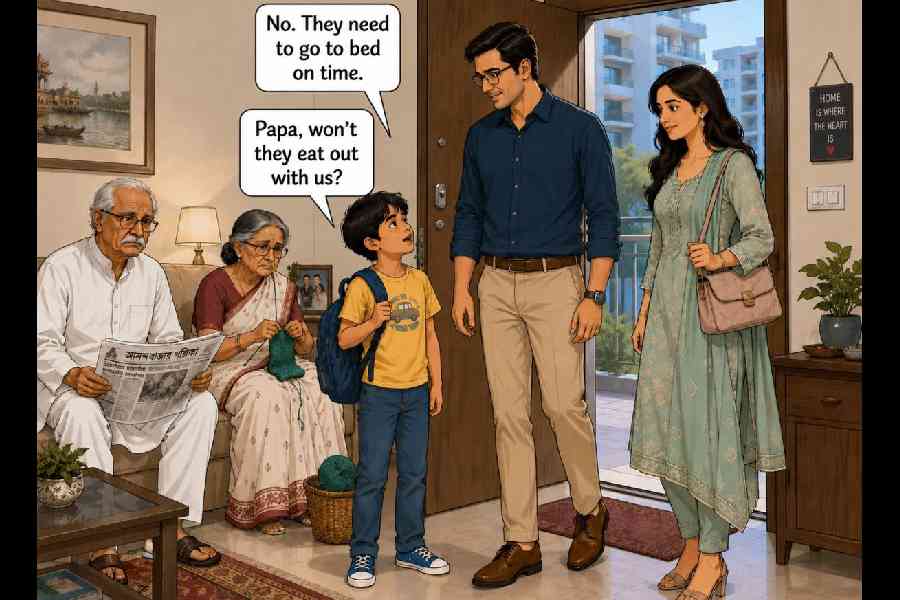
Picture an evening when a family plans to go out for dinner. The children get ready excitedly, the parents dress up, but then the father announces that grandma need not come along.
“What will you do there? You’ll get bored. You might even slip and fall. You relax at home, we’ll bring you dinner,” he decides.
On another evening, during Puja shopping season, the family heads out to buy new clothes — naturally, without grandma. When they return, everyone proudly shows off their bright, colourful outfits. But the sari they have bought for her is plain, dull white.
Hitting a parent or throwing them out of the house are not the only forms of elder abuse. Such subtle insensitive behaviour can break the hearts of older people too and amount to abuse.
“In a study conducted across India on ageing, senior citizens were asked whether they had faced elder abuse. Most said no — only about five per cent answered in the affirmative. But when specific examples, such as the ones above, were described and respondents were asked whether they had experienced similar situations, nearly 35 per cent said yes,” said Debanjan Banerjee, geriatric psychiatrist at Apollo Multispeciality Hostpitals. “Most elders don’t even realise they are being abused. They believe that, with age, this is simply their new normal.”
Banerjee was speaking at a seminar at IPHE Hall, organised by the township-based NGO Initiative for Scientific and Public Awareness Target (Ispat). The event was held on June 15, observed as World Elder Abuse Awareness Day.
Banerjee recalled visiting an old-age home where a resident was being visited by her husband, who lived elsewhere because of health reasons.
“Their room’s door was partially open when a resident and an attendant simply pushed it wide open and barged in to do their work,” said the psychiatrist. “I found it rude and later asked them whether they thought it was acceptable to enter a couple’s room without knocking. Their response was: ‘What’s the big deal? They’re just dadu-didas.’ Do the elderly have no right to privacy?”
This, he explained, is ageism — the unfair treatment of people because they are considered old.
“Ask any youth if they would like to be 70, and no one will say yes. Google ‘senior citizens’ and the images you’ll get will be of bent-over people with grey hair and walking sticks,” he reasoned. “Adult children refuse to give them money, saying: ‘Why do you need money when we are here?’ Caring for elders should not mean tying them in chains.”
Representational picture Imaging by Sudeshna Banerjee
He cited a common instance where caregivers (ayahs) treat elderly patients poorly, especially if they suffer from dementia, mobility issues, hearing impairment or speech difficulties. “They neglect serving food and administering medicines, become impatient, or even resort to giving extra sleeping pills as an easy solution to pain and discomfort,” Banerjee said.
Ageing gracefully
Banerjee also challenged the notion that all elderly people living alone are unhappy. “When I play cricket, there is a 70-year-old man who bowls with us. The man says that since times are bad, he must stay fit in case he ever needs to beat anyone up!”
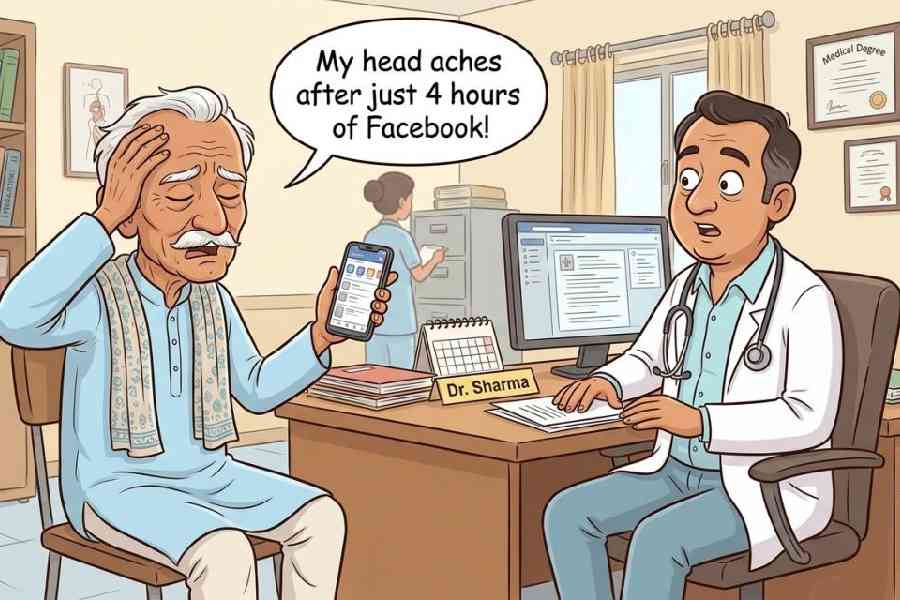
“I also had a 94-year-old patient who came to me complaining of headaches after spending more than four hours on Facebook. I was shocked and said anyone’s head would ache after such a marathon screen session. He cut me short and said: ‘My elder brother’s head doesn’t ache.’”
Tips for senior citizens to stay healthy and happy-
- Stay digitally connected- make the effort to learn basic apps such as WhatsApp so you can text, call and make video calls and stay independent. Else, you may feel hesitant to seek help repeatedly from children who respond with: “How many times have I taught you this?” For those with eyesight problems, there are softwares that can read out texts and the like for you.
- Emergency numbers such as those of hospitals, children, and neighbours must be kept on speed dial.
This is a function on your phone where you can dial these numbers by simply long-pressing one digit. Medical reports should be stored in an easily accessible place at home so that anyone accompanying you to the hospital can quickly locate them.
- Banerjee asked the audience to watch films like the 2024 Mithun Chakraborty-starrer Shontaan, where a father moves court when his son refuses to look after him and his wife. For any such matters, call the national elder helpline 14567 for guidance.
- Join groups such as Saanjhbaati, the senior citizens’ initiative by Bidhannagar Police Commissionarate.
- There are paid elderly support groups too that provide 24x7 attendants upon call.
- Consider installing CCTV cameras at home and steer clear of financial frauds.
- The most important support system is the neighbours. “Community solidarity is a must. Any senior citizen’s home that never receives visitors is vulnerable as there is no monitoring,” Banerjee said. “Everyone needs to be able to meet or ring up someone to say: ‘Guess what happened today....’ When there is nobody to share life with, nobody checks on your well-being either. Such people are vulnerable to abuse and may even hide abuse out of fear or shame.”
Banerjee also clarified that dementia is not the same as ordinary age-related forgetfulness. To reduce the risk of dementia, he recommended-
- Walking for at least 20 minutes daily.
- Eating a healthy diet and reducing junk food.
- Consuming seasonal fruits.
- Avoiding smoking and excessive alcohol consumption.
- Keeping the brain active through crosswords, Sudokus, brain-training apps, learning a new language, and listening to music, particularly raga-based music.
- Staying socially connected through clubs, community groups and friends.
- Sleeping right. After the age of 60, one needs six to seven hours of sleep at night. This is regardless of your afternoon siesta.
Secretary of Ispat, Ritesh Basak, said they held this event so society would value and treasure the elderly. “This is the generation that built society as it is today so it is not fair that they are neglected by the same,” he said.