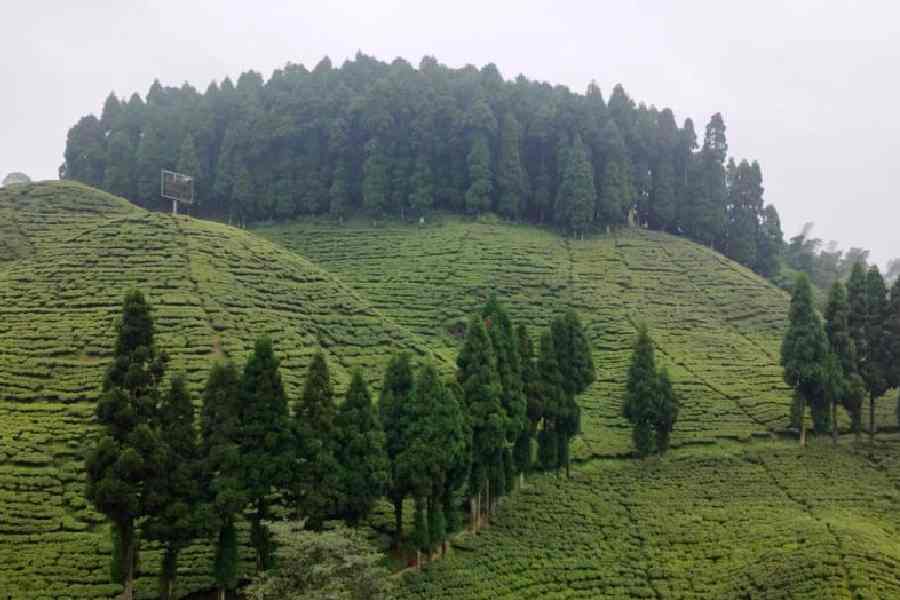
A rain-deficient winter has raised concerns among Darjeeling’s tea planters over the likely impact on the production of the premier first flush crop whose plucking is to start within the next few weeks.
"We have had an absolutely dry winter this season. This condition is not favourable for first flush. The planters are extremely worried about the current weather conditions,” said Sandeep Mukherjee, the principal adviser to the Darjeeling Tea Association.
According to data of the India Meteorological Department (IMD), Darjeeling received only 0.2mm of rainfall from January 1 to February 2, 2026, against a normal of 12.9mm during the corresponding period.
This indicates a rainfall deficit of 98 per cent during the period in Darjeeling.
The neighbouring tea growing district of Alipurduar has recorded a rain deficit of 91 per cent. The deficit figure for the tea-growing Jalpaiguri district stands at 95 per cent.
First flush plucking starts from February-end in the lower elevation gardens of Darjeeling.
There are four plucking seasons, first, second, monsoon and autumn. However, tea from the year’s first plucking commands the highest price in the auctions.
The first flush plucking ends by mid-April.
“The first flush accounts for 20 per cent of the annual production but around 30-35 per cent of the annual revenue,” said a source.
The DTA official said that planters were worried as production had been coming down every year, and this dry spell might make matters much worse.
“From a record annual high production of 14 million kilos (in the late 1970s and 1980s), the figure came down to around 5.5 million kilos of made Darjeeling Tea in 2025,” said Mukherjee, who added that climate change was also one of the factors towards low yield. Made tea refers to the tea made for consumption, not the green leaves plucked.
Most tea gardens in north Bengal are already under financial stress. The absence of any significant package for the tea industry in the Union budget tabled on February 1 in Parliament had disappointed many. The unusual weather is adding to the worries.
The absence of an active western disturbance in the region or the lack of cyclonic activity in the Bay of Bengal led to a dry winter season in the upper reaches this time, weather experts said.
Western disturbance are cyclonic storms originating over the Mediterranean region which are crucial for winter precipitation and snow across the Himalayas and north India.
Western disturbance has mostly remained confined to north-western Himalayan region this winter, a weather expert said.
“The absence of cyclonic activity in Bay of Bengal which helps transport moisture to the region has also not helped,” an official added.