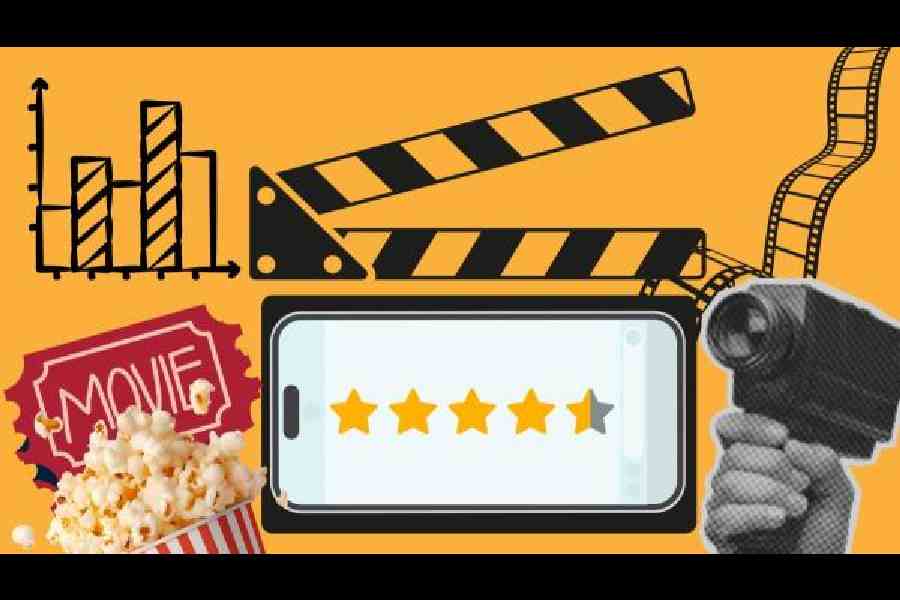
When a 20-something settles in to watch a film these days, there is a reasonable chance that part of their brain is already composing a review. Not necessarily for a magazine or a blog, but for Letterboxd — the social media platform that has quietly become the spiritual home of the contemporary film lover.
Think of it as a marriage of IMDb, Goodreads and a personal film diary. Users log everything they watch, rate and review to their heart's content, curate lists, follow friends and fellow critics, and discover films they might otherwise never have encountered. Its tagline — "social film discovery" — encapsulates both its great virtue and its creeping problem.
Introduced at the Brooklyn Beta web conference in the autumn of 2011, Letterboxd built a devoted following slowly and quietly. In its early years it attracted cinephiles and professional critics. Then came the pandemic. Housebound and hungry for connection, audiences discovered the platform in their millions, and its growth became explosive. Today, anyone with an opinion about a film — and everyone, it seems, has one — has found their way to Letterboxd.
The joy of disovery
The film discovery element of Letterboxd is, without question, genuinely wonderful. There are films that many viewers would simply never have heard of were it not for a well-curated list stumbled upon on a quiet Sunday afternoon. The platform gives obscure cinema a visibility it could never have achieved through traditional channels, and for that alone it deserves considerable credit.
But it is the social dimension — the rating, the reviewing, the performing — where things begin to unravel. The problem starts with something as seemingly innocent as the star rating. On the face of it, scoring a film out of five is harmless enough. In practice, it invites an increasingly neurotic relationship with one's own taste. Is this a three-and-a-half-star film or a three-and-three-quarter? Should that ending push it up or pull it down?
The numbers, intended to distil a feeling, end up replacing it. The richest part of watching a film — that unguarded, unrepeatable experience of simply being absorbed by it — gives way to something more administrative. The viewer is no longer an audience member; they are a judge, filling in a scorecard before the credits have finished rolling.
And then there are one-liners. The perfectly crafted quip for a Letterboxd review has become something of an art form in itself — witty, irreverent, occasionally brilliant. But the pursuit of it can colonise the viewing experience entirely. Instead of watching a film, the viewer ends up watching themselves watch the film, drafting sentences in their head, auditioning observations. That is a rather exhausting way to spend two hours.
Down the rabbit hole
Consider the modern-day film viewer. They watch a film. Then they open the app to log it, read a few reviews, and before long they have spent two hours on YouTube watching video essays by people arguing that the film is either a masterpiece or a symptom of cultural decline. They wander into the comment section. A stranger informs them that their reading of the third act is naive. A post on X reveals that the director once said something ambiguous in an interview in 2017.
Did any of that make the film better? Did it deepen the experience of it? In all likelihood, it did the opposite. It muddied something that had been, until then, entirely personal.
Much of the film content on YouTube is genuinely excellent. A thoughtful critic who loves cinema and communicates that love with intelligence and enthusiasm is a pleasure to listen to — a reminder that talking about films can be as enjoyable as watching them. But a significant and vocal portion of online film commentary operates on an entirely different principle. It is driven not by curiosity or love but by the logic of the algorithm, which rewards outrage, provocation and conflict above all else.
The result is an endless churn of performative negativity: trailers dissected for evidence of ideological betrayal, sequels condemned before a frame has been screened, filmmakers tried and convicted for remarks made in passing. Channels built around cataloguing everything wrong with a beloved film — everything wrong with The Devil Wears Prada, everything wrong with Total Recall, everything wrong with almost everything, in 18 minutes or less — have found substantial audiences. They are not film criticism. They are something closer to competitive fault-finding, dressed up in the language of analysis.
Tribalism of taste
There is a peculiar snobbery that lurks within online film culture, a system of gatekeeping so convoluted that no one can quite win. Watch too few films and the opinion is dismissed as uninformed. Watch too many and the viewer is a joyless obsessive who needs to step outside. Profess to love a mainstream blockbuster and the charge is a lack of sophistication. Prefer slow European cinema and the verdict is pretension. The golden mean, if it exists, seems almost impossible to locate.
Part of the difficulty is that social media turns taste into identity, and identity into territory worth defending. People become tribal about the films they love — and, more corrosively, about the films they hate. Disagreeing with someone about a film can feel, online, like a genuine act of aggression. The response is frequently disproportionate.
There is also the peculiar phenomenon of watching out of obligation rather than desire. A significant number of online film commentators watch films not because they are moved to do so, but because a new release demands engagement — it must be reviewed, rated, reacted to, positioned. Watched in that spirit, almost any film will disappoint. The experience is instrumentalised before it has even begun.
Letterboxd, to its credit, is not solely responsible for any of this. It is a platform, and like all platforms it reflects the people who use it. At its best — populated by thoughtful viewers who genuinely love cinema and write with wit and feeling about what they have seen — it is a genuinely enriching corner of the Internet. The histogram of score distributions alone can tell you something interesting about how a film has landed with its audience. And Rotten Tomatoes, for all its bluntness, at least offers the useful distinction between critical and audience response — a reminder that the gap between the two can be as illuminating as either score on its own.
But the best argument for Letterboxd might also be the simplest: if people are going to talk about films online — and they clearly are, in vast and growing numbers — it is better to do it here, among those who actually care, than almost anywhere else.
Perhaps the most radical act available to the modern film viewer, then, is not a perfectly calibrated Letterboxd rating or a 20-minute video essay. It is simply to watch a film, let it end, sit quietly for a moment, and then carry it away — unrated, unlogged, entirely their own.