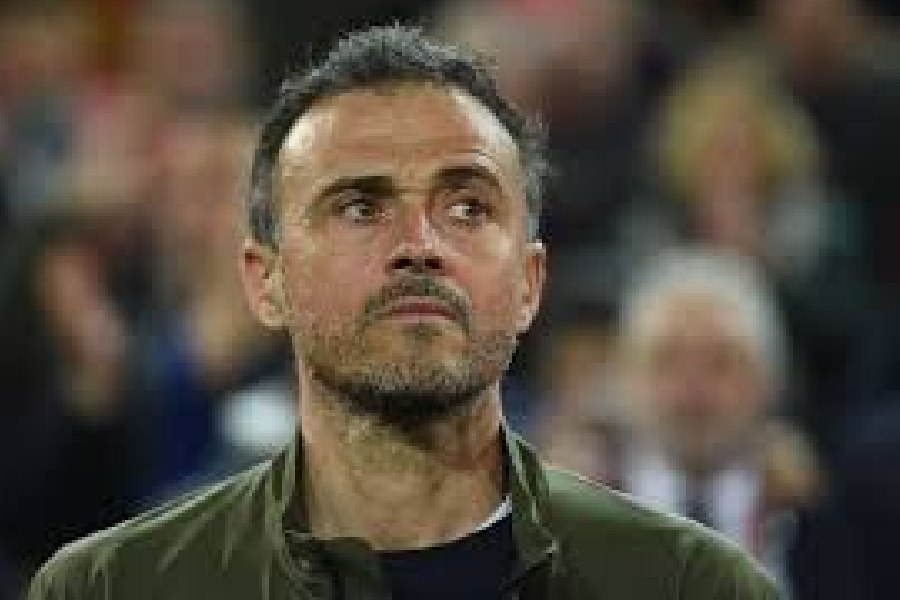
What a year it has been for Paris Saint-Germain and their manager, Luis Enrique! The psychological barrier was finally breached as PSG lifted the Champions League for the first time.
Across 143 matches in all competitions, Enrique has recorded 98 wins, 26 draws and just 19 defeats, a win percentage of 68.53 per cent. This is since he took over the reins at the Parisian club.
There are two more coaches who have caught the imagination of world football. Barcelona manager Hansi Flick and Real Madrid’s newly-appointed coach Xabi Alonso.
They are the coaches driven by the same motto — staying true to their belief and system, irrespective of the result. Sometimes it pays off, sometimes it does not, but they will not budge from what they want from their players. They are the architects of a new era in coaching.
For example, PSG’s mind-blowing success — they won the Champions League final, streamrolling Inter Milan 5-0 — drives home the point Enrique always harps on. Build a team according to the system. That’s why he did not lose sleep when Kylian Mbappe left for Real Madrid in the summer of 2024. At times, the out-of-the-box ideas that the Spaniard, a treble-winning manager with Barcelona as well as PSG, comes up with leave the footballing world astounded.
For example, their kick-off to touch strategy is designed to put pressure on the opposition and regain position deep into their rivals’ half. It created havoc in the Inter Milan defence, who had no clue how to negate the tactic.
Enrique gave a new life to Ousmane Dembele, who thrived in the attacking role. A Ballon d’Or and Fifa best awards for both the Frenchman and Enrqiue, as well as PSG’s team of the year awards, show promise of more success in the future.
“The model and the playing idea are very important, but if the players do not have the technical and tactical abilities to carry it out, they are useless. First, you have to evaluate the level of the players, and only then apply the idea or playing model that they are capable of executing,” Antonio Lopez Habas, present Inter Kashi coach and someone who managed La Liga teams like Valencia in the past, said from Salamanca, Spain.
Barca manager Flick’s ploy of a high defensive line, where the team plays aggressively, pushes the opponents back and creates goal-scoring opportunities.
Last season, it paid off handsomely. But this season, teams like Real Madrid, PSG, and Chelsea drilled holes in the Barcelona defence.
“Smart teams will punish Barcelona. The wingers or wingbacks wait till the last second to make their run to beat the trap. Chelsea did that well against Barcelona in the Champions League. They waited for the right time to break free and scored three,” Sanjoy Sen, Mohun Bagan’s I-League-winning coach in 2015 and an AFC Pro Licence coaching badge holder, said.
“Adaptability is the key to a coach’s success. For example, Pep Guardiola did away with his revolutionary false-nine tactic and brought Erling Haaland, who is a No. 9. You can see how successful that move has been,” Sen added.
Habas agreed. “Flick is trying to adapt.”
Xabi Alonso’s system in Real Madrid has been initially successful, but of late it seems the team, particularly stars like
Vinicius Junior, is struggling to come to terms with the strict tactical rules Alonso has imposed.
“Alonso is in the process of having the players assimilate his playing model, but in my opinion, the approach is not correct. If you always press high, opponents alternate between long and short build-up, which creates predictable imbalances between the lines of the team block. I believe it would suit him better to return to a mid-block or mid–high block and exploit space after regaining possession, for which he has the right players,” Habas explained.
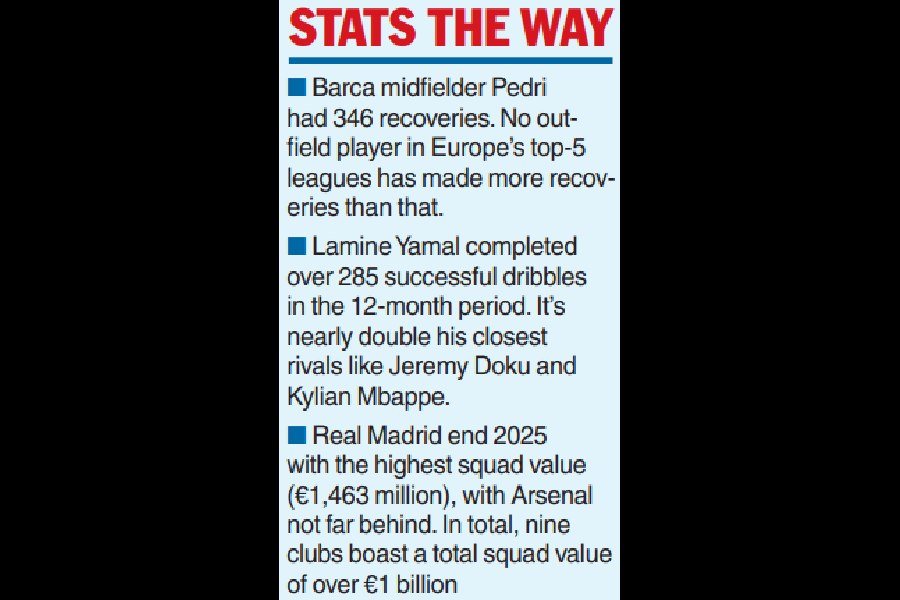
But then, when you have someone like Lionel Messi or Lamine Yamal in your side, it does not matter which system is being followed.
In a footballing world where vertical — some say robotic — football is the rule, players like Messi and Yamal allow you to play lateral too. “That’s because of their dribbling skills and exceptional talent,” says Ishfaq Ahmed, coach of Real Kashmir FC and another Indian AFC Pro Licence coach.
“It is the players who make systems functional. When you have players of that level, you must create a system that allows them to be close to the opponent’s goal for as long as possible, so they have to run 60 metres rather than 120 metres in every action,” Habas said.
Ishfaq said, for a coaching system to work, you need at least three to four players
with exceptional footballing intelligence.
“For example, Pedri in Barcelona, Jude Bellingham in Real Madrid and Martin Odegaard in Arsenal. They think a fraction of a second earlier than the opponent,” Ishfaq pointed out.
As the 2025-26 season gets hectic from the new year, coaches and their systems will be discussed more minutely. The results always dictate the life of a manager. How coaches like Alonso and Flick manage to marshal their resources will decide their future.