“I am not going to live in this country any more. Period,” a US-educated Bangladeshi young woman told me during a recent telephonic conversation.
The exasperation in her voice could not be missed as the former journalist -- who had celebrated the fall of the Sheikh Hasina regime in August 2024 and dreamt of a new dawn under Muhammad Yunus -- went on explaining the sweeping changes taking place in Bangladesh.
"You can't imagine the extent to which the influence of Pakistan has grown in Bangladesh in the last few months. The Jamaat-e-Islami is getting more powerful with each passing day. And things are getting worse," she added.
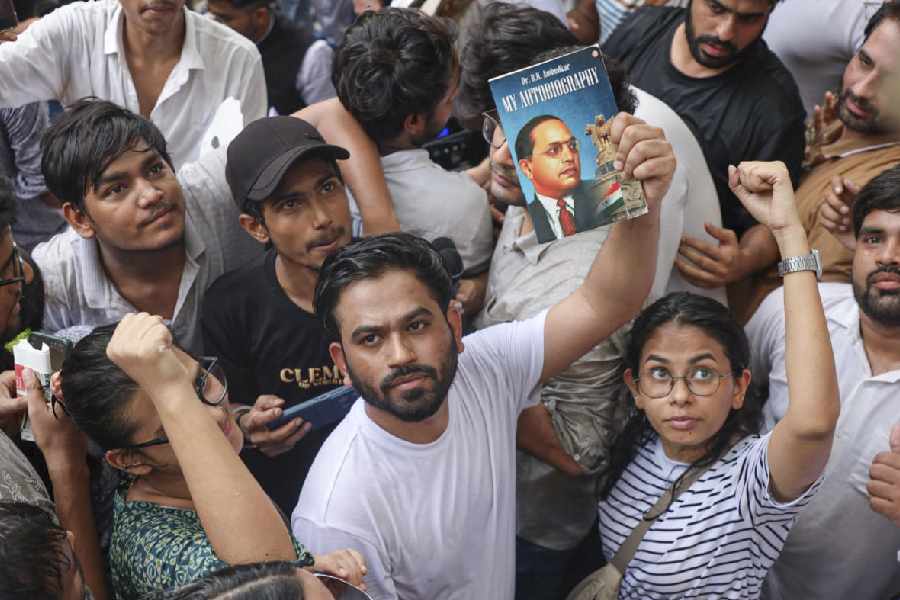
The young journalist, who was attached to a leading daily, was one of my sources during last year's student uprising in July-August, a period that witnessed large-scale internet shutdown, resulting in a virtual information blockade. A fierce Hasina critic, she used to keep me updated on alleged excesses of the armed forces -- like "spraying of bullets" and "raining of grenades from helicopters" -- on student protesters leading the movement against the Awami League regime.
In her articles, she used to spew venom on the "obnoxious" role of the Indian government in aiding and abetting the "autocratic and illegitimate" Hasina regime. The "one-sided" and "biased" coverage of the uprising by a section of the "Indian media" was one of her major peeves.
"What is happening [post 5 August, 2024] is better than when she [Hasina] was here. Bangladesh was under a dictatorship, one that tortured and killed innocent people... Every part of the society had become bootlickers. It takes time for societies to recover after 15 years of dictatorship... Dr Yunus is the best we could do," she had written in a long whatsapp message on 21 August, 2024.
Those were the early days of Yunus, who took oath as chief adviser of the interim government on August 8. Reports of mob attacks on minorities and Awami League supporters, arson, looting and rise of radical Islamist forces were pouring in from all corners of Bangladesh around that time.
Terming all these as the "effervescence of a revolution," she even shared a personal anecdote wherein some Islamist radicals accosted her near her home in Dhaka, asking why she had not covered her head.
"I looked at them sternly and said I would slap them... They scampered away," she had laughed, swatting away the possibility of Islamist radicals having any sway in Bangladesh society.
Cut to December 2025.
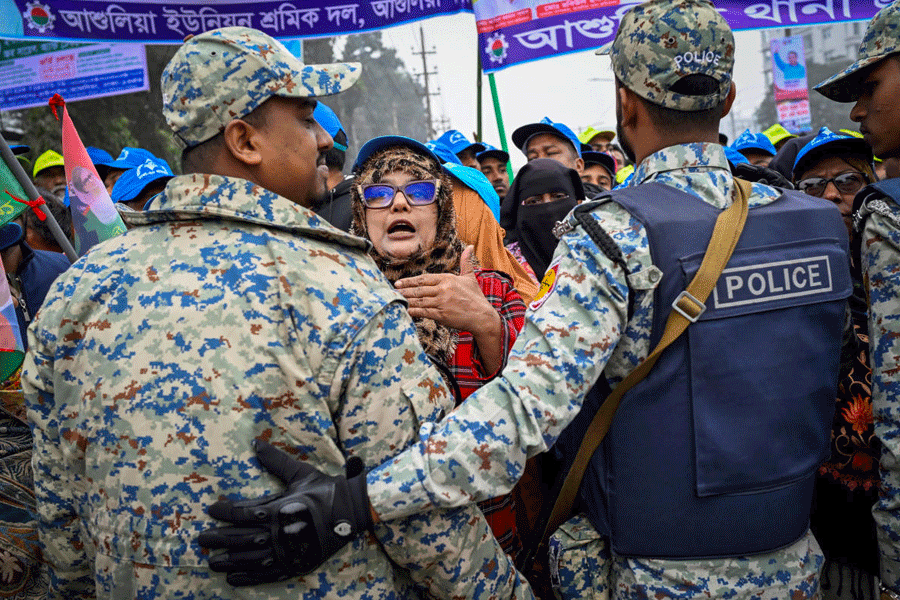
Most Bangladeshi women feel scared to dress as per their wish as moral policing and incidents of violence against women have reached alarming proportions since the change of guard. Parents think twice before allowing their daughters to leave home without a male escort.
A country that was once known for high rates of participation of women in the workforce -- about 44 per cent were economically active as per 2023 data -- has now begun making global headlines for different forms of violence against women. From incidents of vandalism at functions attended by actresses to mass protests at venues hosting women's football matches, the country has really seen it all in the last 16 months.
"I feel really sorry to admit that I was so wrong... Women like me cannot live here anymore," she was honest in her confession about the realities of the Yunus government in a recent phone call.
Amid debates on whether the change in Bangladesh was part of a "meticulous plan" or a "people's uprising", the Nobel Peace Prize winner -- with the promise of pressing a "reset" button -- took guard to offer a "new deal" to the over 180 million people in India's eastern neighbourhood.
The young journalist's 180-degree turn -- from hope to despair -- raises serious questions on whether Yunus has lived up to the expectations.
Beneficiaries of the Yunus-led interim regime and some of their apologists abroad, including some opinion-makers in India, may swat away the views of the young scribe but the fact remains that women feel insecure in today's Bangladesh, which seems to have taken a decisive turn towards a breeding ground of radical Islam.
Not just a western educated liberal woman, the turn of events -- which can be linked to the rise of far-right political forces like the Jamaat-e-Islami and its associates -- has begun affecting ordinary women, many of whom had hit the streets against Hasina.
Take for example the cases of Tasnim Jara and Tajnuva Jabeen, two women who shot into prominence as leaders of the fledgling National Citizen Party (NCP) that was formed by students at the forefront of the anti-Hasina movement.
Both these women, who had plans to contest in the upcoming February general elections, resigned from the party in the last 48 hours.
Reports in Bangladeshi media suggested that the resignations were due to the decision by the student-led party -- being referred to as the "King's Party" due to Yunus's direct support -- to form an electoral alliance with the Jamaat-e-Islami.
Jabeen was apparently devastated after the top leaders of the NCP -- which invited nationwide nominations and nominated 125 aspirants -- decided a seat-sharing deal for only 30 constituencies, effectively barring others from contesting the polls.
In a Facebook post, Jabeen hinted at a conspiracy to deny women the opportunity to contest. The process (of alliance) had been deliberately delayed until the final stage so that even fighting as independent candidates became impossible with the nomination submission deadline looming, she wrote.
The two high-profile resignations follow a series of desertions of the NCP by several women leaders like Neela Israfil, who had severed all ties with the party citing a lack of justice and protection for women within the party.
While some women supporters of the NCP overlooked these controversies, the party's decision to contest the polls under the aegis of the Jamaat, a party that doesn't field women candidates, has come as a shock for them.
Prominent women's rights activists, however, think that the NCP's decision to dump the party's women leadership is not surprising as a significant majority of its leadership cut their teeth in politics under the Jamaat's student wing, Islami Chhatra Shibir.
The very expectation that the Jamaat-bred leaders would offer a political platform to women was a misplaced notion, said one of the activists. According to her, Shafiqur Rahman, ameer (chief) of the Jamaat, made the party's stand on working women very clear.
“He announced that when Jamaat comes to power women will work for only five hours a day as the mothers have to fulfil their duties towards their children. If this is the thought process of the top leader of the most powerful political party in the country, you can imagine the condition of women in Bangladesh," she added.
While the list of failures of Yunus has several elements, ranging from deteriorating law-and-order to near bankruptcy of the economy, his era would stand out as Bangladeshi women never had it so difficult.
Senior women politicians -- like BNP's Rumeen Farhana -- and college and university teachers were attacked and assaulted in the last 16 months.
"The perpetrators of attacks on women were never arrested and this impunity under the Yunus regime emboldened them," said a professor of Dhaka University.
"He got global fame for empowering women with his microcredit experiment, undertaken by Grameen Bank. But it is also a fact that his regime gave unbridled power to Jamaat-e-Islami and right-wing Islamist forces who dealt a body blow to women's rights in the country," she added.