If you were to script the perfect modern fairy tale for the 2026 Fifa World Cup, it would probably involve a dusty pitch, a scout with a cigar and a boy with a dream. It would almost certainly not involve a premium corporate networking subscription.
Yet, as Cabo Verde’s Blue Sharks pushed the defending world champions, Argentina, to the absolute precipice of elimination in a breathless 3-2 extra-time thriller at the Miami Stadium, the traditional folklore of football scouting felt thoroughly disrupted.
Consider Roberto "Pico" Lopes. Seven years ago, Lopes was working a regular desk job as a mortgage adviser at a bank in Dublin, playing part-time football for Bohemians. His trajectory changed not because of a viral highlight reel, but because of a cold outreach message on LinkedIn from Cabo Verde’s then-coach, Rui Águas, who had discovered Lopes’s heritage.
Written in Portuguese, a language the Irish-born defender did not speak, the message languished in his spam folder for nine months. It was only when Águas followed up in English that Lopes ran the original text through Google Translate.
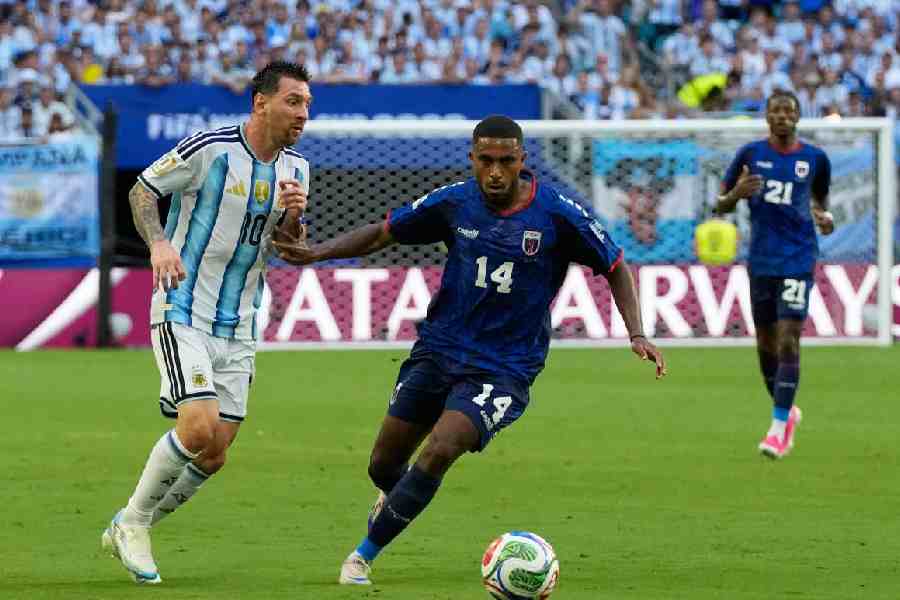
The corporate world is rife with "Open to Work" success stories, but transitioning from checking credit scores in Blanchardstown to marking Lionel Messi in South Florida surely tops the algorithm. On Friday night, Lopes and his compatriots proved that Cabo Verde’s presence in the knockout rounds, as the smallest nation to ever get this far, was no corporate anomaly.
For 120 minutes, Cabo Verde refused to follow the script written for them by the heavily pro-Argentina crowd. When Messi opened the scoring in the 29th minute with a deft and sublime two-touch goal, it felt like the beginning of an administrative formality.
Instead, the Blue Sharks fought back.
Deroy Duarte grabbed an equaliser in regulation. When Lisandro Martínez seemingly broke Cabo Verdean hearts in extra time, Sidny Lopes Cabral answered almost instantly with a curling, right-footed masterpiece past Emiliano Martínez. Probably the goal of the World Cup so far.
That Cabo Verde were within sniffing distance of a penalty shootout was largely down to their veteran captain and goalkeeper, Josimar José Évora Dias, known universally to the footballing world as Vozinha.
At 40 years old, Vozinha plays with the defiance of a man who regards the passage of time as merely a suggestion. Officially a free agent after a nomadic career that took him from local island clubs to leagues in Moldova, Angola and Portugal, he arrived in the United States without an employer but with an entire nation on his back.
His World Cup campaign has been nothing short of a cinematic epic. Having already stopped seven shots to shut out Spain in the group stages, surviving on the pitch while a global, viral fan campaign desperately raised funds overnight to secure an emergency US visa for his mother to watch him play, Vozinha faced Messi with the same unflappable, grandparent-raised grit.
He stopped 10 shots on the night, five of them from Messi alone, playing with a frantic, sprawling heroism that turned the penalty box into his personal fortress.
It took a cruel, 111th-minute own-goal, a thunderous Cristian Romero header that deflected off defender Diney Borges, to finally break the Blue Sharks. When the final whistle blew, Messi wiped his brow in visible relief.
The world champions had survived, but only just.
Cabo Verde leave the United States having already secured historic draws against Spain and Uruguay. They depart not as plucky minnows, but as a deeply unified, tactically brilliant side.
For Lopes, the former banker, the tournament may be over, but his professional summary requires an urgent update. Representing your country against the greatest to ever play the game? Now that is worth a LinkedIn post.