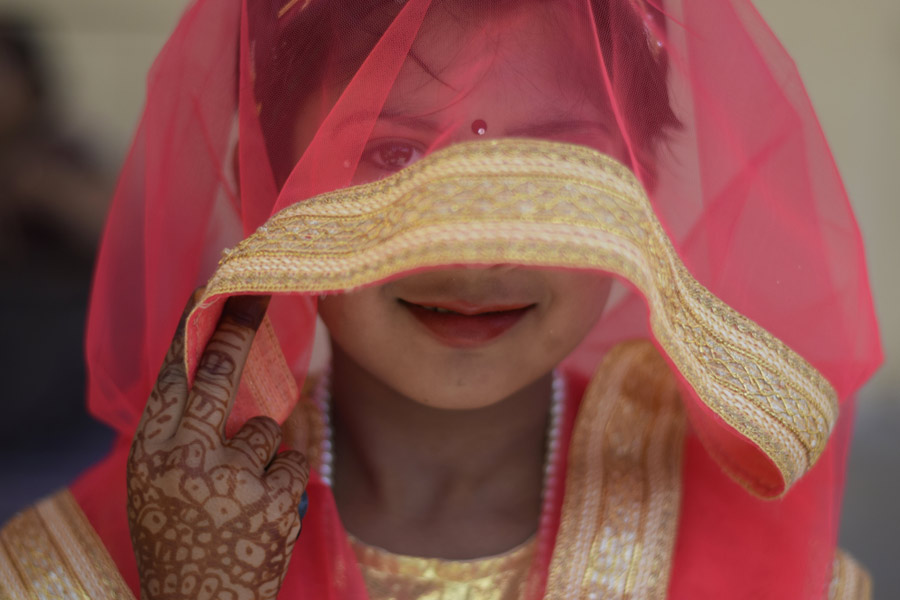
The Union government marked the first anniversary of its Bal Vivah Mukt Bharat Abhiyan this month. But India’s commitment to eliminating child marriage by 2030, in line with the Sustainable Development Goals, has seen uneven progress. Nearly one in four women aged 20 to 24 is still married before 18, with wide inter-state variations wherein West Bengal, Bihar and Uttar Pradesh account for a disproportionate share of child brides. This reveals how poverty, weak schooling systems and social sanctions continue to overpower statutory deterrence. The Prohibition of Child Marriage Act and the Protection of Children from Sexual Offences Act provide a legal edifice to prevent child marriages but enforcement remains patchy. Educational and conditional cash transfer schemes have helped delay marriage to some extent in states like Bengal, but their impact is blunted where schooling quality is poor and labour markets offer little prospect of dignified work for young women. In some cases, welfare incentives have become entangled in local marriage economies, inadvertently subsidising the very practice they seek to end. The progress that India makes in tackling child marriage is expected to have a telling impact on child marriage globally. Data bear out this intersection between India and the world — UNICEF pointed out that in 2023, 64 crore girls were pushed into such marriages: one third of them in India.
Significantly, newer pressures threaten to erode even the limited gains that have been made on this front. Climate change has emerged as a potent accelerant of child marriage by destabilising livelihoods, displacing families, and disrupting education. Evidence from climate-vulnerable regions like the Sundarbans shows a direct link between environmental shocks, school dropouts, early marriage and trafficking. Globally, agencies confirm that climate stress, conflict and economic volatility are slowing the decline in child marriage to a pace far short of the 2030 target. For India, meeting the SDG deadline demands a shift from fragmented interventions to integrated policy. Social protection systems must be climate-responsive, targeting districts where environmental risk, poverty and gender vulnerability overlap. Education must extend beyond enrolment to retention, safety and employability, particularly for adolescent girls. Health systems need to foreground adolescent sexual and reproductive rights, which are closely tied to early marriage. Without such convergence across climate policy, education, labour and child protection, the goal of ending child marriage by 2030 risks remaining unmet.