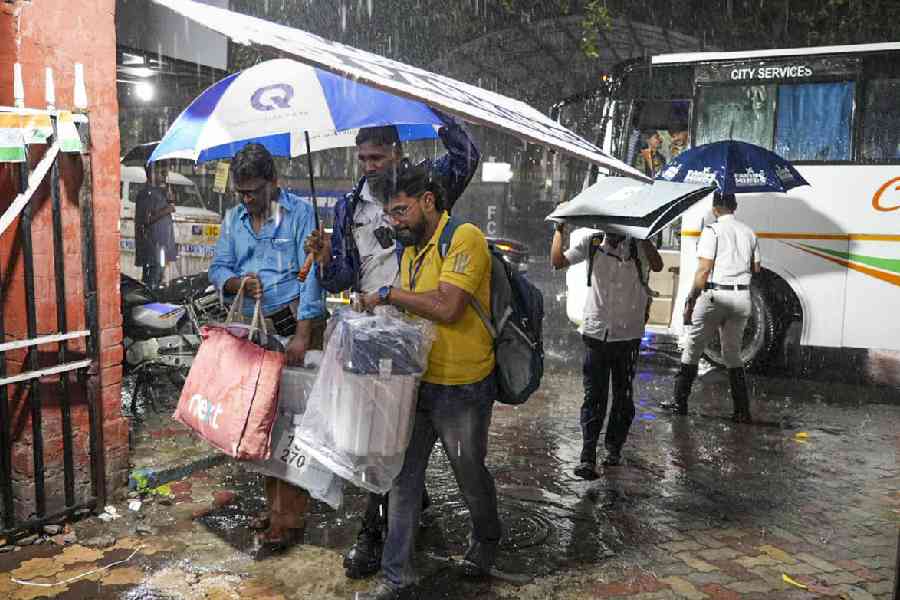
COP30 concluded last November. But its most important signal for countries like India is only beginning to sink in. The global climate conversation has decisively shifted from mitigation promises to adaptation realities, from abstract targets to locally-led resilience, and from generic inclusion to gender-responsive climate action. This shift comes at a moment when climate impacts in India are no longer episodic but structural: heat waves are getting longer, rainfall is more erratic, extreme weather events are more frequent, and climate stress is embedding itself into everyday rural life.
Given this reality, one truth remains clear: the success or the failure of India’s climate adaptation strategy will depend significantly on whether rural women continue to remain invisible shock absorbers of climate stress or are recognised and empowered as architects of resilience.
This is not a theoretical argument. It is grounded in demographic, economic and labour trends already visible in India. According to recent labour force data, women’s workforce participation rate has risen sharply in recent years, reaching above 40% in 2023-24 compared to just over 20% a few years ago. A significant share of this increase is in agrarian contexts where women are increasingly becoming self-employed farmers. In agriculture, women already account for over 42% of the workforce with even higher shares in certain regions. Yet, this expansion of women’s responsibilities across rural livelihoods is colliding with a climate system under severe stress.
Evidence shows that female-headed households face higher income losses from heat waves and floods while climate shocks increase women’s unpaid care burden, food insecurity, and vulnerability to gender-based violence. But vulnerability is only half the story. What is often underplayed is how women are responding, not just by adapting but actively reshaping their livelihoods. This adaptive leadership is emerging organically, without formal recognition, institutional backing or dedicated climate finance — and that is precisely where India’s greatest opportunity lies.
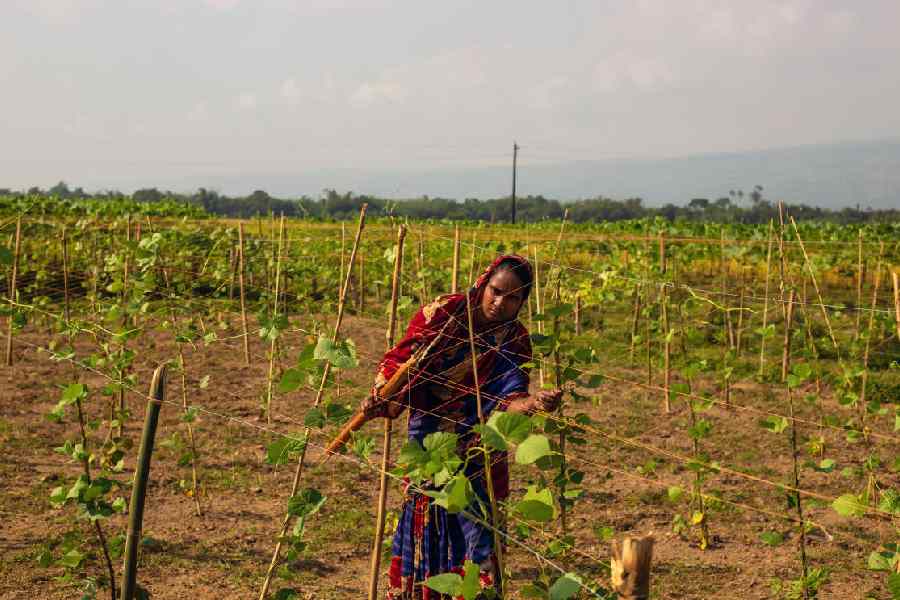
Take the case of Shivkunwar Koreti from Kanker district in Chhattisgarh. Erratic rainfall, soil erosion and the absence of reliable irrigation had severely constrained her agricultural productivity. Traditional farming methods were becoming unsustainable under changing climate conditions. Her trajectory shifted when she became part of a women’s self-help group supported by PRADAN, a grassroots civil society organisation that works closely with rural communities. Through structured training, exposure visits, and mentoring, she began practising in-situ soil and water conservation, trellis-based multilayer farming, and low-water crop cultivation. With support from the state government and PRADAN, she also diversified into poultry and fishery and accessed solar pump assistance and agricultural inputs. What emerged was not just higher income but a livelihood model built on resilience.
In Parvi village, also in Chhattisgarh, the story extends beyond livelihood. Women farmers who strengthened their economic base through similar climate-responsive interventions have stepped into leadership roles in local governance. They contribute to gram panchayat development plans, influence resource allocation, and help integrate climate resilience into village development priorities. Their lived experience has begun shaping decision-making, reflecting a critical transition: climate-affected women are evolving from participants to planners, and from implementers to influencers.
These stories represent a deeper undercurrent of transformation taking place across rural India. And this is where national and policy context becomes critical as emerging frameworks, such as the Viksit Bharat-Guarantee for Rozgar and Ajeevika Mission (Gramin), signal a shift towards locally-planned, livelihood-linked interventions that can anchor climate adaptation within everyday rural realities.
India’s vision of Viksit Bharat 2047 places strong emphasis on women-led development, higher female labour force participation, and greater economic agency for women. This vision coincides with the global, post-COP shift towards adaptation, resilience and inclusive growth as well as emerging rural livelihoods frameworks that seek to link employment, local planning and asset creation. This convergence presents a strategic opportunity, positioning climate adaptation as a core pillar of India’s women-led development trajectory.
Three structural shifts must happen to ensure that climate strategies represent the very populations most central to resilience. The first is the institutionalisation of rural women as decision-makers in climate governance. Government systems must formally integrate women farmers, self-help group leaders and grassroots organisers into climate action-planning bodies, agricultural extension systems and local governance platforms — a pathway India is already beginning to chart through emerging, village-level employment and livelihoods frameworks that emphasise local planning and asset creation.
The second is the strategic routing of adaptation finance towards women-led and community-based solutions: what is missing today is a dedicated financial architecture that recognises rural women as investible climate actors. Government programmes need to align subsidies, credit and technical support. The private sector, especially agribusiness and food value chain players, must partner with rural women producers to build resilient supply chains. Philanthropy can play a catalytic role by providing flexible, trust-based funding that mitigates early-stage risks and supports scalable solutions while civil society organisations remain essential for translating commitment into sustainable community action.
The third is the mainstreaming of successful grassroots adaptation models into national policy frameworks. While India has multiple examples of women-led climate resilience across states, they often remain scattered. A national repository or evidence platform for women-led climate adaptation could accelerate replication and inform state-level climate action plans, currently underutilising gender-responsive strategies.
Importantly, this approach does not undermine existing government efforts. India already has strong institutional frameworks for rural livelihoods, decentralisation and women’s empowerment. What climate change demands now is an intensification and reorientation of these systems.
As the world moves into the post-COP30 era with greater emphasis on locally led, gender-responsive adaptation, India has both the opportunity and the responsibility to demonstrate leadership. Rural women across India, from Kanker to countless other districts, are already demonstrating what climate leadership looks like in practice. The question is no longer whether they are capable. It is whether our national strategy
is finally ready to be built around their leadership.
Tamali Kundu is a development professional and Integrator at PRADAN. Devaki Singh is Asia Program Manager at Co-Impact