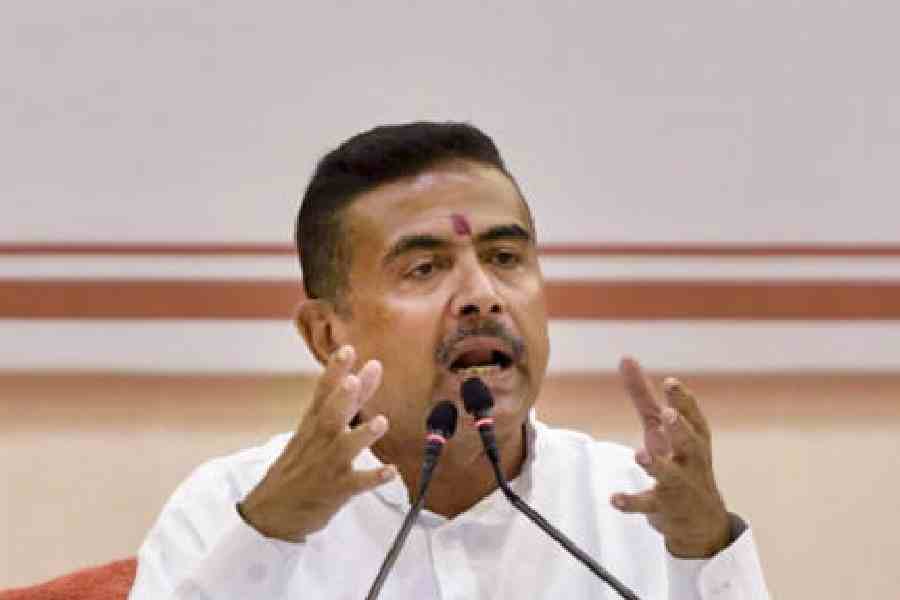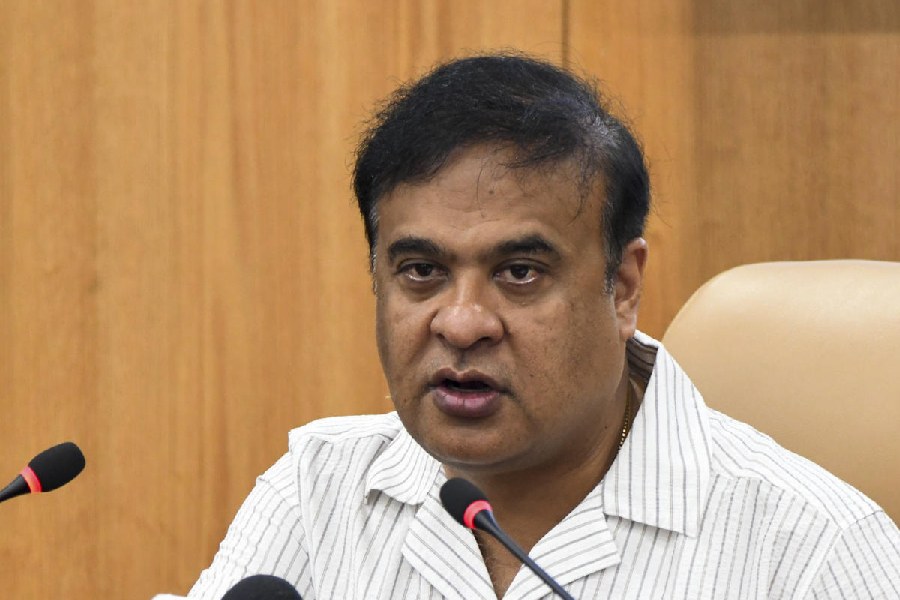
Social media posts, much like the picture of yore, speak a thousand words. Even a deleted one does so. In poll-bound Assam, the Bharatiya Janata Party may have got rid of a post that comprised screenshots of an AI-generated video of the chief minister, Himanta Biswa Sarma, taking aim at a photograph of two Muslims. But the poison will — is meant to — linger as the elections draw closer. This is because religious polarisation and demonisation of minorities have been part of a tried-and-tested electoral strategy for the BJP. The ploy is expected to fetch rich dividends in Assam that has had a complex and contested history of illegal migration. So Mr Sarma has been working hard at speaking with a forked tongue. Apart from his periodic targeting of miyas, a derogatory term for Bengali-speaking Muslims, the chief minister has also been trying to tarnish the image of his principal opponent, Gaurav Gogoi, by alleging that he has links with Pakistan.
Mr Sarma’s inflammatory assaults are, of course, consistent with the BJP’s ideological mantle. But they are also strategic in nature. By seeking to direct — limit — public attention towards issues with a pronounced majoritarian tilt, he is trying to evade scrutiny of his own record in governance. That Mr Sarma, and many of his peers, succeed in doing so repeatedly speaks of a failure on the part of India’s Opposition. There is no doubt that the BJP’s electoral ascendancy has been possible because of a massive public endorsement for Hindutva and its divisive rhetoric. But it also cannot be denied that one of the factors that has abetted the march of Hindutva on India’s social plane and of the BJP on the country’s electoral axis has been the Opposition’s failure to put up roadblocks that are potent politically as well as ideologically. This raises a question that has deep ramifications for not only the republic’s present but also its future. Secularism as a principle, as everyday praxis, has remained trapped within hallowed texts: the Constitution is an example. That inclusive spirit must now be liberated from high portals and pedagogic discussions and made to embrace India’s streets for a public renewal of the compact with the Constitution.