
THE TRUTH ABOUT THE HARRY QUEBERT AFFAIR By Joël Dicker, MacLehose, Rs 599
Can the truth ever be found? This is one of the questions that Joël Dicker, the young Swiss author who used to spend his summers in Maine as a boy, seems to throw slyly at the reader in the title of his 700-page thriller, The Truth about the Harry Quebert Affair, translated from the French by Sam Taylor. And is there only one truth? This question, a favourite with writers, is overshadowed in Dicker's story by another: can one truth adequately account for the myriad contradictory acts people perform in response to a single event or person, the differing levels of silence within which they wrap secrets of wildly varying significances, the inexplicable passions and obscure guilts that spur their stealth as well as their partial or uncertain sense of realities?
If the 'truth' is slippery, the 'affair' is far from innocent. Resonating from the sense of 'the strange case' of Harry Quebert, the word in the title takes the reader right to the heart of the novel - or one of its hearts. This is a love affair between a 34-year-old Harry Quebert and a 15-year-old girl, Nola Kellergan, which ends when the girl abruptly vanishes, and then reappears years later as a skeleton buried in Harry's backyard. Dicker does nothing to alleviate the persistent discomfort created by Nola's age in what is apparently an idyllic and single-minded, if brief, love story. As the revelations - the affair of years ago is just one of them - come in phases, never sequentially, never in the same way, and seldom to everyone at the same time, the reader discovers that the book for which Harry had become famous was the story of their love. Like the title of Dicker's own book, Harry's title, The Origin of Evil, begins to vibrate with multiple ironies as the 'story' behind it becomes known.
But none of this is sombre reading; it is quite fun for the most part. The story races on, swinging smartly between two time sequences, twisting, somersaulting, turning back on itself, uncovering one occurrence while covering up another, in a minutely calculated stop-go rhythm of discovery that is an extraordinary achievement of plotting. Marcus Goldman, a young and ambitious writer whose first book has been a runaway success, carries forward much of the narrative in the first person. But there are also extracts from The Origin of Evil, which happen to be Nola's letters to Harry, there are third-person accounts arranged by date, presumably reconstructed from Harry's own account of the fateful time and from the accounts of the other characters told to Marcus and to his policeman friend, Gahalowood, who is investigating the case.
Dicker uses the other relationship at the heart of the book, that between Harry and Marcus, to create the puzzle-within-a-puzzle structure, and it will be found that the murders are not the only mystery. Marcus is suffering from writer's block after his first earth-shattering success. He goes to Somerset, New Hampshire, from New York, to stay with Harry, his old mentor, who, too, is famous for only one book. When Nola's body is discovered sometime later, and an eye-witness's murder linked to it, Harry is regarded as the villain by the law, by his neighbours and the public. At once, Marcus gives up his obviously futile attempts to fulfil the contract with an increasingly enraged publisher and devotes himself to proving Harry's innocence. That story, Marcus's agent and publisher decide with elation, will become his next book. As a result, Dicker's novel, too, becomes partly a work in progress.
The frames of the different 'works', including The Origin of Evil, slip and tumble in the reader's mind, with what appears to be the truth at different times vanishing after a few gleams and reappearing in a different relationship to newly uncovered facts pages later. The sense of the elusiveness of truth, however, is achieved not just by the narrative strategy but also by the ambiguities within most of the characters. Of these Nola is the most disconcerting example, although Marcus does not do too badly in this direction either.
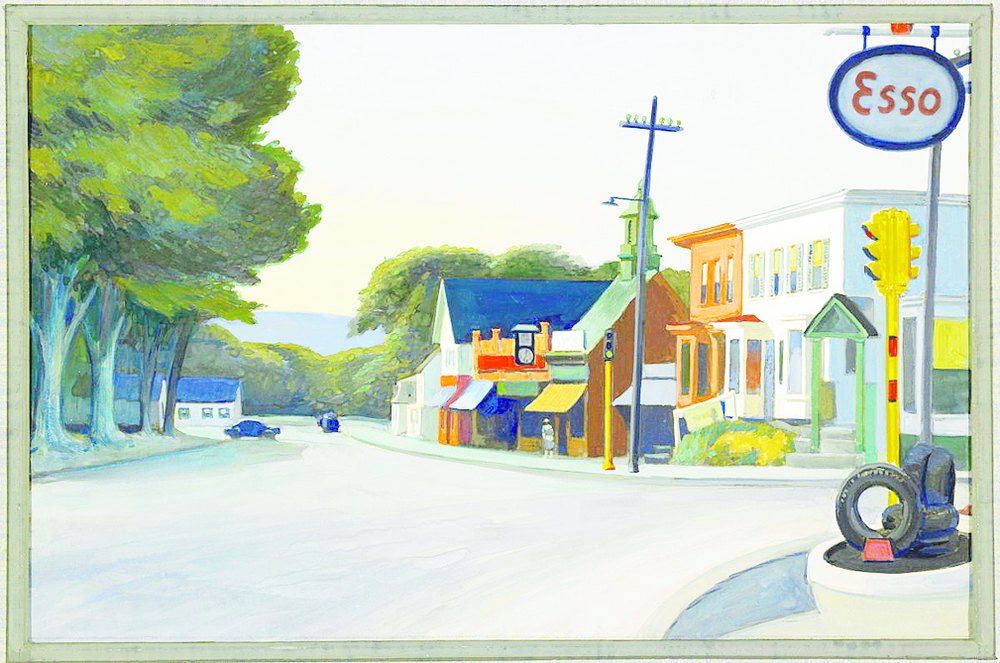
There is something startling in the contrast between the apparently placid surface of the small town in America and the complicated motives and convoluted actions that underlie its everyday life. Marcus's journeys of discovery take him as much through carefully described roads and hills, into meticulously portrayed interiors and by beautiful waters as through the years.
At the end, the explanation for the murders turns out to be fairly straightforward, once the characters and circumstances have been perceived as having converged on the moment. But there is also a feeling of inevitability. In other words, given the time, the place and people, the truth could not have been reconstructed before. The trick is in the telling.
Although Dicker's powerful depiction of the mysteriousness of human beings deepens the experience of reading the novel, it is not a heavy feeling. There are distinctly comic exchanges and situations, slightly cartoonesque exaggerations, and a persistently tongue-in-cheek, occasionally satiric, presentation of writers, agents, publishers and the media in general. Rapaciousness seems to be the driving passion of the media and publishing industry. To fall, rise and fall again before their devouring eye, to experience fame and shame, to resist their advances, their traps, their cunning 'leaks', are not easy, but Marcus chooses to doggedly pursue the truth while the world laughs or turns away. This gives the young man, who had once been spoilt and manipulative, a new dimension. It is the seed of another startling ambiguity that results in another mystery, this time to do with a book, which remains poised at the end of the novel.
Dicker pulls off the merging of tones and modes with some success, although there are some sentimental moments. But the really pedestrian bits are the pieces of advice about being a writer that Harry has presumably given Marcus, which head each chapter. "Learn to love your failures, Marcus, because it is your failures that will make you who you are. It is your failures that will give meaning to your victories." Or, "The words are good, Marcus. But don't write in order to be read; write in order to be heard." This is neither amusing nor illuminating, merely embarrassing. The result is to make the reader doubt Harry's talent as a writer, and hence that of Marcus. The reader is left wondering how far Dicker, almost an image of the brilliant Marcus, would have gone had he followed the advice he imagines Harry to be giving. He obviously has not; instead, he has created an entertaining thriller that communicates a strong sense of the mysteries of human motivation.