It’s been a dream that India’s foreign policy leaders have pursued relentlessly for decades: a seat at the global high table that New Delhi believes would reflect the country’s stature as the world’s largest democracy and give it the international clout it covets.
Yet, the past year has raised fundamental questions about what that high table even looks like anymore.
Traditionally, full-time membership of the United Nations Security Council has been at the heart of these aspirations. The five permanent members — the United States of America, Russia, China, the United Kingdom and France — have a veto power that allows them to block any Security Council measures critical of their actions or those of their allies and friends. In the decades after World War II, that veto authority served as a powerful tool to shield these five nations from UN sanctions and reprimands. They thus violated international law and the UN Charter without consequence.
Other bodies like the International Monetary Fund and the World Bank were the secondary platforms where positions of influence were deemed helpful, as also the memberships of elite clubs like export control groupings.
But over the past year, the world has witnessed something rare — if not unprecedented: the biggest beneficiary of an unequal world order has itself sought to rip it apart.
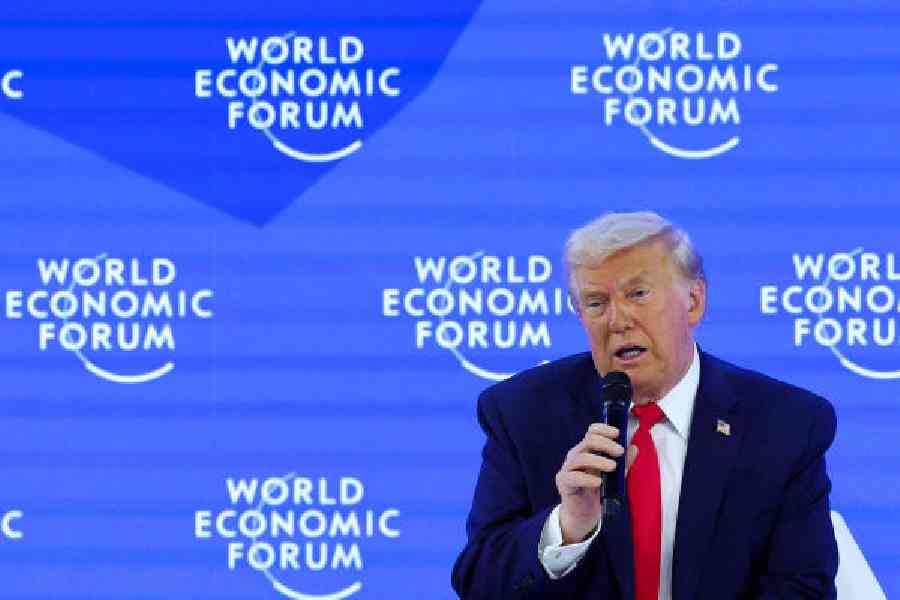
Donald Trump has moved from expressions of disdain for the UN and multilateralism to direct, public efforts to destroy the organisation and the values of global cooperation it has promoted, at least on paper. If the year began with the brazen and illegal abduction of the Venezuelan president, it was quickly followed by the US withdrawing from dozens of international organisations. Last week, Trump went one step further with the so-called Board of Peace that’s actually an attempt at a personal money-making scheme. It’s ostensibly a body meant to oversee the Israel-Hamas ceasefire in Gaza and monitor the redevelopment of the Palestinian territory after more than two years of brutal devastation from Israel. But its charter — which Trump wants countries to sign at Davos on the margins of the World Economic Forum — makes it clear that the Board, controlled by Trump in his personal capacity, not even as US president, appears to be an attempt to set up an alternative to the UN.
He has since invited the leader of practically every country he can place on the map to join the board, including Prime Minister Narendra Modi. But this is no high table; it’s a casino pit where countries and leaders are being invited to gamble their self-respect and money to make Trump feel good about himself while also making him rich. Permanent membership of the Board comes with a $1 billion price tag.
If the UN Security Council is unfair, with five countries holding greater power than others, Trump’s Board has just one veto holder: Him.
For India, this moment should be clarifying. With the UN so mortally wounded by the very power that shaped and gained from it the most, permanent membership of the Security Council would no longer be a seat at a high table. Other multilateral bodies, too, have been rendered increasingly useless by the unilateral actions of country after country. No country or region today expects international law to protect it from the rapacious hunger of a stronger military power. Not Ukraine. Not Iran. Not Palestine. Not Taiwan.
There are those who still hold on to the hope that Trump’s successor in the White House in 2028 will revert to more traditional US foreign policy positions, including paying lip service to bodies like the UN.
Unfortunately, they’re living in la-la land. Any meaningful global high table will have to be built afresh. And it will need to be strong enough that Trump can’t blow it down.
Charu Sudan Kasturi is a journalist who specialises in foreign policy and international relations