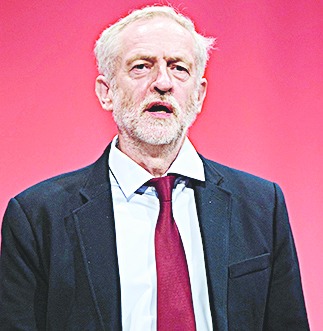

The veteran socialist, Jeremy Corbyn, is the new leader of the British Labour Party after winning almost 60 per cent of more than 400,000 votes cast in the party's leadership contest. The left-winger, who has spent his entire 32-year career in the House of Commons on the backbenches, promised to fight for a more tolerant and inclusive Britain, and to tackle "grotesque levels of inequality in our society". He opposes the austerity programme of the government, something which the Labour Party has supported with minor changes. Corbyn has spent his life opposing foreign military adventures, chaired the Stop the War Coalition and is highly likely to oppose the UK extending air strikes against the Islamic State group into Syria. He's not keen on the UK having nuclear weapons or being in the military alliance Nato.
What this election reveals about Britain is that the country is changing significantly and after its defeat in the May elections, the Labour Party is trying to come to terms with its own identity. During this year's elections, the Conservatives had faced desertions in favour of the UKIP, while the Labour Party got decimated on its home turf in Scotland with the rise of the Scottish Nationalists.
For Labour, the defeat meant an emboldening of those who were tired of the New Labour project, which had ensured three successive election victories under Tony Blair, but which, according to some, had taken the party away from its core ideals. The election of Corbyn signals an end of the Blair era in the Labour Party. Blair made it clear to one and all that economic growth and social inclusion are not incompatible. One of the fastest growing economies in the world, Britain today is also a more confident and socially progressive society than when Blair assumed power. The Blair government undertook some of the most politically difficult tasks as it embarked on the journey to restructure British public services, be they health or education. The journey is not yet complete and much remains to be done but Blair showed his successors that sometimes in politics difficult choices are also the ones that voters want their leaders to make.
The restructuring of public services, the disparity between the rich and the poor, crime, environmental issues, multiculturalism, and of course liberal interventionism are the issues that animate British populace today and all of them have been shaped by Blair's leadership. Blair looms large in the way David Cameron has redefined what it means to be a Tory in contemporary Britain. He has accepted that he was as excited by the arrival of Blair to power as the Labour Party supporters. Blair changed the face of British politics by rescuing his party from the extreme Left. Cameron has tried to do the same by loosening the grip of the extreme Right on his party's agenda. Blair's lasting legacy is there for all to see in the form of his Conservative opponent, Cameron, who has paid Blair his biggest compliment by moving his party to the centre. Blair has made sure that elections in Britain from now on will be fought on the centre ground. The extremes on both the Left and the Right seemed to have been relegated to the margins.
But that was then. Today, the Labour Party has decided to turn Left once again despite warnings that Corbyn's election would make the party unelectable. Those around Corbyn are energized by a politician they see as authentic, principled and different. Though the Labour Party is trying to project a united front at the moment, cracks are already visible and many in the Labour parliamentary party are questioning whether the party members have made a catastrophic mistake by electing a person who has no experience of leading anything other than sundry protest demonstrations. The Labour Party has made a fateful choice by junking Blairism and electing Corbyn. The rise of regional and smaller parties is a testament to the uncharted waters into which British politics seems to have entered. It is not readily evident if Corbyn will be able to provide leadership at a time of this great tumult. But his victory has made British politics much more interesting, for sure.