I had never thought about the nature of my life in school before I returned for the memorial service of the priest who had been its principal in the time I was there. Which is odd given that I spent the best part of twelve years of my life on its premises. Like my contemporaries, I took school for granted; it never occurred to me to ask myself if I liked being there; it was the air we breathed.
In Delhi in the Sixties, the unspoken compact between middle class parents and the schools that raised their children was that we would be socialised into English. In retrospect, this seems to have been their principal purpose and their only durable achievement. When I entered St. Xavier’s kindergarten, I was an entirely Hindi-speaking child; inside two years, English had replaced Hindi as my first language in a particular way: the children’s fiction that I had recently begun reading was exclusively in English. This had something to do with the school’s library, which was overwhelmingly stocked with books in English but this was backed up by coercion. To be caught speaking Hindi during break meant a four-anna fine.
To be clear, this wasn’t an unsanctioned imposition; our parents knew and approved of the school’s concerted press to force us into English because the whole point of going to that desi institution, the English-medium school, was to get us swimming in English. This is still true of the schools that the pan-Indian middle class sends its children to today, but it was peculiarly true of Delhi in the Sixties. In college, I met contemporaries from Calcutta who read for pleasure in Bengali and wrote to their parents in their mother tongue. This wasn’t true of my cohort in Delhi; in North India, for the most part, becoming fluent in English meant leaving Hindi behind for everything but transactions. Even before I could lay claim to a life of the mind, my imagination had been comprehensively Englished.
The other function that school served was that it trained us as apprentice-citizens. This is not to loftily suggest that it taught us civic duty; school accustomed us to the novel idea of public discipline, a discipline enforced not by people we knew like our families, but strangers backed up by opaque institutional authority and the acquiescence of our parents. School was our training-wheels
introduction to the State and its powers.
My school took its power to punish seriously. Teachers were allowed to hit us with rulers. The only teachers who slapped or cuffed us with their hands were physical training instructors. Performative beating was a prerogative of the priests who administered the school as principals or vice-principals. Students were formally sent to their offices with a note indicating their infraction which always led to the padre selecting a cane or ruler and hitting you either on the palm of your hand or on your bottom. In winter, the cold made the beating unbearable and accidents happened. In this way, we learnt that slackness, disobedience or haplessness had consequences.
Beatings began in kindergarten and continued till Class IX when they stopped. I was caned as a five year old by an old priest whose hands shook, then in Class II by a cigar-smoking vice-principal whose chosen method was hitting you with a stack of three rulers while you were bent over because they made a tremendous sound, in Class V by a tyrant who daily caned his way through a crocodile of children queued up at his door (you could hear the one who went into the vice-principal’s room before you did yelp with pain) and so on.
This was the way of the world at the time. These men were no worse than their peers in other schools. Corporal punishment wasn’t just accepted then, it was seen as a sanction against bad behaviour and an indispensable instrument of crowd control. But it drew out the beast in them and made them loathsome.
And they made us anxious. I’m certain that I’m not the only member of my cohort who wakes up early in the morning worrying about things not done and nameless sanctions in store. This doesn’t make me more conscientious or productive, just as it didn’t teach me to do my homework on time then, but it does make me approach the world cautiously. School periods, for example, made me punctual. I get to the airport hours in advance; basic time-keeping, for people like me who weren’t successful in school, is an easy way of avoiding unnecessary trouble.
There were things my school did well. Violence was the monopoly of teachers and the school administration; there was no bullying. I was a small schoolboy and there wasn’t a single occasion on which I was harassed by my peers or seniors. The school’s library was a place of wonder, crammed with novels and magazines that we actually wanted to read. The Jesuit priest for whose funeral I returned to school after years to attend was a progressive pedagogue who opened the school to girls, encouraged it to conscientiously implement the economically weaker sections quota and, later in his career, helped establish the Open School system.
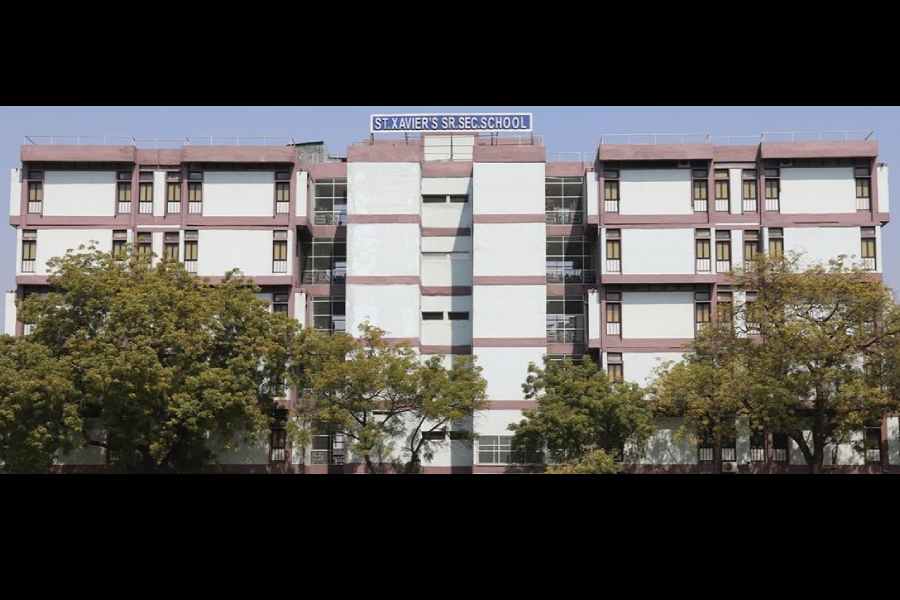
It was also a place of great privilege. It occupied the buildings and grounds of an expansive colonial hotel. Its new buildings were modernist landmarks in their time. It had seven sports fields, large and small, and courts for every kind of ball game. During the service, I wondered how different the school experience now was with the threat of corporal punishment removed.
I suspect that the schools that urban professionals send their children to are different now. They aren’t, as they used to be, privileged boot camps that trained children for college and the world of work. For STEM subjects, that task is managed by coaching institutes that train students for all-India entrance tests. For those who have the money to sidestep these brutal competitive exams, there exist eye-wateringly-expensive air-conditioned schools that teach foreign curricula, prep their students for Western universities, and try to place them there or in expensive private universities.
The difference between my school then and these schools now is that my school catered to metropolitan middle-class parents with Indian horizons and without disposable income. Contemporary elite schools are concierges for my cohort’s richer children who can afford to buy their children places in a luxe and increasingly privatised world. As my brother and I sat in that hall watching the final rites performed for Father Thomas V. Kunnunkal, S.J., it felt like the end of something larger.
mukulkesavan@hotmail.com