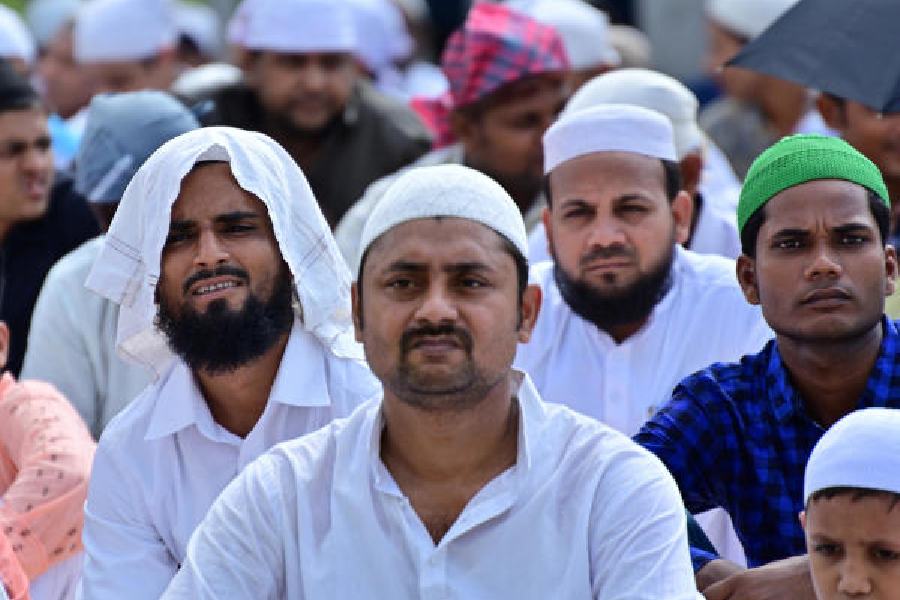
For a large section of the Muslim community, the results of the 2026 West Bengal assembly election marked not just a routine democratic transfer of power but the onset of an uncertain political and social era. Over many decades, Muslims in Bengal have believed that despite its challenges, West Bengal was distinct from much of North India in terms of its political and cultural landscapes.
The state’s political culture has been deeply shaped by regional identity, linguistic pride, syncretic traditions, Leftist ideologies and a relatively moderate approach to religious majoritarianism. Even when communal tensions arose, they remained confined to specific local areas.
Muslims constitute roughly over a quarter of West Bengal’s population; but numbers alone do not automatically guarantee confidence. A community may be numerically large yet still feel politically vulnerable if it perceives the dominant narrative as portraying the community to be suspect, peripheral or electorally expendable. Repeated exposure to messaging that questions its patriotism, loyalty, demographics or cultural practices can foster a persistent sense of siege. Economic anxiety is also likely to deepen these fears. A considerable number of Muslims in Bengal already occupy economically precarious positions across informal labour, small businesses, rural occupations, transport, artisanal work and lower-income urban sectors. In such circumstances, political uncertainty can intensify fears of exclusion from opportunities, State support, and avenues of social mobility. Parents are beginning to worry about whether their children will face discrimination.
In a diverse democracy, every community has the right to political representation and to seek protection for what it values. But the limit is this: rights are reciprocal, not majoritarian. Hindus, Muslims, Christians, Sikhs, Dalits, linguistic groups and regional communities can organise politically. However, no political force should transform
the protection of identity into hostility, intimidation or the denial of equal citizenship to others. For decades, sections of West Bengal’s minorities, particularly Muslims, found in the ruling Establishments (the Left Front and the
Trinamool Congress) a sense of political inclusion and physical security.
Both the regimes were widely perceived as protectors against large-scale communal violence. The Left projected itself as strongly secular and anti-communal, while the TMC positioned itself as a protector of minorities against
majoritarian politics. The Left and the TMC cultivated Muslim political participation through local leadership, welfare outreach, symbolic inclusion and forms of what critics describe as ‘appeasement’ or ‘vote bank politics’.
Election after election, emotional rhetoric, symbolism, insecurity and ‘secular versus communal’ narratives dominated the public discourse. While these concerns were not entirely baseless, they gradually replaced deeper conversations about education, institutional excellence, scientific thinking, women’s empowerment and so on. When security becomes the central political demand, other demands like jobs and education often move to the margins. Muslims felt politically included, but they remained on the margins of broader development. When politics is organised primarily around identity and protection, it can inadvertently lower the horizon of expectation. It becomes focused on safeguarding groups from harm rather than on expanding what people believe they can collectively achieve. Both the Left Front and the TMC fell short in delivering sustained social and economic uplift, underscoring that political inclusion, while necessary, cannot by itself ensure meaningful progress.
At the same time, it will not be fair to attribute socio-economic stagnation solely to political marginalisation, discrimination or majoritarian pressures. While these are real and significant, an honest conversation must also examine the responsibility of the community’s own educated and influential classes — doctors, engineers, lawyers, academics, business professionals, and civil servants — that often shape social attitudes and aspirations. Yet the collective effort to build strong educational institutions, mentorship networks, scholarships, think tanks, entrepreneurship ecosystems and civic platforms remained weaker than it could have been. Too often, intellectual energy became trapped in reactive politics instead of building a long-term vision focused on modern education, economic progress and scientific literacy.
Religious leadership also bears responsibility. Imams and clerics speak to large audiences every week. A Friday sermon heard by thousands in a mosque can influence how parents think about schooling, how youth think about ambition or how communities think about coexistence and progress. Their influence carries not only spiritual responsibility but also social responsibility. What is needed is prudence over dogma. Clerics should remind people that faith and social harmony are not opposing ideals but shared obligations. Religious leaders (imams, maulvis, priests or monks) do not operate in isolation. Messages delivered from pulpits reach well beyond seminaries. Sermons often focus on personal morality, ritual observance and the afterlife, while direct and specific engagement with issues such as corruption, governance failures or institutional malpractice remains comparatively limited. This naturally raises questions about moral consistency and selective silence. While spiritual guidance is essential, it is not sufficient to address the pressing social and economic realities faced by communities today.
In an age defined by the rapid spread of information, misinformation and propaganda circulate just as quickly, often intensifying already fragile political environments. Some fears can be amplified by social media ecosystems. Television debates, YouTube commentary and so on often magnify anxiety far beyond immediate ground reality. These are early days. A political transition can initially feel existential to communities, but the long-term outcome depends on how institutions behave after the emotional heat of elections fades. For Muslims in Bengal, the coming years in such a situation would involve a difficult emotional balancing act. On one side, there would be apprehension, uncertainty
and the fear of marginalisation and,
on the other, the practical reality that life continues: children still go to school, businesses still operate, neighbours
still interact and society still depends
on coexistence.
Also, political reality is rarely as straightforward as immediate fear suggests. Governments entering office often discover that campaign rhetoric and actual governance are quite different things. West Bengal is not an easily transformable state. In countless towns and villages, Hindus and Muslims share economic dependence, neighbourhood life, language, food culture and historical memory. Political polarisation may intensify tensions but it cannot erase centuries of coexistence. Even governments with strong ideological agendas often moderate themselves in practice when faced with administrative realities, economic pressures or public backlash. Also, communities initially respond to political shocks emotionally, but over time they often reorganise socially and politically. Fear can
produce withdrawal, but it can also produce resilience.
Muslims in West Bengal need institutional reforms, particularly in education, community organisations and social leadership. The Bengal verdict, therefore, invites a deeper reflection: on whether security should remain the endpoint of political aspiration or whether it can become the foundation for a more expansive demand, one that couples dignity with opportunity and recognition with real, measurable progress. The way forward lies not in abandoning identity but in refusing to let identity define the entire horizon of aspiration.
Political transitions often produce anxiety before the long-term picture becomes clear. History shows both possibilities: periods of polarisation and periods where societies adapt, resist extremes and find new balances over time.
Syed Tajdaar Bakht is Manager, PricewaterhouseCoopers Service Delivery Center (Kolkata) Private Limited