Immigration is seen as a problem in the United States of Donald Trump and Elon Musk but immigrants are shining at the Fifa World Cup that the country is co-hosting.
From Japan's Zion Suzuki to Australia's Nestory Irankunda, global football’s showpiece event is showcasing how migration has reshaped the game, broadened national identities and challenged longstanding racial assumptions.
Suzuki (named after Mount Zion in Jerusalem) is perhaps one of the most striking stories of this World Cup. His mother is Japanese, his father Ghanaian and he was born in the US.
He is not an exception. Nearly one in four of the 1,248 players selected for national teams at this World Cup were born in a different country from the one they represent.
Foreign-born players make up the majority of footballers in eight of the tournament's 48 squads, according to Oxford University's Centre on Migration, Policy and Society.
The share of foreign-born players in this edition of the World Cup is 23.6 per cent, the highest ever; in 2022 it was 16.8 per cent.
At a time when immigration remains one of the most divisive political issues across Europe, North America and beyond, the beautiful game’s biggest tournament is offering a powerful illustration of migration's impact.
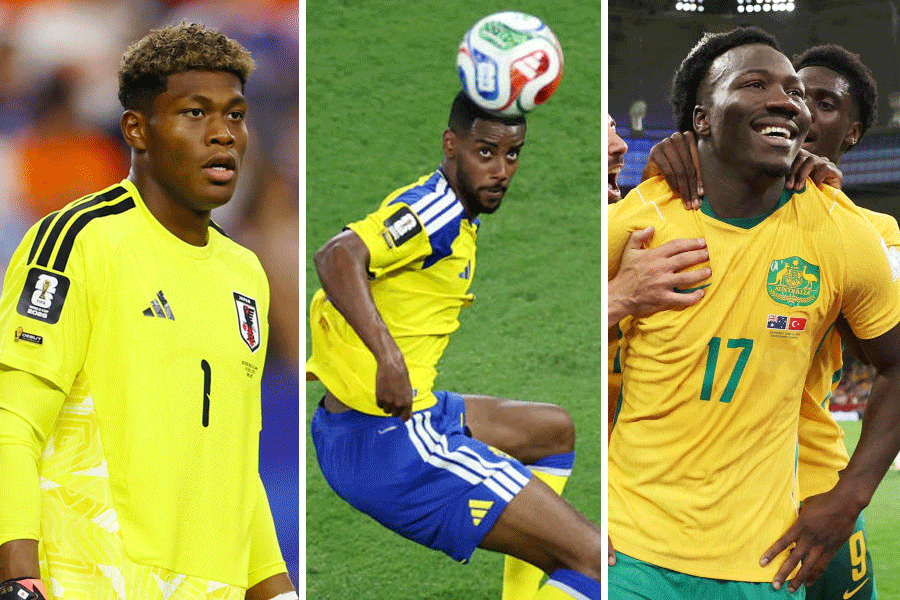
Zion Suzuki, Alexander Isak and Nestory Irankunda. Reuters picture
Australia's Nestory Irankunda, who scored against Turkey, was born in a refugee camp in Tanzania after his family fled from Burundi.
Alexander Isak, who scored for Sweden, was born to Eritrean parents who fled a civil war.
Germany's Felix Nmecha, who scored against Curacao, was born to Nigerian parents and raised in England.
Stars such as Lamine Yamal, Kylian Mbappe, Jamal Musiala and Bukayo Saka are among the most recognisable faces of modern football and products of multicultural societies. Their rise has coincided with the modern era of globalisation and migration.
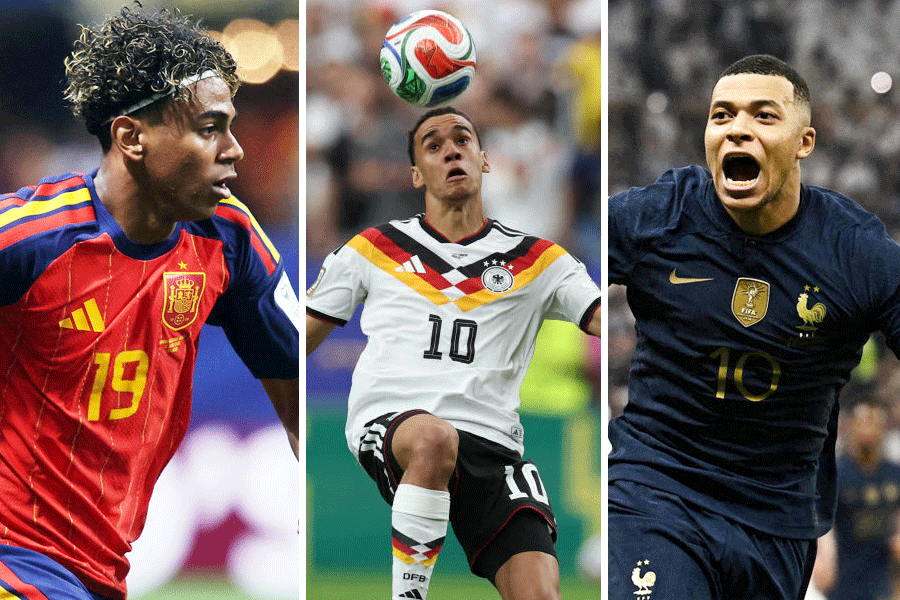
Lamine Yamal, Jamal Musiala and Kylian Mbappe. Reuters picture
The prominence of players from immigrant backgrounds marks a dramatic change from football's recent past.
The US, one of the hosts of this World Cup, is a nation shaped by migration. Despite the increasingly polarised political debates around immigration, around one-third of the US football team are children of immigrants.
Timothy Weah's parents emigrated from Liberia and Jamaica, met in the US and raised their family in Brooklyn. Ricardo Pepi's parents moved from Mexico to Texas in search of a better life. Folarin Balogun – born in New York City to Nigerian parents and raised in England — is the standout goal scorer.
Their contributions come at a time when Trump has intensified efforts to expand deportations and restrict immigration during his second term.
The rise in immigration across Europe and other developed nations has contributed to the growth of far-right movements.
France's National Consultative Commission on Human Rights regularly surveys public attitudes towards racism and immigration. One recurring question asks whether there are "too many players of foreign origin" in the French national team.
Even when France were among the strongest teams in world football, more than a third of respondents answered yes.
Politicians such as Jean-Marie Le Pen have long sought to turn such demographic anxieties into political capital.
Modern football originated in England. As Simon Kuper and Stefan Szymanski wrote in Soccernomics, the first Black person to set foot in the British Isles was a soldier in Julius Caesar's army in 55 BC. The indigenous English themselves arrived centuries later during the collapse of the Roman Empire.
In football at least, the world has become flatter, more connected and diverse. Even though problems remain. As Mesut Özil remarked in July 2018 when announcing his retirement from the German national team following the World Cup: "I am German when we win, but I am an immigrant when we lose."
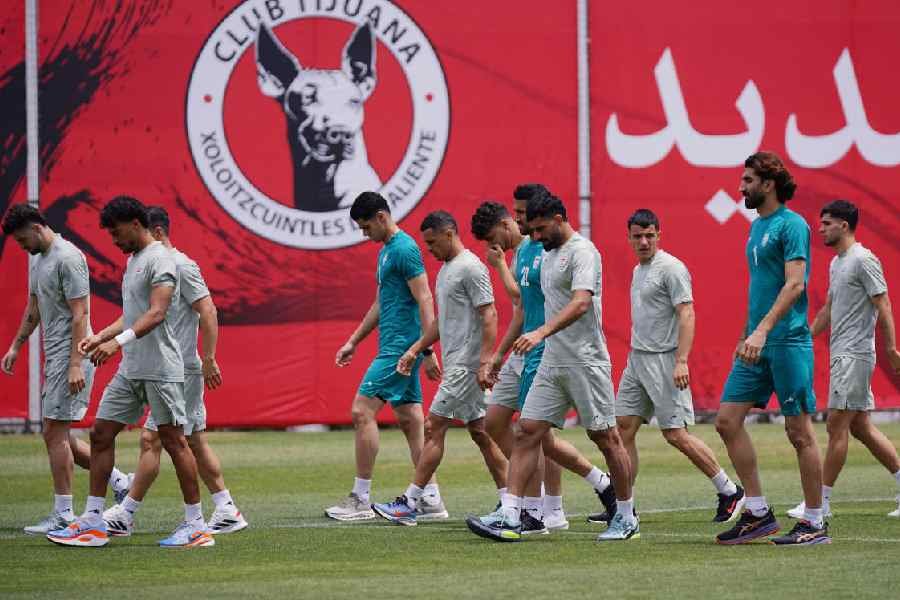
How do foreign-born players play World Cup?
Fifa’s rules have also made football’s DEI – diversity, equity, inclusion – story possible. Broadly, a player needs to fulfil one of four criteria: be born in the territory of the relevant football association; his biological mother or biological father was born in the territory of the relevant association; his grandmother or grandfather was born on the territory of the relevant association, or he has lived continuously for at least five years after reaching the age of 18 on the territory of the relevant association.
Blackness in football world
There is another connected side to the immigrant-footballers story. For decades, black footballers were often underrepresented.
From the 1960s to the mid-1990s, the game’s story was largely told through figures such as Bobby Charlton, Franz Beckenbauer, Johan Cruyff and Diego Maradona.
Pele and Eusebio stood out because they were exceptions to a football culture whose power structures remained white.
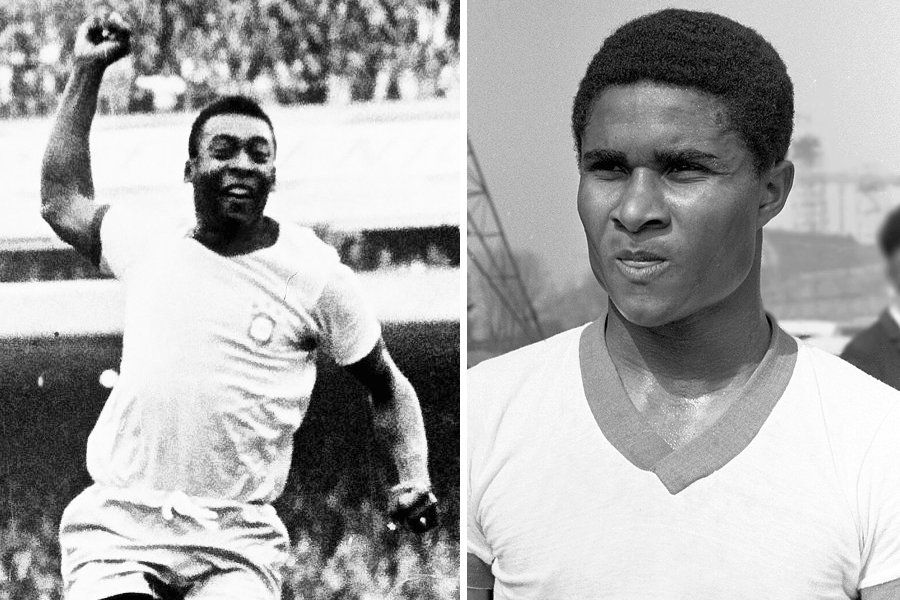
Pele and Eusebio. Wikipedia, Library pictures
Africans and black footballers, mostly immigrants, were frequently reduced to stereotypes. They represented joyful celebrations, colourful supporters and raw athleticism rather than tactical intelligence or leadership.
In 1991, Ron Noades, then chairman of Crystal Palace, had once said on television: "The problem with black players is they've great pace, great athletes, love to play with the ball in front of them. I don't think too many of them can read the game. When you get to the midwinter you need a few of the hard white men to carry the athletic black players through."
The comments reflected prejudices that remained common in parts of European football.
After the collapse of the Soviet Union the acceleration of globalisation transformed economies, societies and football.
Amid a new era of migration, and associated perils of civil wars and refugees, black players such as Claude Makelele, Clarence Seedorf, Edgar Davids, Yaya Toure and N'Golo Kante emerged as stars. One club and one national team at a time, they challenged assumptions about who could define elite football.
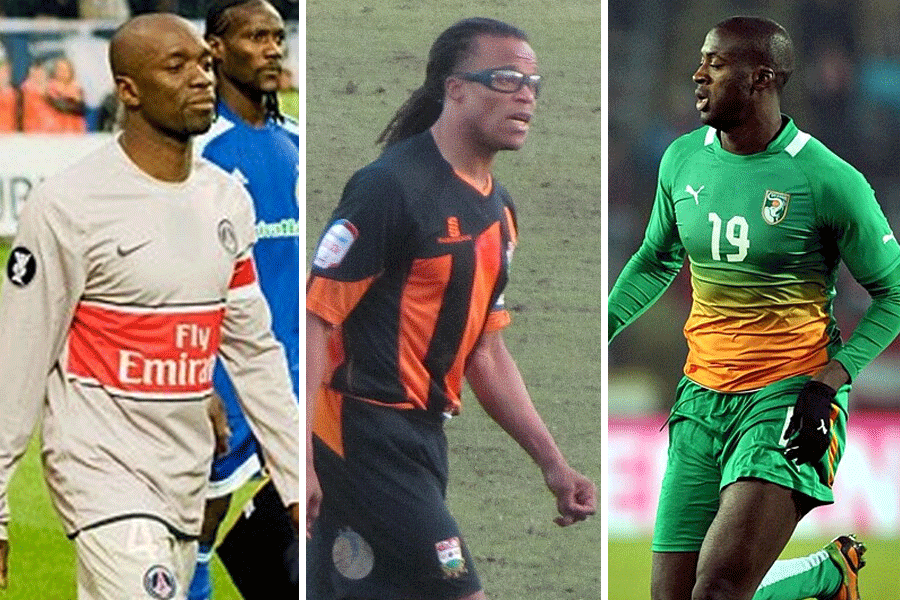
Claude Makelele, Edgar Davids and Yaya Toure. Wikipedia pictures
To many global football viewers, the rise of blacks also came in the form of Cameroon’s Roger Milla.
At the 1990 World Cup in Italy, Milla burst into global fame, scoring against Brazil and celebrating with his famous dance beside the corner flag. The image became one of the defining moments of the tournament.
In 2002, Senegal's celebrations after defeating France at the World Cup became almost as famous as the result itself.
But had attitudes really changed?
In April 2011, French investigative website Mediapart leaked the minutes of a meeting within the French Football Federation.
According to the report, then France coach Laurent Blanc expressed concern that the country's youth system was producing one prototype of player: "big, strong and fast ... the blacks". Blanc reportedly argued that French football needed to broaden the player profile.
"I think we need to refocus," Blanc was reported as saying. "The Spanish say to me, 'We don't have this problem. We don't have blacks'."
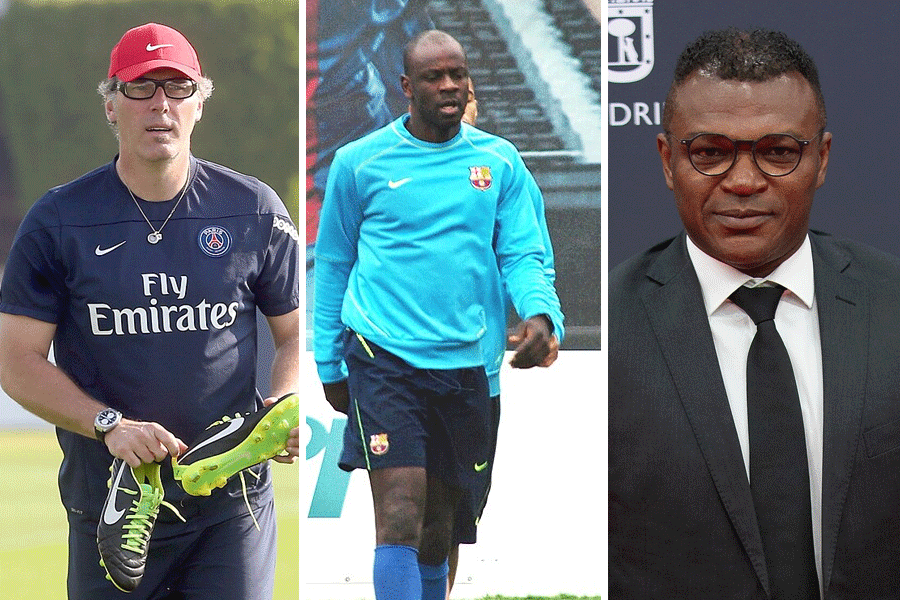
Laurent Blanc, Lilian Thuram and Marcel Desailly. Wikipedia pictures
During his playing career, Blanc shared the dressing room with Lilian Thuram, Marcel Desailly and Patrick Vieira, players who were immigrants and who shaped one of the greatest teams in French football history.
Today, Thuram's son Marcus represents France at the World Cup.
Then, again, there is Suzuki, a 6-foot-3-inch black goalkeeper representing Japan, where the right-wing is rising even as the country grapples with a dwindling population.
And Irankunda has become the youngest World Cup goalscorer for Australia, a country where anti-immigrant sentiment is also on the rise. His journey from a refugee camp in Tanzania to one of the world’s biggest sporting events would once have seemed improbable.
Today it reflects the increasingly global nature of football.