Earthy solution
Sir — Most Bengali lives would be incomplete without Gelusil or a Pan 40. Macaques in Gibraltar seem to have come up with a similar, albeit earthier, alternative to indigestion. Scientists have found that they are eating soil to settle their stomach lining before and after eating junk food like crisps, chocolate, and ice cream from tourists. According to the Cambridge University study, the need for eating mud is driven entirely by the simians’ proximity to humans. This behaviour highlights a desperate survival tactic where animals are forced to eat dirt to counteract the toxic effects of human junk.
Tania Mahato,
Hooghly
Suspicious timing
Sir — Freedom of thought is a precondition for freedom of expression. Srijato Bandyopadhyay, the Bengali poet, was charged in 2017 with allegedly denigrating Hindu sentiments in a poem that mentioned a trishul. Back then, the chief minister of West Bengal had prevented his arrest. It is astonishing that amid a high-pressure assembly election in Bengal, that order has been resurrected and an arrest warrant issued against the poet (“Srijato: Arrest order on me”, April 23).
Pratima Manimala,
Howrah
Sir — Just before the first phase of the 2026 Bengal assembly elections, controversy erupted over a reported arrest warrant against Srijato Bandyopadhyay. He described the situation as a deliberate attempt to create fear psychosis, noting the timing — just a day before polls — as a concerning index of the country’s decline.
Khokan Das,
Calcutta
Show restraint
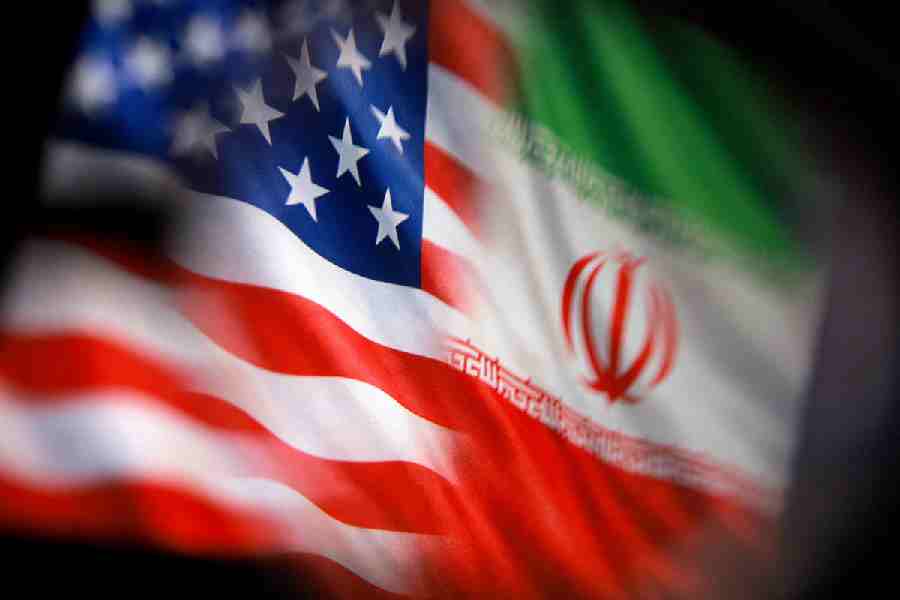
Sir — The president of the United States of America, Donald Trump, has extended the ceasefire with Iran indefinitely. However, he has not lifted the naval blockade on Iranian ports as a confidence-building gesture before a second round of talks in Islamabad. Iran has insisted that the ceasefire extension only makes sense if the blockade is lifted. Although Trump stated there is no timeframe for ending the war, Tehran maintains that reopening the Strait of Hormuz is impossible under current hostile conditions. To break this deadlock, the US must forego imperialistic ambitions and show restraint.
G. David Milton,
Maruthancode, Tamil Nadu
True heroes
Sir — While discourse on the assembly elections focuses on voter turnouts and political manifestos, we must acknowledge the caregivers who run ‘election kitchens’ in remote areas. These women provide vital sustenance to polling officers working under gruelling conditions in rural booths. This labour is not just about providing meals; it is an act of nurturing those who protect the ballot and, in turn, democracy. Their silent dedication allows the poll machinery to function smoothly. It is time we expanded our definition of election heroes to include the caregivers, recognising that democracy is sustained as much by these humble acts of care as by voting itself.
Nilachal Roy,
Siliguri
Academic gap
Sir — The gap between government and private schools is widening as parents favour private, English-medium institutions to improve children’s career prospects. But high costs, including rising fees, transportation, and laboratory charges, make these schools an unaffordable luxury for many. Often operating more like businesses, these institutions force parents to buy uniforms and stationery on-site, imposing a heavy financial burden. As the standard of government schools declines, parents are left with no choice but to yield to this commercialisation. Education’s stakeholders must address this issue to ensure that promising students are not held back by financial barriers.
Iftekhar Ahmed,
Calcutta