The current international system is often referred to as ‘post-Western, ‘multipolar’ or ‘moving eastward’. These terms imply that the influence of the West is declining and being replaced by other civilisational models. However, this characterisation of the world as being ‘beyond’ Western modernity is incorrect because it overlooks the fact that the current situation can be described more accurately as a ‘collision’ between Western modernity and other civilisational models, not an evolution away from Western modernity.
While the idea of a ‘collision’ does not indicate an inevitable decline of the West or validate alternative civilisational models, it does indicate that the existing international order, although functioning through concepts inherited from early modern European thought, has lost its shared ethical foundation across many societies that did not fully absorb its philosophical underpinnings.
What do we mean by ‘early modern European concepts’? They refer to limited and specific ideas such as territorial sovereignty, individual rights as the basis of legitimating political authority, markets as semi-autonomous, moral communities, and a rational-bureaucratic government. These concepts crystallised in response to concrete crises occurring within Europe between the 17th and the 18th centuries (religious wars, dynastic warfare, fiscal crises) and were then institutionally established by means of the sovereign State and, subsequently, reproduced globally via empires and international law.
Although the term, ‘the West’, often represents a vast array of historical, philosophical, and cultural developments, it is important to note that late-capitalism, digital surveillance technologies, platform monopolies, or contemporary neoliberal policy regimes all have separate historical developments associated with them. Therefore, while they are all derived from the legacy of the West, they can be understood independently.
Currently, the most pressing challenge confronting global politics is not caused primarily by technology or market forces. Rather, the historical conditions that led to continuing globalisation of an earlier modern political-juridical framework, which was developed under the historical conditions of the early modern period, have now ceased to exist, thereby challenging the legitimacy of this framework.
The contemporary crisis of political, economic, and social order is not due to the demise of these concepts; indeed, they remain firmly embedded in many societies. The struggle of our times is not against these ideologies but rather against their inability to function in a moral universe that continues to become more complex, economically interdependent, and historically pinned by grievance.
Two examples of this collision are demonstrating themselves — in Ukraine and in environmental governance.
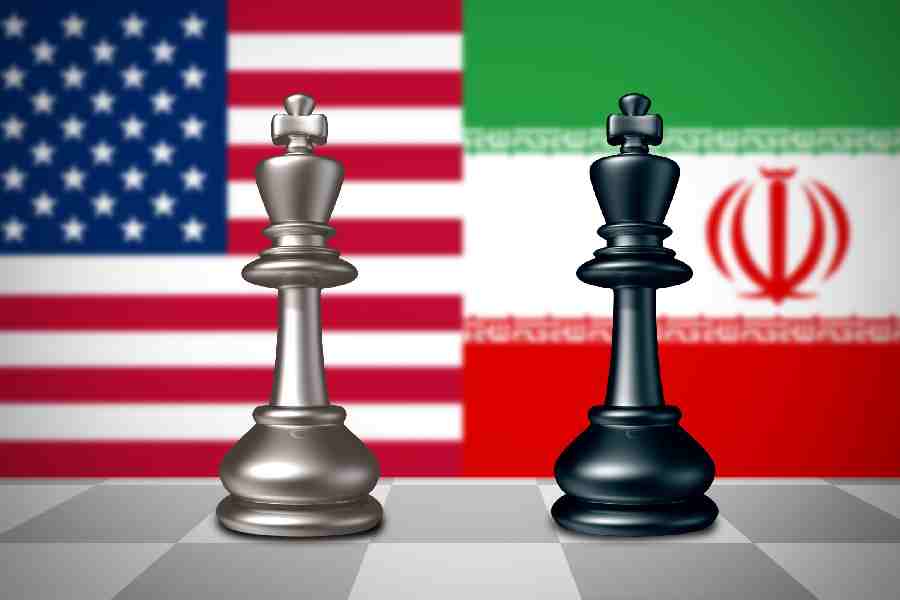
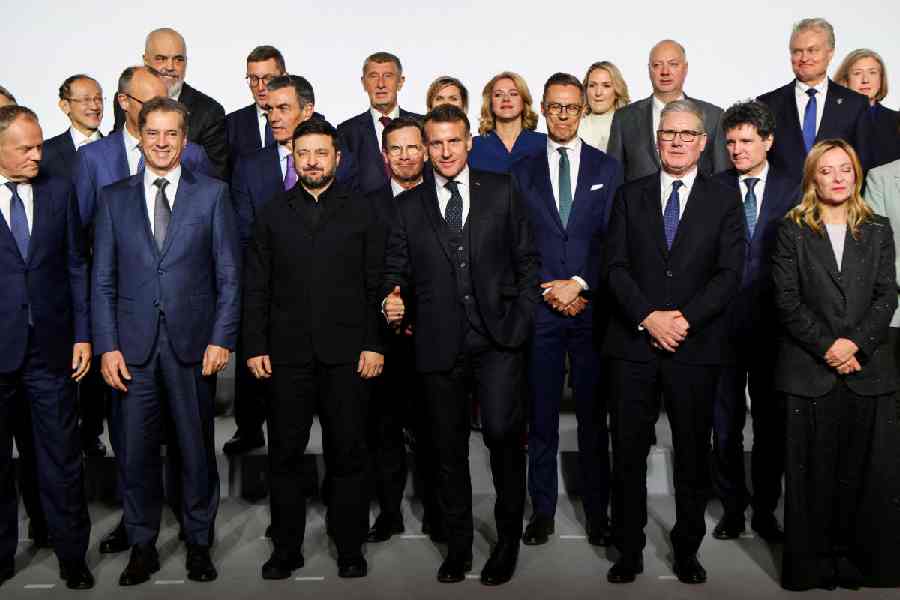
The conflict in Ukraine is presented as a battle between a ‘rules-based international order’ and nation-states that have revised it. The conflict is also described in terms of ‘sovereignty’, the principle that territorial borders of states are legally binding and ought to be respected by other states. Ukraine argues its rights to sovereignty over the territory it claims and uses the concept of ‘sovereignty’ to justify its claim against Russia. Russia justifies its actions using the ‘security doctrine’ and ‘spheres of influence’ theories. NATO claims to be defending an ‘order’ based on sovereign borders and balance of power.
Although sovereignty remains the basis for many legal claims, it no longer provides legitimacy when different historical or moral perspectives compete for legitimacy. Sovereignty does not guarantee that states will not conduct war against each other; it is designed simply to regulate how wars are fought.
In particular, the level of rearmament demonstrates this point. According to the Stockholm International Peace Research Institute, global military spending was about USD 2.7 trillion (nominal) in 2024, with Europe having its highest increase since the fall of the Soviet Union. This increased level of military spending does not indicate a breakdown of the international state system, but rather a strengthening of that system.
The same structural tension is even more exposed by climate change. Global climate governance assumes that sovereign states are the only moral agents to reduce emissions. The negotiations for the reduction of emissions are based on nationally determined contributions and market mechanisms based on the assumption that the responsibility for emissions is bounded by territory.
However, the climate crisis is not sovereign in origin or effect; it is the cumulative result of industrialisation/extraction, which has been historically concentrated in high-income countries but has had a global impact. According to the World Bank, high-income countries are responsible for the majority of the world’s historical emissions, while low-income countries and small island developing states are experiencing the greatest vulnerability to the climate crisis. The crisis is not, therefore, a purely technical issue but a philosophical one. But the existing frameworks for action do not provide legitimacy to engage in actions that are commensurate with the harm done.
The limitation of early modernity is also reflected in its most effective moral export: ‘individual rights’. Rights are important tools for challenging tyranny and are the language of norm for international institutions; nonetheless, they do not constitute all moral legitimacy in all societies. In many cases, political obligation is defined in a relational context rather than an individual context. These traditions are not normatively superior to others, nor are they devoid of coercive power; they represent moral pluralism.
The problem occurs when diverse moral systems are put together in a single legal word. While rights can exist in both law and as a form of legitimacy, they will not carry the same weight regardless of where they were created. As such, while universal human rights exist, there are limits to what human beings consider universal.
Redefining modernity does not mean moving away from sovereignty or rights; it also does not mean romanticising alternatives. Rather, it means recognising that although early modern concepts are time-bound, they are not neutral or universal. This means that we will have to make choices between two opposing forces, such as pluralism leading to fragmentation and universalism leading to coercion. The solution does not exist without friction.
The most pressing issue in international politics today is not whether the West will fall or be replaced, but rather how we can adapt our international order based on inherited concepts while also acknowledging the limits of these inherited concepts. Until this
tension is acknowledged, the international order will remain both functional and broken.
Tushar Mishra is a History graduate currently reading Law and Philosophy