Just after the prize distribution of the World Cup was over, there was a round up session of the tournament on television. During that discussion Tony Greig ? an acute, if somewhat overenthusiastic, observer and analyst of the game ? said that one of his abiding memories of this World Cup would be the noticeable ?Asian influence? on the game. The words within quotation marks are his.
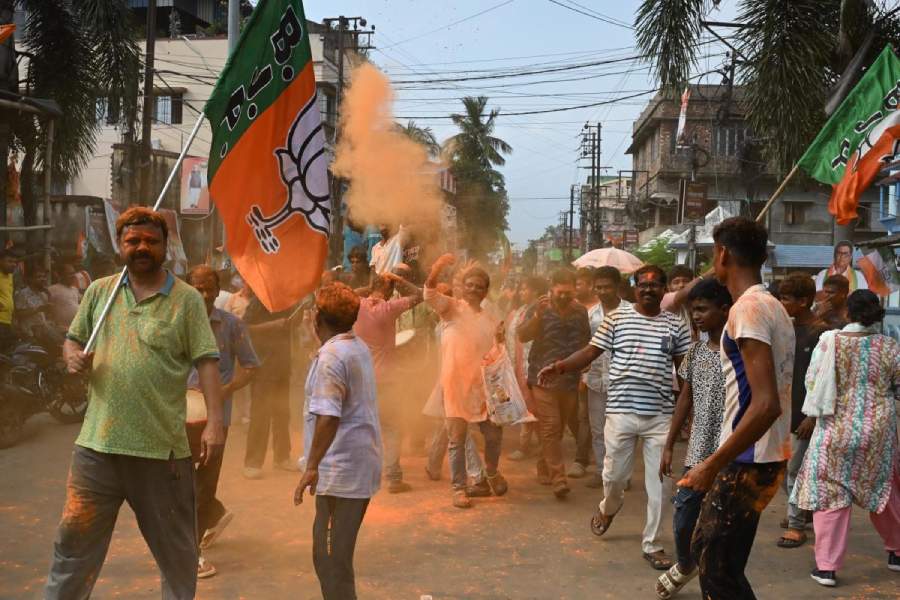
Greig went on to expand what he meant by Asian influence. He was referring to the tremendous enthusiasm of the crowd, the noise and the carnival atmosphere that prevailed in most of the grounds of England where the matches were played. There is no doubt that these features were something new in the cricket fields of England. Never before had English grounds seen so many pitch invasions on such a mass scale; never before had places like the Oval, Headingley or even Hove and Taunton heard drums, cymbals and even conch shells; never before had the hallowed ambience of Lord?s been polluted by cries of ?hai hai?.
From the way Greig voiced his opinion it would appear that he welcomed these developments. He was, in fact, quite ecstatic about them and hoped that these features would spread, adding to the drama and popularity of cricket. Greig?s enthusiasm about crowd involvement and participation fits well with the way he himself played cricket. Many in Calcutta will remember him going down on his knees at the Eden Gardens in mock supplication to the crowd to plead with them to keep quiet while he batted; or the way he made his team run the lap of honour after winning the test match in Calcutta in the winter of 1977.
His euphoria, however, deflects attention from the negative side of the kind of crowd involvement being witnessed on cricket fields. There are obvious ones. From what was done to Venkatesh Prasad ? he was borne shoulder high by the crowd because he had failed to run off the field before the crowd rushed on to the ground ? it is clear that players run the risk of injury. There is the danger of players being attacked: a cracker was thrown at Keith Arthurton in Calcutta during the Hero Cup in 1994. Drums and cymbals are all very well but the noise they create makes the job of the umpire difficult, and batsmen too often fail to hear calls. Overt partisan behaviour increases tension and increases possibilities of hostilities between sections of the crowd.
It is nobody?s case that crowds should not be involved or that spectators should not be partisan. Crowd support has always been part of cricket and it has added to the buoyancy of the game. Today, in the age of sponsorships, crowds are the market which ultimately pays for the game. A distinction has to be made between partisan and enthusiastic crowds and mob frenzy.
It is natural to expect that the home team will win and that the home team will have overwhelming crowd support. This has been the expectation since cricket began. But cricket lovers the world over are known by their willingness to recognize and applaud good cricket whenever it is played even if it is by the opposition. Similarly, bad cricket on the part of the home team has been known to be booed and barracked. This kind of crowd behaviour has been one of the givens of the game. Slow batting, negative bowling and bad sportsmanship have been barracked or slow handclapped or occasionally shouted down. A good innings or a spell of outstanding bowling has been applauded and the person concerned given a standing ovation.
Things have been livened up by a couple or so of humorous barrackers who could bring the house down with their loud and witty comments. Some of these like Yabba on the Sydney Hill before World War II and Yorkshire Fanny at Lord?s have become part of cricket lore. There was in all this a balanced and gracious ambience, the partisanship was healthy and there was fun in the sense of involvement. Above everything else, nobody went overboard in victory or in defeat.
These aspects are in sharp contrast to what is happening today. If a captain loses a match or a tournament his effigy is burnt; a player of the losing team has his house stoned by a mob; a captain?s mother has to plead for sanity so that her son?s and his family?s lives are not endangered. In Calcutta twice matches have been stopped because the crowd showed its displeasure at the poor performance of the home side.
This is the most extreme side of mob frenzy. But this frenzy begins with the flag waving, the drum beating, the cries of ?hai hai? ? the so called carnival atmosphere ? which are common sights in cricket grounds these days and which have won the approbation of the likes of Greig. The problem is that in a carnival atmosphere, cricket and the appreciation of its finer points take a back seat. Calcuttans should be familiar with the logic of this since every year the city hosts a book fair in which the fair element is more important than the books.
One aspect of the partisan crowd behaviour which spills over increasingly into hooliganism is the fact that in the former colonies of Britain ? in south Asia, in Australia, in the Caribbeans and even in South Africa ? cricket has become imbricated with national pride. Sentiments of nationalism are heightened with victory and defeat in a cricket match. Cricketers overnight become heroes or traitors. This leads to expressions of delight or anger which ? to use an old fashioned phrase ? are not quite cricket.
As I write these lines I can almost hear charges of elitism being levelled against me. I prefer to see cricket being played and cricket being watched in a more relaxed and informed way. If this is elitist so be it. Cricket has become more popular and democratic. But those who believe that democracy means mob rule and indecent behaviour in the playing fields or in the political arena should perhaps rethink their notions of democracy. Something more than cricket is at stake here.
 Thursday, 07 May 2026