Tangy case
Sir — Some estimates suggests that over 4.8 crore cases are pending across various levels of the Indian judiciary. But one such long-drawn case has finally come to a close — a legal battle over one missing golgappa has been wrapped up after 12 years, 15 witnesses and a brief jail sentence. One does not know whether to cheer for the fact that India is a polity where the theft of even one golgappa can lead to a quest for justice or to be shocked that this case dragged on for 12 years, wasting the court’s precious time. While golgappas are undoubtedly serious business for Indians, does it really warrant a court case?
Rima Roy,
Calcutta
Oil shock
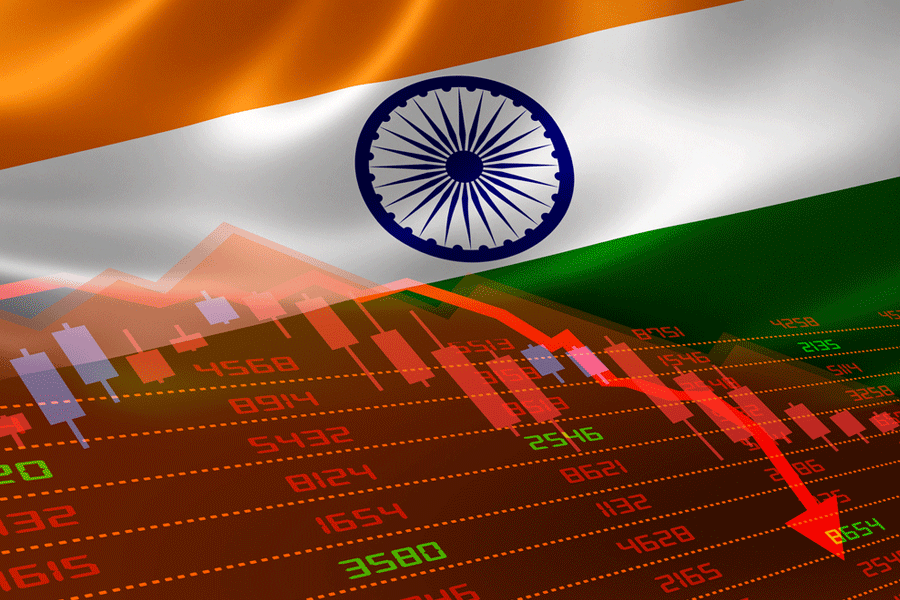
Sir — The excise duty cut on petrol and diesel will shift the burden of the price rise from oil companies to the government. This decision may ease pressure on Indian Oil Corporation Limited, Hindustan Petroleum Corporation Limited and Bharat Petroleum Corporation Limited. However, revenues from the petroleum sector remain crucial for public spending. Data from the Petroleum Planning and Analysis Cell show large fiscal dependence. A potential revenue loss of Rs 1.1 lakh crore, as estimated by the State Bank of India, raises valid concerns about budgetary stability.
Aloke Kumar,
Gaya
Sir — Retail fuel prices remaining unchanged despite duty cuts raises important questions. The Centre has reduced excise duty; yet consumers have not received immediate relief. Oil marketing companies had absorbed under-recoveries of about Rs 2,400 crore daily, according to the petroleum ministry. The policy appears to be aimed at strengthening company finances rather than lowering pump prices. Citizens deserve clarity on timelines and future pricing. Transparent communication will help avoid confusion and maintain confidence in government decisions.
Altaf Khan,
Mumbai
Sir — India’s fiscal position depends heavily on petroleum revenues. The Petroleum Planning and Analysis Cell reported total contributions of Rs 7.4 lakh crore in 2024-25. The Centre received Rs 4.15 lakh crore while states collected Rs 3.25 lakh crore. Cutting excise duty risks widening fiscal pressures on the State. The rise in the ten-year bond yield to 6.93% reflects similar market concerns. Policymakers must balance short-term relief with long-term fiscal discipline at a time when global crude prices remain volatile.
Anwar Saeed,
Calcutta
Sir — Global crude oil prices rising from $69 in February to $147.24 per barrel on March 24 has created significant challenges. The conflict in West Asia threatens supply stability and increases uncertainty. Some Asian countries have introduced work-from-home policies to reduce energy consumption. India has imposed an export tax on diesel to secure domestic supply. These measures indicate pressure on energy management. Sustained high prices may eventually affect retail fuel costs despite current policy adjustments.
B. Sanyal,
Calcutta
Sir — Fuel prices influence inflation, transport costs and household expenses. Holding retail prices steady may help control inflation in the short term. However, the State Bank of India estimates a net revenue loss of at least Rs 1.1 lakh crore in FY27. This gap may require adjustments elsewhere in the budget. Fiscal prudence remains necessary when external shocks continue to disrupt energy markets.
Abhijit Roy,
Calcutta
Sir — Oil marketing companies have absorbed significant losses due to rising crude prices. The excise duty cut partially offsets these losses and supports company finances. A clear roadmap will help address concerns about future fuel pricing.
Anupam Neogi,
Calcutta