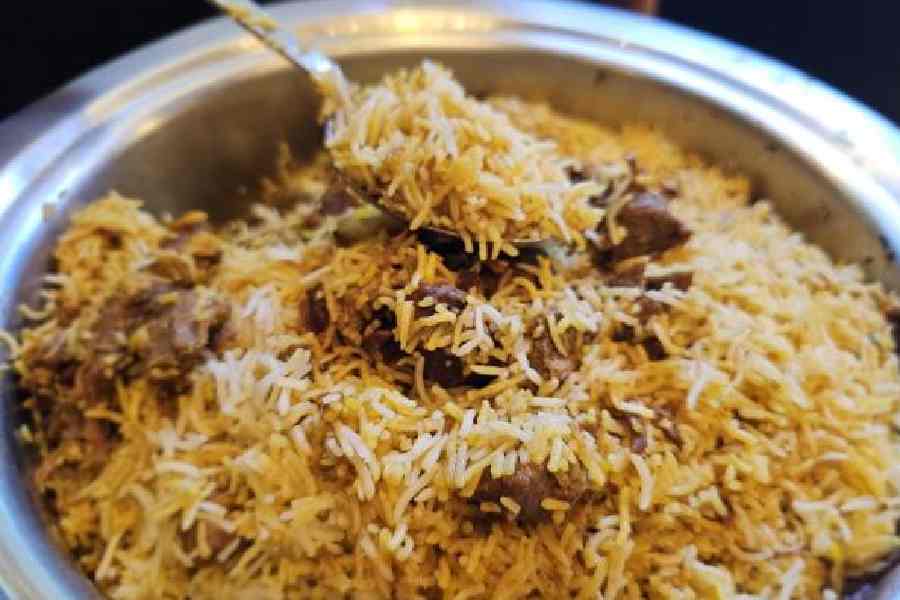
Uniform taste
Sir — Calcutta’s street food scene once displayed remarkable variety. Pice hotels served rice with fish curry, vegetables and lentils while small stalls sold luchi, kochuri and other snacks. The current dominance of biryani stalls suggests a gradual narrowing of that diversity. Reliable dishes that guarantee sales often replace more delicate preparations. What is more, biryani travels well and remains intact after long journeys in delivery bags, while many Bengali dishes depend on fresh frying or contain thin gravies that spill easily. Consumers may still enjoy traditional meals at home, yet the public food landscape risks becoming less varied.
Roshmi Sengupta, Calcutta
Public spat
Sir — The recent disagreement between the president, Droupadi Murmu, and the chief minister of West Bengal, Mamata Banerjee, highlights a troubling trend (“Murmu, Didi in public duel over protocol”, Mar 8). Constitutional offices must communicate carefully during politically sensitive moments. The president’s public remarks about attendance and venue arrangements invited a political response that could have been avoided through quieter consultation. The Centre’s decision to escalate the matter through protocol inquiries may further polarise the situation. National institutions gain strength through measured conduct. Calm engagement among the Rashtrapati Bhavan, the Union government, and the West Bengal administration would serve the public better.
Hemanta Sasmal, Howrah
Sir — Public exchanges between high constitutional offices rarely help democratic institutions. Droupadi Murmu’s remarks during her Bengal visit and Mamata Banerjee’s response have created unnecessary tension. The president has every right to raise concerns about tribal welfare, yet such criticism from the country’s highest office carries political implications and should have been done with the government in confidence. The Union government’s swift intervention has also deepened the impression of partisan alignment. Greater restraint from the president and the Centre would protect institutional dignity while allowing genuine concerns about tribal development to be addressed.
Sukhendu Bhattacharjee, Hooghly
Sir — Concerns about the welfare of Santhali communities deserve attention. Droupadi Murmu raised these issues during her visit to North Bengal, reflecting her long association with tribal communities. However, when such observations are made publicly during a politically charged period, they risk being interpreted as part of a wider political argument. The Centre’s criticism of the state government also appears unusually sharp. A more balanced approach from national authorities would allow a discussion on tribal welfare without turning it into a confrontation between governments.
Alok Ganguly, Nadia
Sir — Protocol during a presidential visit is important, yet it must be handled with care. The Centre has sought explanations from the West Bengal government regarding arrangements during Droupadi Murmu’s visit to the state. Accountability is necessary, though public accusations can create unnecessary controversy. The president’s office traditionally maintains distance from partisan exchanges. Greater restraint from the Rashtrapati Bhavan and the Union government would help maintain that tradition and keep the focus on governance.
Murtaza Ahmad, Calcutta
Sir — Political disagreements between governments are common, yet disputes involving the president of India remain rare. The exchange between Droupadi Murmu and Mamata Banerjee therefore deserves careful reflection. The president’s concerns about venue changes and attendance may be genuine, though airing them at public events has intensified political interpretations. The Centre’s strong language against the state government has also widened the divide. Constitutional authority carries moral weight. Quiet dialogue would have resolved these matters more effectively than public criticism.
Prasun Kumar Dutta, West Midnapore
Sir — Many citizens may find the recent controversy surrounding Droupadi Murmu’s Bengal visit confusing. The issue began with concerns about arrangements for a tribal conference and the absence of senior state leaders. Such matters usually remain administrative questions. The president’s public comments and the Centre’s firm response transformed the matter into a national political dispute. Institutions function best when disagreements are addressed privately and respectfully.
Chitra Ghosh, Calcutta
End of an era
Sir — The passing of Hari Krishan Dua invites reflection on an era when editorial authority rested largely on professional credibility. Dua led several prominent newspapers and later served governments without losing a reputation for integrity. That balance is not easy. Journalism depends on editors who maintain distance from power even while understanding it closely.
Kajari Das, Calcutta