Wrong focus
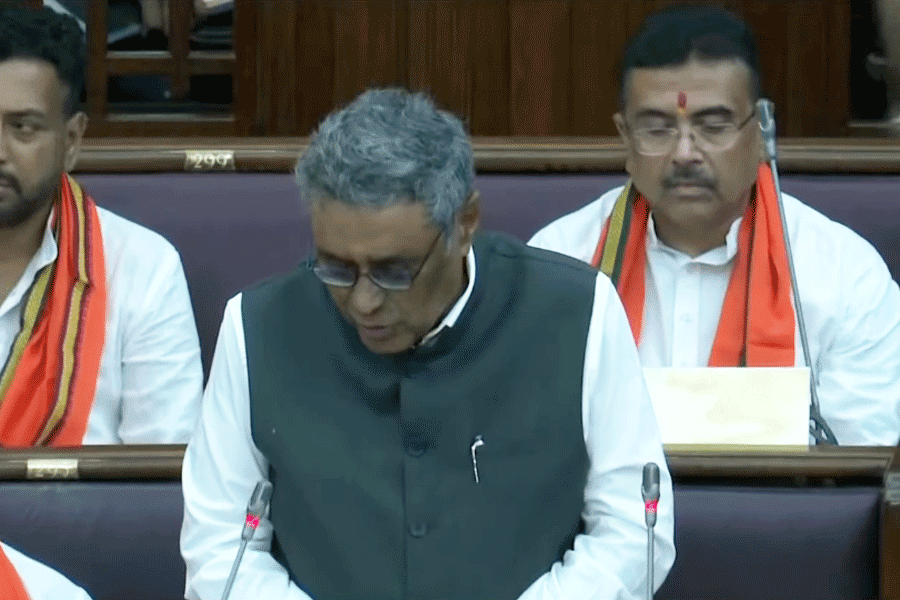
Sir — Before the last assembly election in Bihar, many violent speeches were made by ministers cutting across party lines. From death threats to promises of gouging a minister’s eyes out, politicians did not shy away from expressing violent thoughts. Yet, the deputy chief minister of Bihar, Vijay Kumar Sinha, has declared war on a butcher shop, suggesting that the mere sight of meat near a school might instil “violent tendencies” in students. One wonders why such a concern does not extend to Sinha’s own fraternity. A good plate of Champaran mutton can make allies of enemies rather than instigate violence.
Rohit Sinha,
Patna
Barbaric war
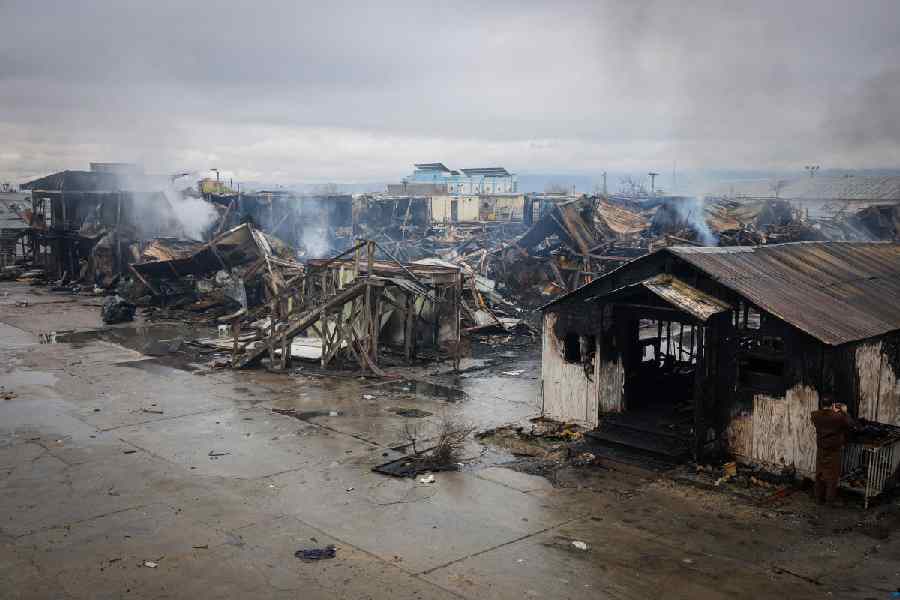
Sir — While Pakistan claims that it targeted an army base in Afghanistan and not a hospital, India has denounced the attack as a brutal act of war. From Ukraine to Iran, humanity is being pulverised as conflicts spread. Recently, Israel bombed a hospital in southern Lebanon. Similarly, a missile strike on an Iranian school took over 170 lives, mostly those of children. International law and the Geneva Conventions mandate that critical infrastructure and medical personnel must be protected even in war. Such attacks are illegal and morally unacceptable. Yet statistics from the World Health Organization show these regulations are being ignored. With rampant attacks on healthcare institutions in Ukraine and the targeting of water and oil bases in West Asia, it is clear that basic norms of morality are no longer being followed by world leaders.
Abhijit Roy,
Jamshedpur
Sir — The editorial, “Lawless wars” (Mar 19), rightly highlights the alarming disregard for international law. Atrocities, such as Pakistan’s bombing of a medical rehabilitation centre in Kabul, the missile strike on an Iranian school, the staggering civilian death toll in Gaza, and the targeting of civilian infrastructure in Ukraine and the Gulf, reveal a clear violation of the rules of the United Nations. Governments often dismiss these crimes as individual errors, yet leaders like Donald Trump have openly defied international mandates.
Jahar Saha,
Calcutta
Sir — The strike on an Afghan medical facility by Pakistan is a brutal blow to humanity. Both the Taliban-ruled Afghanistan and Pakistan are locked in a cycle of bombings and retaliatory strikes (“Hospital hit in Kabul, 400 dead”, Mar 18). Terrorism is a global menace; Kabul and Islamabad must end this rivalry and choose dialogue and diplomacy over attacks that kill civilians.
Kirti Wadhawan,
Kanpur
Strike a balance
Sir — The Supreme Court’s scrutiny of the Digital Personal Data Protection Act, 2023 is timely (“Fine balance”, Mar 18). If every detail about a public official is deemed personal, the Right to Information becomes hollow and accountability gives way to secrecy. Yet privacy is not optional either. The practical way is to separate what concerns the exercise of public power from what belongs to one’s private life and to allow the disclosure of limited personal data only when it is necessary to expose wrongdoings or to protect public institutions.
K. Chidanand Kumar,
Bengaluru
Costly civility
Sir — Two Indian-origin men were recently very heavily fined for spitting paan in London. This is the right step as public behaviour has a disproportionate impact on local infrastructure and can inflate municipal upkeep budgets. The difficulty of removing these stains should correctly lead to high financial penalties. Perhaps this will deter such incivility. The Indian government should also punish those who damage public property abroad as they sully India’s image.
Tharcius S. Fernando,
Chennai