India's prodigal sons and daughters have returned, if only to receive the honours bestowed upon them by a grateful government. Thirty expats received the Pravasi Bharatiya Samman Awards this year. But as is often the case with government honours, merit was allegedly sacrificed at the altar of political expediency.
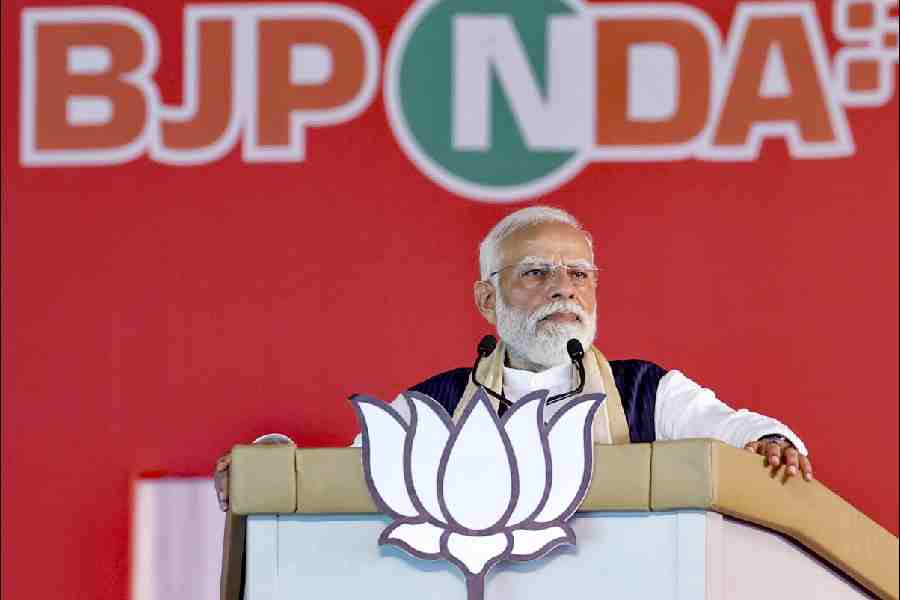
Those nominated for the samman are expected to meet at least one of the eight eligibility criteria. This year, six of the 30 winners met an additional - and perhaps the most important - condition: they were part of a coterie that has direct access to the prime minister. The winners included three Indian Americans who had been cherry-picked by Narendra Modi to organize the jamboree at Madison Square Garden. A member of the Republican Hindu Coalition, who worked his magic to revive Modi's ties with the United States of America, too, won the prize, as did an Indian Canadian, who facilitated a visit by Canadian law-makers to Gujarat then under Modi's watch. Significantly, some of these names were selected by a pliant panel, and not by the Indian missions.
Patronage is a virtue in India. The practice of granting privileges in return for primarily political favours has been institutionalized in the rungs of power, from local administrations to the Central government. Some of the choices of the selection panel - the external affairs minister is a member - should not come as a surprise. It will also be naive to expect that the awards would be more representative of the full spectrum of Indians living abroad.
Blind spots
But what can, and ought to, change is the nature of India's vision towards such specific segments as migrant workers within the expatriate community. There are two common features in official commentaries on the diaspora. They inevitably mention the surge in the number of emigrants. (A recent report estimated that there are over 8.5 million Indian workers in the 17 Emigration Check Required nations alone.) Next, they go on to highlight the remittances sent back by such workers. (Indians in the ECR economies remit $69 billion annually, which makes up 3 per cent of India's GDP.)
India's official engagement with its diaspora remains overwhelmingly quantitative. Economics (the value of remittances) and demographic data (the size of the émigré population) dominate the official discourse. Consequently, what disappears through the cracks are the challenges - economic and cultural - that confront vulnerable segments of the Indian population on foreign shores.
The problem is compounded by another blind spot in policy. Students and professionals are often at the centre of focus, even though they are outnumbered by migrant workers. In Kuwait, which has the largest number of Indian residents in Arab nations, 280,000 Indians are domestic workers - drivers, cleaners, gardeners, maids - while 42,000 are students. The troubles faced by Indian migrants, as the following example shows, are specific to their settings. During this year's Pravasi Divas, The Telegraph profiled Ashraf Thamarassery, a Malayali, who has repatriated approximately 3,886 dead bodies of migrant workers, a majority of them Indians, from the United Arab Emirates in the last 17 years with minimal help from the Indian mission. Thamarassery's selflessness should not deflect attention from the larger failure of India towards its own people.
Much needs to be done to protect the interests of those on the margins of the diaspora. Confronting dubious recruiting agents, unfair labour laws -the kafala system that strips workers of basic rights - and trafficking is more important than rewarding the prime minister's favourite expats.