|
|
| Villagers queueing up to collect rice, Lalgarh |

The government of India basks in the reflected glory of the economy’s good performance, and has grown complacent about its own performance. In the circumstances, the economic survey brought out by the Organization for Economic Cooperation and Development is a valuable view from the outside. The OECD published a similar survey — its first one for India — four years ago. It was a gushing encomium. The new survey also paints a rosy macroeconomic picture. Beyond it, however, once it gets down to details, the OECD’s analysis is more nuanced and critical; the OECD has come to know us a bit better.
The OECD tries to penetrate the opacity of government debt. What the Central government shows as debt in the budget is only part of it. In addition, it borrows through what the OECD calls public accounts; these accounts are highly convenient because the government borrows through them without Parliament’s approval. They were first used to recapitalize bankrupt government banks in the 1990s. Later, they were used to compensate government oil companies for the subsidies they were forced to give. Small savings deposits are really borrowings of the Central government from the public, but they are automatically lent out to state governments; why, no one knows. After working through the complications, the OECD concludes that the overall Central plus state debt-gross domestic product ratio in 2010 was 70.8 per cent. It suggests abolition of public accounts, and transparent borrowing always with Parliament’s approval. This should pose no problem for the Centre, for members of parliament never show any interest in the level of government debt.
The government has three measures of its deficit — primary, revenue, and fiscal deficit. The Bharatiya Janata Party government had passed the Fiscal Responsibility and Budget Management Act in 2003 which required closing of the revenue deficit (that is, equation of revenue — non-capital — expenditure and revenue) and reduction of fiscal deficit (total expenditure minus revenue) to 3 per cent of GDP by 2007-08. After the Congress defeated the BJP and came to power in 2004, Finance Minister P. Chidambaram threw the target out of the window and went on to spend merrily. The OECD suggests that the government should scrap such targets, prepare a balance sheet of its assets and liabilities, and write off depreciation on its physical assets as well as capital gains and losses on its financial assets against revenue. The new revenue balance would show the change in the government’s assets every year. The government should then adopt the golden rule that it would run a zero or positive revenue balance; in other words, that it would borrow only to finance assets and not to finance consumption. If it did that, it would have more money to spend on health and education. Its draft on private savings would stop, and they would go entirely to finance asset creation.
Growth in GDP must go to some people and make them less poor. Unless income distribution worsens, growth will make most people less poor. The survey plots countrywise combinations of per capita GDP growth and change in poverty ratio over the 1990s and 2000s. The ratio fell considerably in China and Vietnam; it fell even in Pakistan, whose growth performance was miserable. But it did not in India, where the governments spend so much on income redistribution programmes, especially food distribution and employment generation.
Of the redistribution programmes, the Mahatma Gandhi National Rural Employment Guarantee Act is confined to villages, and can do nothing to alleviate urban poverty. It generally pays wages 25-50 per cent above the market wage; it therefore creates more jobs than there are takers, and takes workers away from other available work. More important, it raises incomes of the poor only on the condition that they come and spend hours working on public works. Their poverty can be relieved without their having to do that. Unconditional cash transfers are a more effective way of making people less poor.
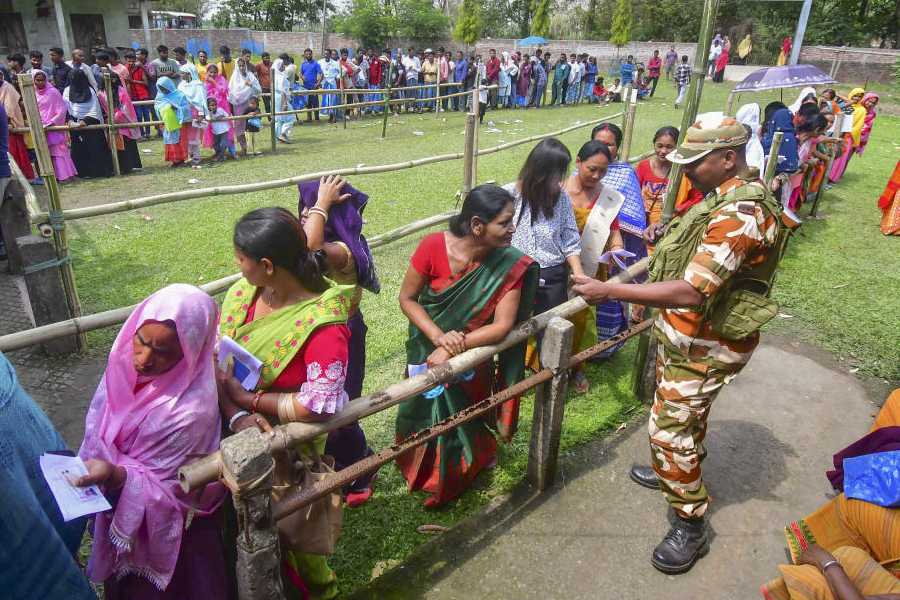
The public distribution system does serve a higher proportion of the poor; but surprisingly, less than a half of even the poorest got grains from the PDS. The PDS is supposed to be available only to the poor, and should therefore reduce the cost of grains to them. But the average price of rice paid by the rich and the poor is just about the same. The scheme is so leaky that it hardly serves the interests of the poor. Other subsidies — on electricity, fertilizers, irrigation, bottled gas and kerosene — are also shown to go more to the rich. Thus, the government’s huge expenditures on subsidies to the poor, in so many different forms, go more to the rich than the poor, and more to the dishonest than the honest.
The OECD considers the reform of the securities market to have been a success; the only suggestion it has is that Chidambaram’s securities transaction tax almost doubles the transactions costs in what is the world’s most efficient securities market, and should be abolished. It points out the consequences of having too many regulators. After a row between two of them, the finance minister gave the insurance regulator jurisdiction over Ulips. He allows maximum commission of 4 per cent over 5 years. The Securities and Exchange Board of India allows 2¼ per cent on mutual funds; so agents prefer to sell Ulips, and mutual funds are losing clients.
More generally, the OECD is critical of the profusion of financial regulators — Reserve Bank of India, Sebi, Insurance Regulatory and Development Authority, Pension Fund Regulatory and Development Authority, National Treasury Management Agency, Deposit Insurance and Credit Guarantee Corporation and Securities Appellate Tribunal. A number of them have little to do, and do even that poorly. For instance, all claims on DICGC have come from bankrupt cooperative banks; no commercial bank has ever failed. But 93 per cent of its income comes from banks. Surely they should have to pay much less for deposit insurance.
The OECD’s main critique concerns the RBI: it handles too many things, and runs into conflicts between its functions as well as with other regulators. It should divest itself of some of its responsibilities. It should sell the National Bank for Agriculture and Rural Development to the government. It should sell the government bond market to a private operator. And it should give up issue and management of government debt to the proposed NTMA. It should be possible to appeal against the RBI’s decisions — it should be subject to an appellate tribunal like other regulators. And where there is a law, for instance the Foreign Exchange Management Act, it is the law that should rule, and not arbitrary decisions of the RBI.
The OECD is not the first to note the imperfections of the RBI. Their news has reached all the way to the finance minister, whose solution is to create a super-regulator in Financial Services and Development Council. But FSDC is no regulator; it is just another committee, which will meet occasionally and take arbitrary compromise decisions. What is needed is a radical overhaul of the entire system of financial regulation. It should be based on first principles, and not on compromises between interested institutions. It should be initiated by the appointment of an independent commission. The commission should not consist of Indians alone; it should have members from the world’s best regulators and financial economists. India has done well; its leaders should show self-confidence, and willingness to learn from the rest of the world.