
A LIFE IN SHADOW: THE SECRET STORY OF A.C.N. NAMBIAR - A FORGOTTEN ANTI-COLONIAL WARRIOR By Vappala Balachandran, Roli, Rs 695
Vappala Balachandran's book, A Life in Shadow, talks about an individual and the history of different countries during the Second World War. The war against colonialism was waged by Indians in different countries of Europe. Many forgotten revolutionaries, fought the enemies in foreign lands. They worked amidst mysterious circumstances and their activities spanned continents. The book brings to light the lives of a number of men and women, Hindus and Muslims, from different regions of the country and political spectrum, who secretly worked against British rule. It also notes how Subhas Chandra Bose single-handedly built his organization to fight the raj.
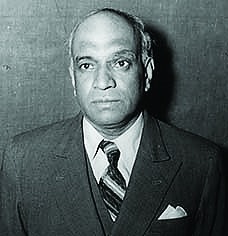
Biographies are always interesting to read. The book is about a man whose life remained an enigma when he was alive. Even after his death not much is known, except few aspects that had been recorded by intelligence agencies during the colonial times. Few are aware of A.C.N. Nambiar. Balachandran, who was closely associated with him during the last phase of the latter's life, pens a sketch that enlivens the extraordinary man and the turbulent time. Other than well-known freedom fighters, the author also introduces many characters who were lost in the pages of history. Amongst the famous are Jawaharlal Nehru and Bose. The two dictators - Adolf Hitler and Benito Mussolini - also make an appearance. Balachandran also talks about the roles played by Suhasini and Virendranath Chattopadhyay, M.N. Roy, Jayasurya Naidu, Soumendranath Tagore, a nephew of Rabindranath Tagore who was arrested along with Nambiar for the Reichstag fire in 1933. But it is the life of Nambiar, his wife Suhasini, and their tragic married life that keeps the reader interested.
Balachandran begins with Nambiar's death in Delhi and then shifts to the past. The narration includes jottings from Nambiar's memoirs that track the rise of Nazism in Germany and India's tryst with independence. This includes stories from his early days, his student life in London and his stay in Berlin. The author's focus on the mysterious life that the revolutionary led, even in his twilight years, raises curiosity. He led many lives, all rolled into one. He was a left sympathizer, a deputy to Bose and a confidant of Nehru. He was also close to Indira Gandhi when she became the prime minister. His contribution to The Hindu from Berlin offers insight into the most turbulent phase of Europe. He was appointed Indian ambassador to the Federal Republic of Germany. He was also thought to be a spy of the Soviet Union. Being a former intelligence officer himself, Balachandran, has managed to unearth many facts that Nambiar never disclosed.
The two former prime ministers, Nehru and Indira Gandhi, opened their hearts to him. The two sisters of Nehru, who differed with Nambiar in matters of policy, also reached out to the latter for moral support. If Nambiar had the ability to take famous men and women along with him, Balachandran, too, deserves credit for an objective evaluation of the man and an accurate portrayal of historical events.
If on the one hand, A Life in Shadow brings out interesting facts about German and Russian history, on the other, many Indian political myths are also corrected. The author manages to bring Nambiar out of the shadow and portrays him as an esteemed figure. The book is a tribute to an individual who dedicated his life to the country and yet died unknown and unsung.