There is a particular kind of confidence, uniquely judicial, that allows a person in black robes to pronounce on the nature of the big questions of life. Neither with the hesitation of a seeker, nor the self-doubt of a scholar, but with the finality of a man who has fully read the petitions before him and considered the arguments carefully. The result leaves no room for equivocation or half-measures. Indian judges have always had this quality.
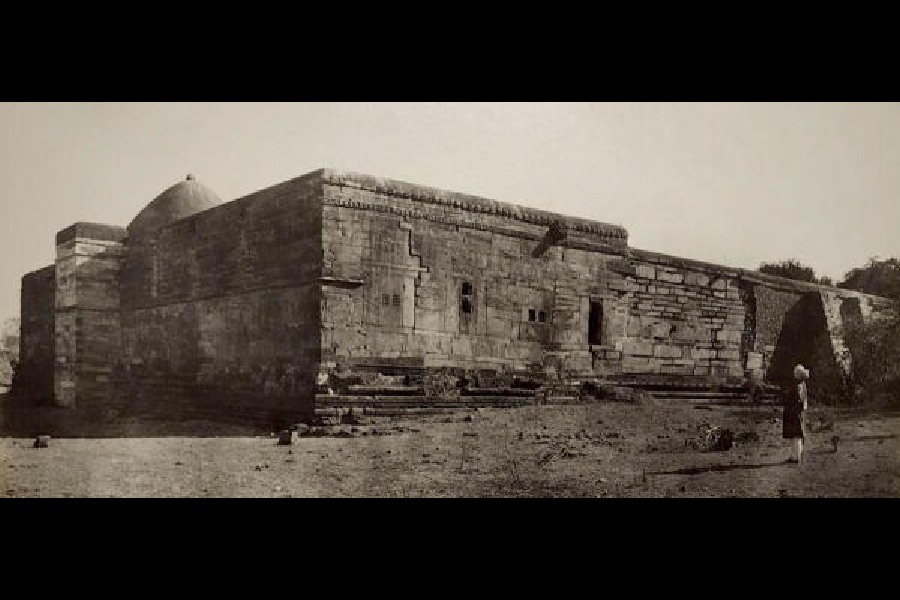
Take two recent examples. First, the Madhya Pradesh High Court's ruling in the Bhojshala-Kamal Maula mosque case, declaring the nearly 1000-year-old structure in Dhar a Hindu temple — not the mosque it has functioned as since the 14th century. Second, the Allahabad High Court's order expressing concern that discarding non-vegetarian leftovers in the Ganga might hurt the religious sentiments of Hindus.
In both cases, the hyphen was the casualty. That seemingly unobtrusive line on the sheet, the flick of the pen, the bridge, not just between two words but two worlds, undone swiftly. Now the worlds — Hindu and Muslim, vegetarians and those who eat meat— are to remain apart, not because they are, certainly not because Hindu scripture requires them to be. But because three judges were convinced this is what the law demands.
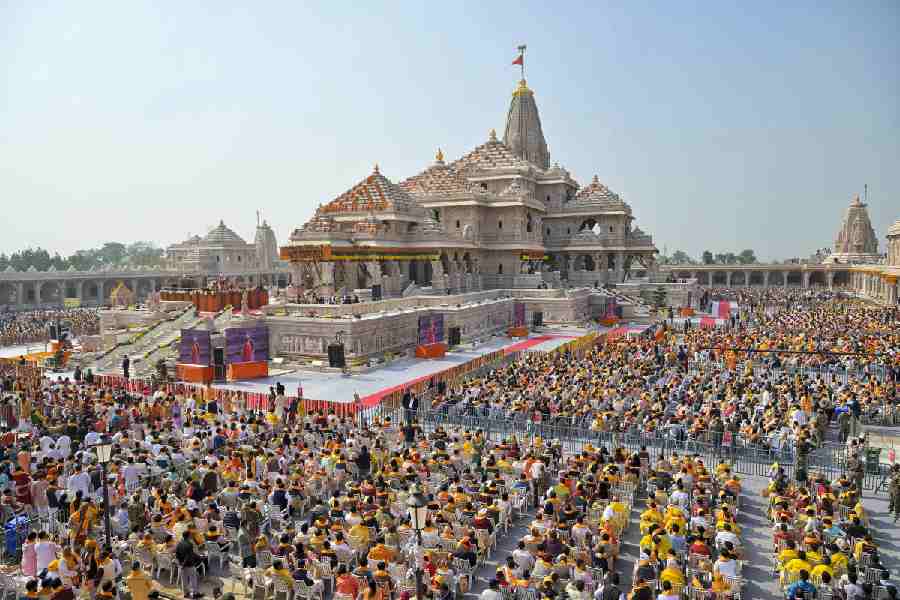
The Bhojshala case was, at its core, not complicated. The question before the court was whether the Bhojshala complex where the Kamal Maula mosque stood had the essential character of a Hindu temple. Consequently, would the current practice of offering namaz on Fridays and a puja to goddess Saraswati on Tuesdays as well as on Basant Panchami be permitted to continue. The court definitively held the structure to be a temple and allowed unrestricted access to Hindu followers. For Muslim worshippers, following the precedent of the Supreme Court in the Ram Janmabhoomi-Babri Masjid case (another example of the hyphenated history of India), it allowed them to make an application for a suitable plot of land elsewhere for the construction of a mosque. A structure that had become syncretic over time would now revert to its essential Hindu character.
To prevent such determinations is precisely the reason that the Places of Worship (Special Provisions) Act, 1991 was enacted. It froze the religious character of every place of worship in India as it stood on August 15, 1947. Given the special nature of the Babri Masjid dispute, it was listed as the only exception. It did not ask whether any structure was once something else. It did not invite archaeological survey reports, carbon dating, or expert testimony on whose deity was inconvenienced by whom and at what point of time in history.
The court has now found a way around this clear legal position. The Act made a limited exception for ancient and protected monuments. For such heritage structures, which are protected by the Archaeological Survey of India, the freeze on the religious character as at the time of Independence and a bar on new cases being filed do not apply. The logic is not hard to find — several archaeological remains may be discovered in the future. Others, on private property, may have certain disputes between the owners and the government that will require adjudication. This is a narrow exception, not an open invitation to bypass the fundamental basis of the Act itself by digging beneath every structure more than a hundred years old to unearth what lies in its depths.
Despite this, with the Madhya Pradesh High Court now having taken the view that this exception swallows the rule, unless the Supreme Court holds otherwise in appeal, the Places of Worship Act is as good as dead in the water. Now every structure more than a hundred years old is up for its time in court. And we know what we will find — a veritable palimpsest of mosques built on ruins of Hindu temples, in turn, built on Buddhist ones, which may themselves sit atop even older structures.
The Places of Worship Act was passed not because Parliament wasn’t aware of this history, and certainly not because it wanted to erase it. Rather, it understood that the alternative — relitigating every ruin, reopening every wound, placing every mosque and temple at the altar of the judiciary — is not the way forward for the nation. It drew a line under that history and took that line into text by installing a permanent hyphen between the Bhojshala mandir and the Kamal Maula mosque and several other structures. The judgment of the Madhya Pradesh High Court has now severed this bridge.
The Ganga judgment represents a different kind of severance. This was a case where five Muslim men were arrested for throwing non-vegetarian leftovers in the Ganga after an iftar party. Their crime — hurting the religious sentiments of a community. The judge was right in dismissing the strident arguments opposing the grant of bail. He pointed to the fact that the accused were apologetic about their actions, had no criminal records, and their continued jail time served no purpose. Despite this, almost in a case of balancing things out, he noted that the fact of members of the Muslim community throwing non-vegetarian food into the Ganga “could rightly be said to hurt religious sentiments of the Hindu community”.
The concern is overtly framed as religious. Here is what the court could have remarked instead — throwing any food waste in a river is environmentally destructive and, if we are doing religion here, ritually inappropriate. The Ganga is venerated as a goddess, as a purifier, as a living entity. The idea that Hindus will feel that She objects to chicken bones but has no particular views on vegetable peels, plastic bags, industrial waste or faeces that several Indian cities discharge into Her is hard to defend. This is especially since He whose jata She emanated from — the all-powerful Shiva — is routinely offered meat as prasad in several prominent temples dedicated to Him. By making ‘non-vegetarianism’ the issue, the court overlooked this uniquely hyphenated and Indian way of describing the eating of meat.
The question is not whether the judgments are legally sound or not. Reasonable lawyers may have two views on such matters. The deeper issue in both judgments is the same. Courts are institutions of law meant to resolve disputes, not fan them. When they venture into matters of faith or essentially communal disputes masquerading as technical questions of law, they tend to pick up the loudest, most politically salient, version of things and run with it. This encourages litigation instead of reducing it, forces people to argue their sides instead of sitting across a table and working things out, gives the illusion of there being right and wrong whereas all it might have taken is a little give-and-take.
The Places of Worship Act was wise precisely because it tried to keep courts away from a determination of historical truth. It said — whatever was there, let it remain and move on. Factually, it is all stone and brick, spiritually, it is all matter. The Allahabad High Court's right move would have been identical in spirit: whoever you are, whatever you're throwing in the river, stop. All of it. The river doesn't discriminate between meat and vegetables. Factually, it is all rot; spiritually, it does not matter.
Arghya Sengupta is Research Director, Vidhi Centre for Legal Policy. Views are personal