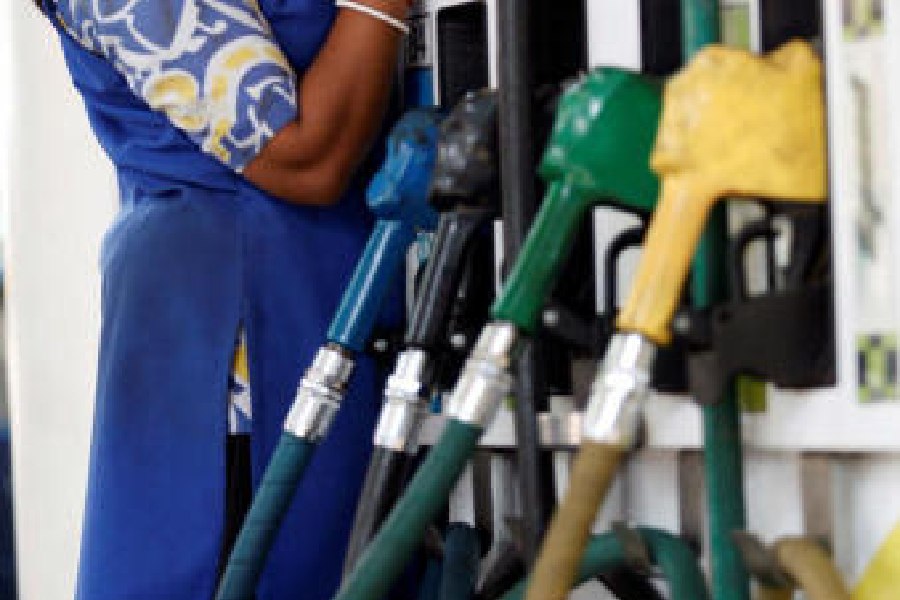
The second fuel price hike in four days has triggered widespread fear about more pain being inflicted in small doses in the coming days, with many among the poor caught between the twin callipers of a higher cost of living and falling incomes.
Among the metros, Calcutta recorded the sharpest rise of 96 paise in the price of petrol, taking it to ₹109.70 a litre. Diesel climbed to ₹96.07 a litre, up by 94 paise.
On Friday, petrol had gone up by ₹3.29 a litre to ₹108.74, and diesel by ₹3.11 a litre to ₹95.13.
While petrol and diesel prices have been raised after four years, the government had already increased domestic LPG prices moderately (by ₹60 for a 14.2kg cylinder) and commercial gas prices astronomically (by over ₹1,300 for a 19kg cylinder).
Transport and operational costs across the chain are expected to rise, threatening a cascading effect on every product and service.
While household expenditures will increase, some will also be hit by dwindling incomes because of higher input costs or cuts in salaries effected by their cash-strapped employers.
Sumit Das, who drives an app cab, travels around 150km every day. Until May 15, he had been spending about ₹25,500 a month on diesel. This will now jump to around ₹26,650 a month.
“My income from rides is not going up but the expenses are rising,” said Das, who lives near New Garia station on Calcutta’s southern fringes.
“The cost of my daughter’s education (Class VII) is my biggest worry. This additional expense of over ₹1,100 will really hurt.”
Moloy Sardar, 50, a cook at a fast food outlet in Behala who makes rolls, Mughlai parathas and other deep-fried snacks, is paid ₹13,500 a month.
After the steep hike in the price of commercial cooking gas on May 2, Sardar’s employer warned him of a possible pay cut.
A standard 19kg commercial LPG cylinder now costs ₹3,202 in Calcutta, up from ₹2,208 — a jump of ₹994 at one go. This is the third hike in commercial cooking gas prices since February 28, when the US and Israel attacked Iran. The prices were increased by ₹195.50 on April 1 and ₹114.50 on March 1.
With diesel too becoming costlier since Friday, the transporter who supplies chicken to the outlet has been charging more. Sardar’s employer has said he would pay him ₹13,000 from June.
The salary might fall further if there are more fuel price hikes, he fears.
“My wife works as a cook with three different households. But even with two earning members, sustaining a family is becoming more difficult by the day,” Sardar said.
Sandip Kayal, 47, who owns a car rental business, has a fleet of four cars. Three of them run on diesel, and one on CNG.
He cited, by way of example, one of the diesel vehicles: a Toyota Innova that ferries a group of teachers from Ultadanga to a private school in Ghatakpukur off Basanti Highway.
Until the latest round of back-to-back diesel price hikes, he would earn — after spending on fuel, driver’s salary and maintenance — around ₹4,500 a month from the car.
Before Friday, Kayal spent around ₹26,500 a month on diesel; that will now go up to about ₹27,650. This means he will be left with an income of just over ₹3,300 from this particular car.
“I have requested an increase of ₹200 a month each from the seven teachers. If they don’t agree, I might have to stop the service,” Kayal said.
Kayal has a master’s in commerce. For the past few months, he has been managing the books of a restaurant in Chinar Park.
“My son is studying MBBS. His tuition expenses are high. I’m looking for other avenues of income,” the Keshtopur resident said.