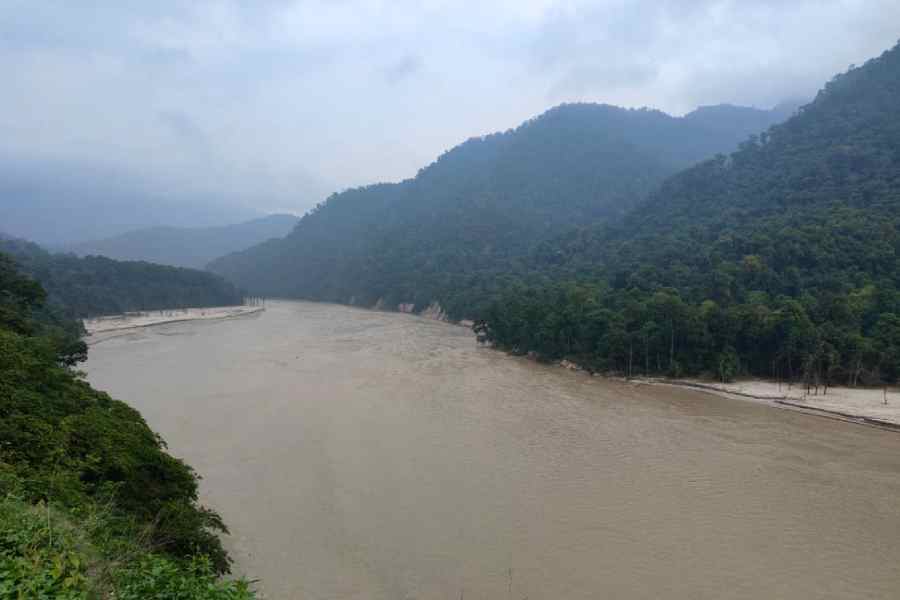
China’s decision to support Bangladesh’s multi-billion-dollar plan to develop the Teesta river, announced during the just-concluded Beijing visit of Bangladesh’s prime minister, Tarique Rahman, should serve as a wake-up call for India and the rest of South Asia. For 15 years, Bangladesh has nudged, negotiated and needled India in a bid to secure a water-sharing agreement for the Teesta. But successive Indian governments, first led by the Congress and then by the Bharatiya Janata Party, have failed to deliver a deal that many diplomats and economists say would make sense from New Delhi’s perspective and be politically acceptable to West Bengal. Now Bangladesh, under a new government, has in effect declared that it is no longer willing to wait to modernise and build infrastructure on the river with the aim of turning it into an engine of economic growth. It has made it clear that it will approach whichever country is willing to fund and back its plans.
In the immediate future, the joint development of Teesta infrastructure by China and Bangladesh should not hurt Indian interests. India is the upper riparian state, and Dhaka cannot afford to take any steps that provoke New Delhi into action that could deprive Bangladesh of much-needed water. But the China-Bangladesh deal holds broader significance that New Delhi or Southeast Asia cannot afford to ignore. The fact that Mr Rahman chose China, not India, as the destination for his first foreign trip is itself a message. Closer cooperation between Dhaka and Beijing may cast a shadow on New Delhi’s access to the Brahmaputra wherein India is the lower riparian state. The Teesta pact also underlines just how significant cross-border rivers are becoming in modern geopolitics. India already faces a tense equation with Beijing on the Brahmaputra. To the West, India under Prime Minister Narendra Modi has tried to weaponise the Indus Water Treaty to punish Pakistan over its continuing support for terrorism. While India has not yet curbed water supplies into Pakistan, it has, by declaring that it would no longer subscribe to the Indus Water Treaty, turned the fate of water-sharing with Pakistan into a political decision. A stable arrangement for water sharing is in India’s interests — both in the east and the west. Water is a source of both soft and hard power that nation-states must not squander.