 |
The Paper Trail: An Unexpected History of the World’s Greatest Invention By Alexander Monro, Allen Lane, Rs 899
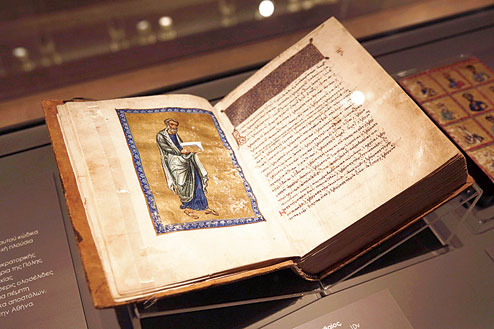
In The Paper Trail , the last five sentences that Alexander Monro writes are, “What began in China more than two millennia ago, continues to engage people in news, stories, poems and correspondence to this day. Paper cannot promise to deliver quality content any more than it can always evade censorship or consistently refuse propaganda. It cannot even promise to deliver truth. But what it can do, it has done. And that, for untold billions, has been to place power in the reader’s hands.” So much has paper impacted us that to it we have added our notions of paper tigers, paper pushers, paper chases, paperless offices and paper moons. Monro’s sentences encapsulate a discovery, or a rubric, of what he’s probably right in calling the World’s Greatest Invention.
The Paper Trail was funded by a Jerwood Award from the Royal Society and Monro, as if to establish his credentials, which in any case has been well grouted with years of China studies at Cambridge, Oxford and Beijing, has left no archival material unexamined, no relevant histories unread, no avenue unexplored, no lead allowed to go cold, in short, no stone unturned, to deliver what comes dangerously close to being a research paper. However, what rescues The Paper Trail from becoming an impossibly steep climb for his lay readership is Monro’s contemporary, chatty, at times almost gossipy, form and style. Differently put, though the book is a dense forest of fact and opinion, Monro is careful not to let his reader get lost in the undergrowth.
Whilst thinking and, in the extant case, writing, about the process of evolution — be it of paper or of political principle — I suppose it is imperative, along with other weightier realities, to understand the roles, in such process, of measured reason and that of sheer happenstance. Simplistically put, how prolonged would our unraveling of Second Temple Judaist thought have been had the Dead Sea Scrolls not been suddenly chanced upon? How crucial to the deciphering of Egyptian hieroglyphics was the sudden discovery of the Rosetta Stone? Very crucial, but which is not to say, critical. Adroit writers such as Monro understand the difference and balance their work nicely between the two, which device lends the story the immediacy of breaking news. Consider this. The Oxford educated Hungarian philologist, Marc Aurel Stein’s monumental discovery, in 1907, of 40,000 ancient scrolls on paper and silk and bamboo, long considered lost, at Dunhuang in China’s desolate north-west, ‘tells the story of paper’s first religious blossoming as little else can”. Stein’s beliefs, and his nose, led him to the scrolls that not only mapped the rise and growth of Buddhist influence on Chinese history and vice versa but also contained written remnants of cultures from further north and west, many in Sanskrit and Pali, which was surprising because the sub continental traditions were believed to have been mainly revelatory and verbal, as was the case with the Prophet’s teachings and the pax islamica, before the coming of paper. One painted scroll, Stein found, showed the revered monk Xuan Zang bringing in scriptures from India. Because a major part of Stein’s expedition was funded by the Government of India, Stein sent back a large number of scrolls to India; they lie now in the National Museum in New Delhi, more than thirteen centuries after they were written.
Monro’s book, though, is not just a documentation of discovery; it dwells principally on humanity’s need to convert verbal chronicling, a fickle process at best, to that of using more stable and robust means to serve both short and long term objectives, mainly governance, socio religious promulgation and yes, polemics. Humanity, in this case meant the succeeding Chinese dynasties who were the first to command the scribes in their Court and their monasteries to undertake the documentation, using known materials like stone, silk and the ubiquitous bamboo. This was an expensive, frustrating and impractical process and the search for a medium which by and large eliminated all these negatives lit up many pioneering minds across China. Paper wasn’t discovered overnight, and the book traces its slow beginnings as an extraordinary receptacle of ideas, events and emotions. This profusion of data, rich and diverse, can be the siren’s call for the writer who feels compelled to cover every inch of ground as he strides towards the raison d’ être of his work; and in the process, is trapped into spreading his writing too thin. Monro is resourceful; so whilst his chapters on the science of making paper and ink and book production and on the art of calligraphy are very skillfully presented, it’s clear that he is really most engrossed with paper’s inspiring history of spreading ideas and beliefs over large parts of the world. The leitmotif was religion because to the chosen, the essence of all dissemination had to be so. Whilst the teachings of Confucius and Bao were circulated widely within China itself it was Buddhist sutras which paper carried into China from India and from China primarily into Korea, Vietnam and Japan, and even northwards into places like Tibet; Monro circles back to this flow time and again and moving westwards, his brilliantly articulated chapter on the Prophet, the Revelations and the Koran is worth a re-read. Equally fine and, by the way quite prescient, is his writing on the proscribing and licensing of all written material in the pre-revolutionary France of the 1680’s and, as was expected, the world’s first taste of organized book piracy. If there is one issue I would want to take up with Monro, it is that in all his ruminations, why has sub continental India drawn a blank; if paper wasn’t in vogue, we would have liked to know why. We do know, however, that everything of consequence seems to have happened to paper from its beginnings till about two hundred and fifty years before now, after which, discoveries have been at a premium.
And of what value was paper if it didn’t carry the written word? Calligraphy was an unique art, but often it was just that, an art and the world, by the time paper in all its forms had become omnipresent, wanted something different; it wanted viability, which meant economy and, well, workability. So Europe borrowed the exquisite processes of the Far East and Arabia and gave it the required technological twists to suit the markets of the west. For instance, Johannes Gutenberg, a goldsmith who had melted metal all his life, changed the rules of the game irreversibly by developing moveable type setting at his press in Mainz; suddenly speed and flexibility and high volumes at low costs were at hand.
Even though Monro reflects on the future of paper in a byte-driven age in just a brief epilogue, The Paper Trail is a book that had to be written, and must be read.