The Indian army regiments? history is a subject with a beginning but without an end. Suffice it to say that it is an amazingly enduring institution of the British era which is both good and bad. How? Take the three instances. The chief of the British Indian army staff once wrote, ?Little further can be done in the attainment of independence by violent means so long as the authority of the Government is supported by its armed forces.? Post 1857, the British reviewed the army policy every 10 years. The British ran an empire and had an army to run it the best possible way.
One thing unacceptable was the presence of the Indian educated class in its military. And why not? The backbone of the terrorist movement in Bengal was formed by the bhadralok youth of Bengal. Who then were to obey the British command? The simple, rural folks from remote areas in the highland who lacked education, were poor and had minimum needs. No wonder the Indian masses always resented the loyalty of the hill-soldiers to the raj. Yet this did not prevent independent India from absorbing the Gurkha battalions.
Phased out
Four distinct phases in the recruitment, deployment and raising of the Indian army regiments are discernible. Three regiments of Madras, Bihar and Punjab trace their origin to 1758-61,when the British made their way in Bengal and Madras. Interestingly, the Punjab regiment was not born in the Punjab, but in Trichinopoly. The next phase was between 1768 and 1795, when the Maratha Light Infantry, Rajputana Rifles, Rajput Regiment, Grenadiers and the Jat Regiment were formed. The decline of the Marathas had resulted in a number of unemployed soldiers. It was also a period of the Anglo-Maratha wars. Hence new recruits were needed for the expanding empire.
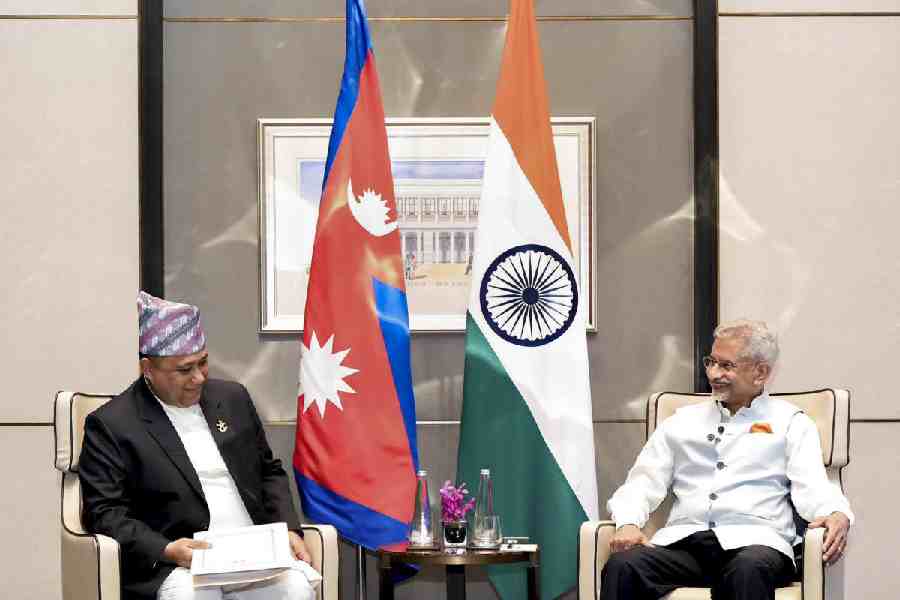
The most memorable phase was the Anglo-Gurkha war of 1814-1816, when the Gurkhas ?lost? the war but won the heart of the British warriors. The Gurkhas stood out for their loyalty and bravery. From the Mutiny of 1857 to the Burma campaign of the Forties, the Gurkhas worked wonders for the British.
Talent search
The next to be born were the Dogra and Garhwal regiments, both in 1887 in the backdrop of the Burma campaign and the delimitation of the Afghan northern boundary. The British required fresh and sturdy men to fight from the jungles of Burma and the dry, barren, hostile terrains of Afghanistan. The parting gift of the British was the raising of the regiments of Mahar and Assam in 1941, Sikh Light Infantry in 1944 and the 50 Paras in 1945.
The backward Mahars were proud soldiers of Shivaji and later Maratha rulers. In the 19th century, Mahars formed part of the Bombay army. But from the 1890s, they were no longer recruited, and by 1914 there were almost none left in the ranks. Mahars appealed and were drawn into the Indian army during World War I. They were excluded again soon after, only to be re-inducted as a permanent regiment in 1941.
The British showed great talent in formulating their military policy. They were unjust and discriminatory in it, but the policy worked fabulously. They managed to put together a professional army from the best of recruits who would leave their mark with their loyalty, discipline, tenacity, and above all self-respect. It was a unique way of dividing a society but uniting an institution. Do Indians today understand the legacy? Today one hears the demand for a reserved scheduled caste regiment. But has one taken note of the possibility of demands being raised to revive some of the disbanded regiments like the 3rd Brahman regiment along with the Chamar and Ajmer Regiment and the Lingayat Battalion?